
Reviewed · WALKING TOURS
Surprise Walk of Aarhus with a Local
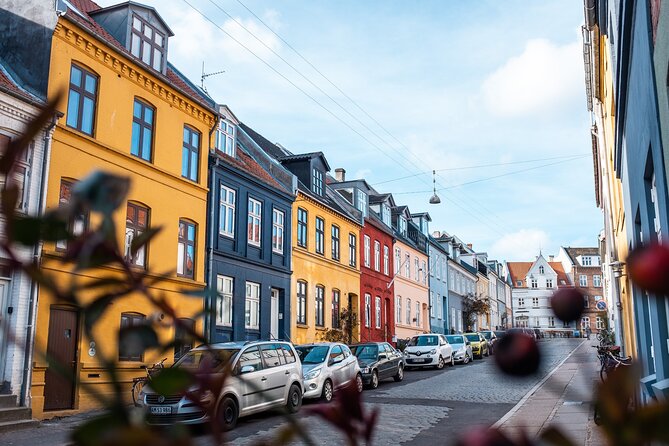
Aarhus rewards curious walkers. This 90-minute tour gives you a quick, personal introduction to Denmark’s second city, linking modern waterfront architecture with old cobbled lanes, local art, charming historic buildings, and the grand Aarhus Cathedral.
I like the small group of up to eight people, which should make it easier to ask questions and adjust the pace. I also like the mix of places: Dokk1 gives you a look at present-day Aarhus, while Møllestien and the old quarter bring you closer to the city’s traditional character. The guide adds local stories and practical recommendations, including a tip for the city’s best rooftop terrace.
The main drawback is the price. At $126.29 per person for about an hour and a half, this is not a cheap orientation walk. You are paying for a private-feeling experience and local attention, not a long tour or admission to major sights. It may feel worthwhile for a first visit, but less so if you mainly want a low-cost stroll.
In This Review
- Key points at a glance
- A short walk with a useful sense of place
- Meeting the guide near Christian X
- Taking in Aarhus from a rooftop
- Dokk1 and the modern waterfront
- The former railway station turned art center
- Møllestien and the old Aarhus feel
- The old quarter and a closer look at historic buildings
- Ending at Aarhus Cathedral
- What $126.29 buys you
- Pace, access, and practical planning
- Who will enjoy this Aarhus walk?
- Should you book Surprise Walk of Aarhus with a Local?
- FAQ
- Where does the tour start?
- Where does the tour end?
- How long does the experience last?
- How many people can join the group?
- Is the tour suitable for a busy schedule?
- Are entry tickets included?
- Is public transportation nearby?
- Can the route change?
- Are service animals allowed?
- What is the cancellation policy?
Key points at a glance
- Dokk1 anchors the modern side of Aarhus: See the city’s public library, government building, and cultural center beside the waterfront.
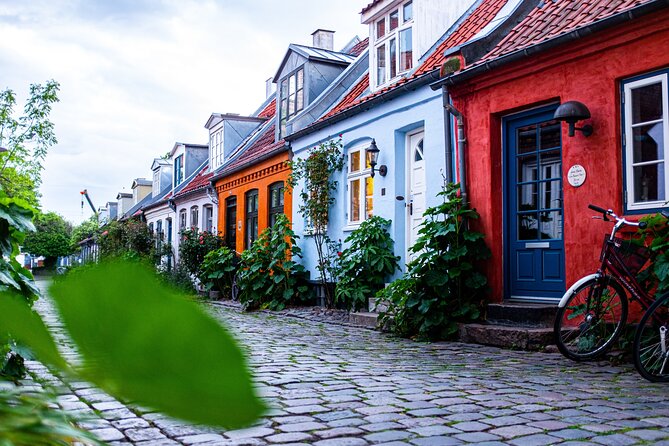
- Møllestien supplies the old Aarhus charm: Walk a cozy cobbled street lined with quaint houses.
- A repurposed railway station adds an artsy stop: The former station now serves as an alternative art center.
- The group stays small: With no more than eight people, you should get room for questions and personal suggestions.
- The route ends at a major landmark: Aarhus Cathedral is Denmark’s longest and tallest church.
- The walk fits a tight schedule: Ninety minutes gives you a brisk introduction without taking over your day.
A short walk with a useful sense of place
This experience is built for you if you want to get your bearings quickly. The route moves through several sides of Aarhus rather than spending the whole time at one attraction. You see a modern civic building, a creative reuse project, traditional streets, an old quarter, and one of Denmark’s major churches.
That variety is the tour’s strongest feature. In a short time, you can get a feel for how Aarhus blends new architecture and public spaces with older streets and historic buildings. You will not receive a full treatment of the city, but you should leave with a clearer idea of what deserves more of your time.
The guide is an independent local, and the route can adapt to the group’s interests and walking pace. That matters on a short tour. A fixed script can feel rushed, while a flexible walk may let you linger briefly at a place that catches your attention.
You should still expect a brisk outing. Six stops or areas are packed into roughly 90 minutes, and the tour does not include entry to museums, monuments, or transportation. Think of it as a walking introduction with local direction, not a series of long interior visits.
More Walking Tours in Aarhus:
- Aarhus Walking Tour: From Viking Village to Metropolis
★ 4.8 · 122 reviews - Historical Walking Tour in Aarhus
★ 4.5 · 35 reviews - Aarhus Walking Tour: Explore Top Sights & Hidden Gems
★ 4.0 · 34 reviews
Meeting the guide near Christian X
The tour begins at the equestrian statue of Christian X in central Aarhus. This is a practical starting point because the walk begins in the city center and finishes at Store Torv by Aarhus Cathedral.
You should arrive ready to walk soon after meeting the guide. The experience is conducted on foot, and the stated duration leaves little room for a slow start. Since the meeting point is specific, check the exact location before setting out and allow enough time to find the statue.
The small group format should help the meeting feel straightforward. With a maximum of eight people, you are not joining a large crowd that has to wait for stragglers at every corner. The guide can speak to the group without needing a loudspeaker, and you can ask for suggestions that match your interests.
One especially pleasant touch is the possibility of a small Danish specialty at the start. One guide, Mai Britt, was praised for arriving on time and offering a typical local treat. That does not replace a meal, but it gives the welcome a personal feel and starts the walk on a friendly note.
Taking in Aarhus from a rooftop
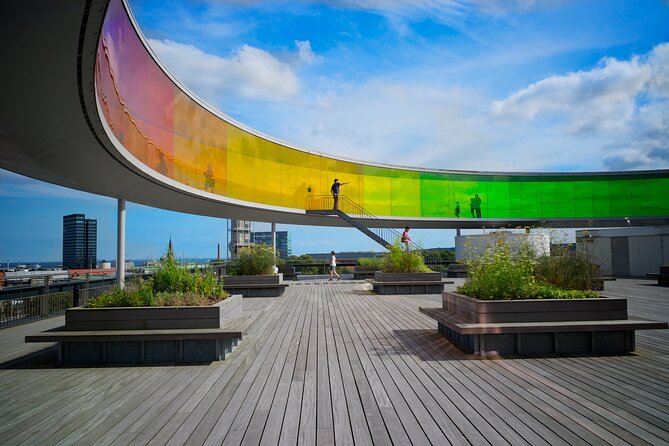
One stop points you toward the city’s best rooftop views. The exact rooftop is not named in the available details, so you should treat this as a recommendation rather than a guaranteed extended visit or included admission.
That distinction matters. The experience promises local guidance about where to find the most beautiful views, but entry charges for venues and monuments are not included. If the terrace requires payment or has access rules, those costs would be yours.
Still, this can be one of the most useful suggestions on the walk. A local recommendation can save you from choosing a rooftop at random, especially when your time in Aarhus is limited. You may want to ask the guide about the best time to return, what you can see from the terrace, and whether the spot works better for a daytime view or an evening stop.
This stop also shows how the tour goes beyond a checklist. You are not only pointed toward famous buildings. You are given an idea for how to see the city from above, then can decide if it fits your schedule and budget.
Dokk1 and the modern waterfront
Dokk1 is one of the tour’s most distinctive stops. It is a government building, public library, and cultural center located beside the waterfront, next to the Custom House on Hack Kampmanns Plads.
The building gives you a look at modern Aarhus and how the city uses public architecture. It is not simply an office block. Its mix of civic services, library functions, and cultural activity makes it a useful place for understanding the city as it operates today.
A guide can add context that you would miss by taking a quick photograph from outside. You can ask how locals use the building, what makes it important to Aarhus, and which parts are worth seeing if you return on your own.
Dokk1 is also a good counterpoint to the later old streets. The tour does not present Aarhus as a preserved historic town frozen in time. Instead, you see a city with modern public spaces alongside older buildings and traditional lanes.
If you are especially interested in architecture, public design, or urban life, this may be one of the most valuable stops. If you prefer churches and old houses, you may find the modern building less immediately appealing, but it helps give the rest of the walk more context.
A different way to spend the same afternoon in Aarhus:
- Street Art and Rooftops of Aarhus, Denmark
★ 5.0 · 62 reviews - The Ancient Viking Stronghold of Aros: A Self-Guided Audio Tour in Aarhus
★ 4.0 · 36 reviews - Aarhus Craft BeerWalk
★ 4.7 · 19 reviews - Time travel in Aarhus
★ 4.5 · 18 reviews
The former railway station turned art center
Another stop brings you to an old railway station that has been repurposed as an alternative art center. The specific name is not provided, but the change in use is the point: infrastructure from an earlier period now supports a creative community.
This is a welcome break from the standard historic sightseeing route. You are not only looking at grand monuments. You are seeing how an older building has found a new role in the city’s cultural life.
The stop is also presented as a good place for a photograph. That makes sense for a short city walk, since the building should offer a different visual style from Dokk1, the cobbled lanes, and the cathedral. If the art center is open or accessible during your visit, you may get more from it than a quick exterior view, but admission is not included.
Art is a strong part of the guide’s background. One guide was praised for particular knowledge of Aarhus’ art scene and for explaining the city in an informative way. If that is your main interest, say so early. The route can adapt to your interests, and the guide may be able to give you more useful suggestions for exploring after the walk.
Møllestien and the old Aarhus feel
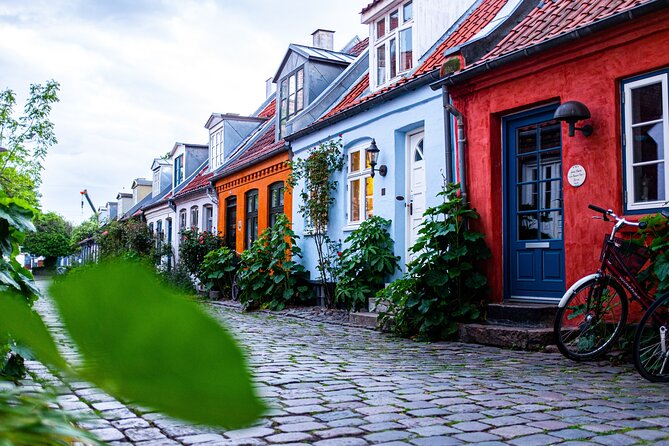
Møllestien supplies the most traditional visual moment on the route. It is a cozy cobbled street with quaint houses, and it offers the kind of setting many people hope to find when visiting Denmark.
The lane is valuable because it feels intimate rather than monumental. You can see smaller-scale architecture and get a sense of the city’s older residential character. The cobblestones and houses also create a clear contrast with the broad waterfront setting around Dokk1.
You should not expect a long stop here. The walk is short, and the guide has several areas to cover. Take a moment to notice the details, but keep your pace in mind. The itinerary can change with weather, and the guide may adjust the order or length of stops.
Møllestien is likely to appeal most if you want photographs, traditional streets, and a quieter atmosphere. It is less useful if you are looking for a museum visit or a detailed architectural lecture. Its value comes from the setting and the local stories that help explain why this small street matters.
The old quarter and a closer look at historic buildings
The walk also explores a well-known Aarhus quarter with picturesque old buildings. The supplied details do not name the quarter, so you should ask the guide to identify it clearly and explain what makes it important.
This area should build on what you see at Møllestien. Instead of one attractive lane, you get a broader sense of the older part of the city. The charm comes from the buildings and the layout of the streets, but the guide’s anecdotes can turn a pleasant walk into something more memorable.
This is where the local format earns its keep. A map can show you the old quarter, but it cannot easily tell you which details matter, how the area fits into Aarhus today, or what you should return to see. A local can also suggest nearby places that suit your interests, though the tour does not promise restaurant bookings or a full food guide.
The stop is likely to be fairly outdoors-focused. Entry fees for museums and monuments are excluded, and the experience is designed as a walking route. If you want interiors, ask the guide what can be visited later and plan those admissions separately.
Ending at Aarhus Cathedral

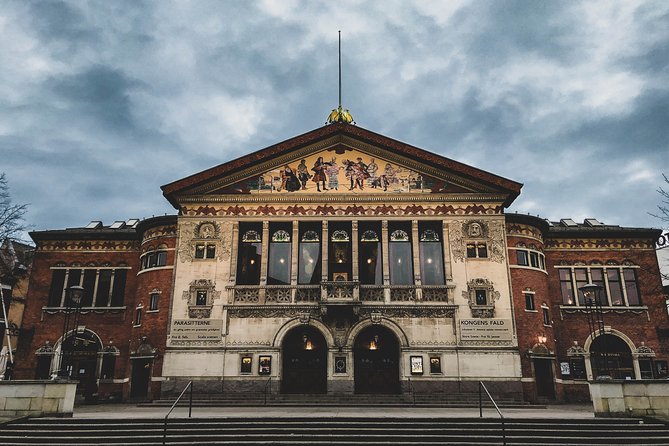
The tour ends at Aarhus Cathedral on Store Torv. It is described as Denmark’s longest and tallest church, making it a fitting final landmark for a compact introduction to the city.
Ending here is practical. You finish in a central square rather than being returned to the starting point, and you can continue exploring from there. You can also decide if you want to enter the cathedral on your own, keeping in mind that admission to monuments is not included.
The cathedral gives the walk a strong closing image. After modern public architecture, creative reuse, cobbled streets, and old buildings, you arrive at a major religious landmark with a much larger scale. Even if you do not go inside, the exterior provides a clear endpoint and a memorable reference point for the rest of your visit.
Ask the guide for any final suggestions before parting. The tour includes personalized recommendations, and this is the best time to ask what to see next, which rooftop to visit, or how to spend the rest of your day in Aarhus.
What $126.29 buys you
At $126.29 per person, this is an expensive 90-minute walk. The cost is easier to justify if you are booking for a small party that values a private-feeling setting, personal questions, and local advice. Group discounts are available, though the exact savings are not specified.
You are not paying for admission tickets, a meal, or transport. You are paying mainly for the guide’s time, the small group, the route, and the ability to adapt the experience to your interests and pace.
For a first visit, that can be useful. A good introduction may help you choose where to return, prevent you from wasting time, and give you context for sights you might otherwise pass without understanding. The value is strongest when you use the guide actively and ask for recommendations.
If you already know Aarhus well, the price is harder to defend. You may prefer to walk these areas on your own and spend the money on an attraction or meal. This tour works best as an orientation service with personality, not as a bargain sightseeing product.
Pace, access, and practical planning
The walk is near public transportation, and a mobile ticket makes the booking easy to carry on your phone. Confirmation is provided when you book, and service animals are allowed.
Most people can take part, but the experience is not recommended for people with impaired mobility. The route includes cobblestones and several stops in outdoor urban areas, and the walking pace may change as the guide moves between locations. If accessibility is a concern, contact the operator before booking rather than assuming the route can be made suitable.
Weather can change the stops. Some parts may be adjusted when conditions are poor, so you should dress for an outdoor walk and keep your plans flexible. Since the tour lasts only 90 minutes, a weather-related change could affect which places receive the most attention.
You can cancel for a full refund if you do so at least 24 hours before the start time. Cancellations or changes made within 24 hours are not refunded or accepted, based on the local cut-off time.
Who will enjoy this Aarhus walk?
I would recommend it most to you if:
- You have only a short time in Aarhus.
- You want a fast first look before exploring alone.
- You prefer a small group over a large guided crowd.
- You enjoy local stories and personal suggestions.
- You want both modern Aarhus and older streets in one walk.
- You are interested in art, architecture, and city life.
- You want to ask a local where to find good views.
I would think twice if you need a low-cost activity, extensive time inside monuments, or a route designed for limited mobility. You may also find the pace too quick if you want to stop often for photographs or study each building in detail.
The guide’s personality can shape the experience. Mai Britt, also referred to as Maj-Britt, received especially warm praise for fluent English, energy, and a personable approach. Another guide was appreciated for arriving on time, offering a Danish specialty, and explaining Aarhus’ art scene and city life clearly.
Those details point to the kind of experience you can expect: friendly, personal, and shaped by the individual local rather than delivered as a formal lecture. That is appealing, but it also means the exact emphasis may vary from one guide to another.
Should you book Surprise Walk of Aarhus with a Local?
Book it if you want a quick, personal introduction to Aarhus and are willing to pay a premium for a small group. The combination of Dokk1, a former railway station art center, Møllestien, an old quarter, rooftop advice, and Aarhus Cathedral gives you a useful first look at several sides of the city.
I would book this early in your stay, not at the end. You will get more value from the rooftop tip and local recommendations if you still have time to use them. If your budget is tight, compare the cost with a self-guided walk, but remember that you will give up the chance to ask a local direct questions.
For a short schedule, this tour does its job well. It will not explain every corner of Aarhus, and it does not include admissions, but it can help you see the city with better direction and a more personal sense of place.
FAQ
Where does the tour start?
The tour starts at the equestrian statue of Christian X in Aarhus, Denmark.
Where does the tour end?
The tour ends at Aarhus Cathedral on Store Torv in Aarhus.
How long does the experience last?
The walk lasts approximately 1 hour and 30 minutes.
How many people can join the group?
The group has a maximum of eight people.
Is the tour suitable for a busy schedule?
Yes. Its approximately 90-minute duration is designed to fit into a tight schedule.
Are entry tickets included?
No. Entry tickets for transportation, museums, and monuments are not included.
Is public transportation nearby?
Yes. The tour is located near public transportation.
Can the route change?
Yes. The itinerary can adapt to the group’s interests and walking pace, and stops may vary because of weather conditions.
Are service animals allowed?
Yes. Service animals are allowed.
What is the cancellation policy?
You can receive a full refund if you cancel at least 24 hours before the experience start time. Cancellations or changes made less than 24 hours before the start time are not refunded or accepted.
Newly added in Aarhus
- Aarhus Self guided Mystery hunt Sabotage in Danish★ 4.5 · 3 reviews
- Aarhus: Express Walk with a Local in 60 minutes★ 4.8 · 3 reviews
- Aarhus Craft BeerWalk★ 5.0 · 4 reviews
- Aarhus: Insta-Perfect Walk with a Local★ 4.9 · 4 reviews
- Aarhus: 1 or 1,5 Hour Boat Rental – No License Required★ 4.3 · 8 reviews
- Aarhus: Surprise City Walking Tour with Local Guide★ 4.2 · 9 reviews
- Aarhus Private Walking Tour with a Local★ 4.0 · 12 reviews
- Explore Aarhus in 60 minutes with a Local★ 4.0 · 14 reviews
Walking Tours, compared.

Group Walking Tour – City Highlights – 2 Hours
Read our review →
3h walking tour, small group max 10 people Copenhagen
Read our review →
Walk & Canal Tour: Copenhagen Highlights + Changing of the Guards
Read our review →

Browse the lists this tour appears in