
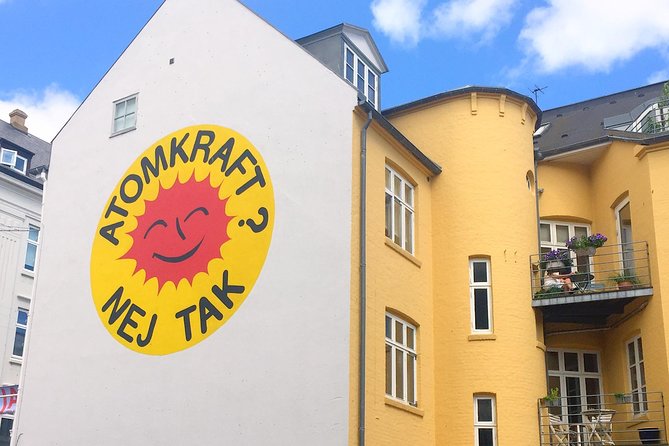
Reviewed · STREET ART & HIDDEN GEMS WALKS
Street Art and Rooftops of Aarhus, Denmark
Aarhus reveals itself through paint and public art. This two-hour walking tour links the harbor, Latin Quarter, creative rooftops, old industrial spaces, City Hall, and a high viewpoint, giving you a lively introduction to the city through the eyes of its artists. I like the mix of famous sights and easy-to-miss works, plus the chance to ask questions in a group capped at 10 people. I also like that the guide adds stories about buildings, local life, and Aarhus culture, not just art labels. The main consideration is pace: it is a walking tour with a moderate fitness requirement, and some reviews describe the outing as closer to three hours.
In This Review
- Key details before you book
- Why Aarhus works so well for a street art walk
- Starting at the harbor and Dokk1
- The Latin Quarter and its old houses
- A rooftop stop for Aarhus’s creative side
- From old industry to modern art space
- City Hall monuments and the official center
- The high viewpoint that closes the route
- What kind of art will you see?
- Marina and the guide’s role
- Is $63.20 a fair price?
- Walking demands, weather, and timing
- Who should book this Aarhus tour?
- Should you book Street Art and Rooftops of Aarhus?
- FAQ
- Where does the tour start?
- What time does the tour begin?
- How long does the experience last?
- Is the tour offered in English?
- How large is the group?
- Are attraction entry tickets included?
- Are food and drinks included?
- Can I cancel for a full refund?
Key details before you book

- Art with a city overview: You see graffiti, murals, sculptures, installations, architecture, monuments, and harbor views in one route.
- A small group of up to 10: The size should make it easier to hear the guide and ask about artists, styles, and local stories.
- A route from the waterfront to the Latin Quarter: The walk moves through several sides of Aarhus, from modern city spaces to old houses and creative districts.
- A rooftop and a high viewpoint: The tour includes time above street level, with a viewpoint opened in 2017 that quickly became one of the city’s major attractions.
- A guide with a strong art focus: Marina is praised repeatedly by name for her art knowledge, local stories, warmth, and ability to point out details many people miss.
- Simple inclusions: No attraction entry tickets are needed, but food and drinks are not included.
Why Aarhus works so well for a street art walk
Aarhus is compact enough to explore on foot, yet varied enough to keep a two-hour route from feeling repetitive. The city shifts quickly from harbor-front modernity to old streets, creative workspaces, public squares, and former industrial areas.
That variety is the real strength of this experience. You are not looking at murals in isolation. You are learning how art fits into the city around it. A sculpture may relate to a public building. A mural may reflect a local project. An installation may make more sense once you understand the neighborhood where it appears.
I especially like tours that use art as a door into local culture. You do not need an art degree here. The guide explains styles, artists, messages, and the stories behind the works in a way that helps you notice more as you keep walking.
The route also gives you a useful first look at Aarhus. If this is your first morning in the city, you can use the walk to mark places you want to revisit later. If you already know the central streets, the public art offers a fresh reason to see them again.
More back-street walks in Aarhus:
- Aarhus Walking Tour: Explore Top Sights & Hidden Gems
★ 4.0 · 34 reviews - Politically Incorrect Private Highlights Walking Tour
★ 5.0 · 1,244 reviews - Politically Incorrect Beer Walk
★ 5.0 · 516 reviews
Starting at the harbor and Dokk1
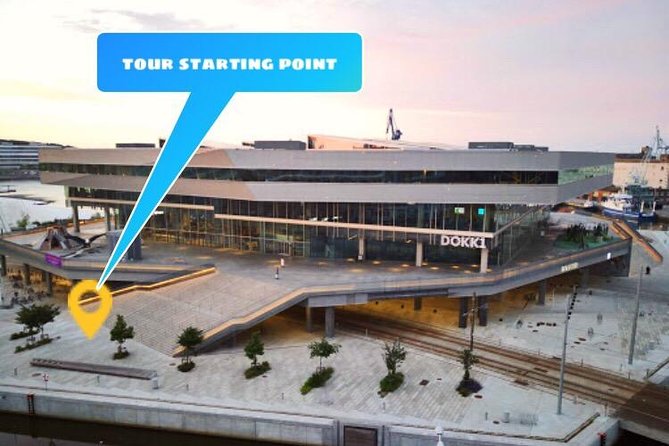
The published route begins at Dokk1, Aarhus’s multimedia center near the waterfront, while the meeting-point details give Europaplads 3, 8000 Aarhus, as the start location. Because both locations appear in the tour information, I would confirm the exact meeting spot after booking.
The harbor setting is a good opening. Dokk1 represents the modern side of Aarhus, with a large civic and cultural presence beside the water. From there, the tour moves into the city streets rather than staying on the waterfront.
This opening also sets up one of the tour’s main themes: old and new Aarhus side by side. You begin near a modern urban center, then walk toward older neighborhoods and repurposed industrial spaces. The contrast gives the art more context.
The meeting time is 10 a.m. That is useful for a cruise-ship visit or a short city break because you still have much of the day ahead. Cruise ship passengers must provide ship name, docking time, disembarkation time, and re-boarding time when booking. I would pay close attention to those details, since the route lasts about two hours and may run longer depending on the guide and group.
The Latin Quarter and its old houses
One of the most appealing parts of the walk is the move into Aarhus’s Latin Quarter. This district is known in the tour description for its old, charming houses, and it offers a different mood from the harbor.
Here, the pleasure comes from looking closely. The streets provide a setting where public art, building fronts, small details, and everyday city life appear together. The guide helps you read the area rather than simply pass through it.
This is where Marina’s style seems especially useful. The strongest praise focuses on her ability to explain more than the obvious facts. She adds amusing stories and quirks about buildings and places, and she points out details that even people who have lived near Aarhus for years may have missed.
That is a valuable skill on a walking tour. You can see a mural without help, but a good guide explains why it is there, how its style works, or what its message may be saying. The same is true of a sculpture or installation that might otherwise look like ordinary street furniture.
The Latin Quarter portion should suit you if you like architecture as much as graffiti. It is not a pure mural hunt. The route treats the streets themselves as part of the art experience.
A rooftop stop for Aarhus’s creative side
The route continues to a hipster hangout where freelancers and other creatives gather for coffee on a rooftop. The description does not name the venue, so you should think of this as an atmospheric stop rather than a guaranteed café visit or included refreshment.
The rooftop matters because it shows another part of Aarhus: a city where old urban spaces are used by newer creative communities. You get a change of view and a glimpse of how locals use the city above street level.
Food and drinks are not included, so bring your own budget if you hope to buy coffee. The tour does not promise a meal break, and at roughly two hours, the main purpose is sightseeing and commentary. Still, this stop may be a pleasant moment to pause and ask questions.
I would not book the tour mainly for the rooftop. Its value is in the route and the guide’s interpretation. The rooftop adds variety, but the exact experience may depend on access, weather, and how the venue operates that day.
A different way to spend the same afternoon in Aarhus:
- Aarhus Walking Tour: From Viking Village to Metropolis
★ 4.8 · 122 reviews - The Ancient Viking Stronghold of Aros: A Self-Guided Audio Tour in Aarhus
★ 4.0 · 36 reviews - Historical Walking Tour in Aarhus
★ 4.5 · 35 reviews - Aarhus Craft BeerWalk
★ 4.7 · 19 reviews
From old industry to modern art space
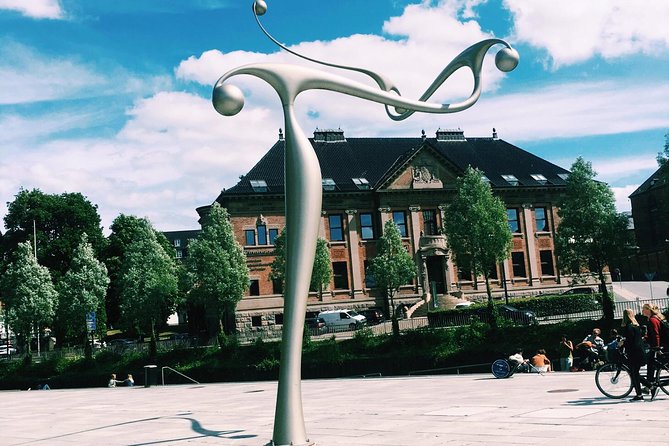
One of the most interesting transitions comes at an old industrial site that has been converted into a modern art space. The change from working industrial area to cultural venue reflects a common pattern in European cities, but here it becomes part of the walking story.
The site attracts people interested in contemporary art, and it gives the tour a stronger connection to Aarhus’s current creative life. Instead of viewing art only in formal museums, you see how older structures can gain a second purpose.
No entry tickets are required for the attractions visited on this experience. That keeps the price easier to judge, since you are not paying extra for a scheduled museum admission. The tour also does not take place entirely outdoors, which may offer some relief if the weather is cool or damp.
Still, do not expect a full museum visit. The experience is designed as a walking route with public art and cultural commentary. The time spent at the former industrial site may vary, and the supplied details do not promise a particular exhibition or indoor collection.
City Hall monuments and the official center
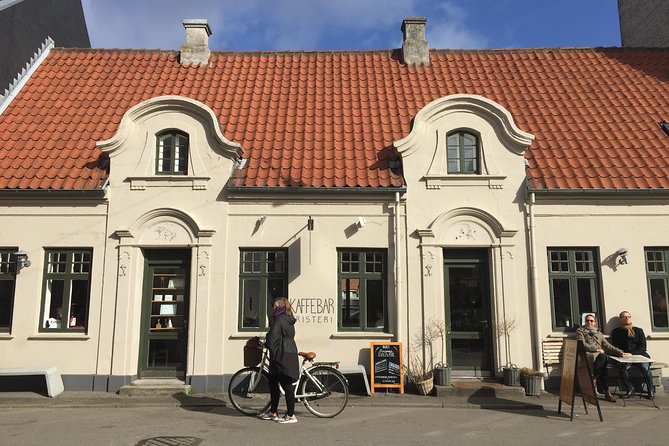
After the creative spaces, the route reaches the official city center and the monuments around City Hall. This gives the walk a civic and architectural counterpoint to the murals and industrial art.
I like this kind of structure because it stops the tour from becoming a string of unrelated photo stops. You see how public art works in different settings: near old homes, among creative businesses, at a former industrial site, and around government buildings.
The guide also brings in broader information about Aarhus and Denmark. The praise for this tour repeatedly points to stories about buildings, public spaces, city life, and local history. That wider commentary is important if you want a city orientation rather than a narrow art lesson.
The City Hall section may appeal most to visitors who want a quick overview of Aarhus. One review describes the tour as a useful introduction to the city, and that seems fair. You cover enough ground to understand the shape of central Aarhus, though you will not receive an in-depth tour of every monument.
The high viewpoint that closes the route
The final major highlight is a high viewpoint opened in 2017. The tour description says it had already attracted millions of visitors and is considered one of the city’s most appealing views.
The exact name is not supplied, so I would not book this expecting a specific named tower or building without checking the current route. What is clear is that the viewpoint provides a strong finish, letting you look back over the city after walking through its streets.
Several comments praise the ending high above Aarhus. That makes sense. A view gives the route a natural final chapter: after seeing individual works close up, you gain a broader sense of the city that contains them.
The viewpoint may also be the best photo opportunity on the walk. If you care about pictures, keep your phone or camera ready, but listen closely too. The guide’s explanation of what you are seeing can turn a nice panorama into a useful map of Aarhus.
What kind of art will you see?
The route includes several forms of public art:
- Graffiti and large murals
- Sculptures in public spaces
- Installations with a story or message
- Architecture and decorative details
- Art connected to community projects
- Contemporary work in a former industrial setting
This range is a major advantage. You are not relying on one style, one neighborhood, or one type of artist. Some works may appeal to you more than others, but the variety keeps the walk moving.
The guide’s role is central. Strong praise focuses on the ability to explain artistic styles, identify details, and discuss what artists may be communicating. That helps you look beyond the easy reaction of I like it or I do not like it.
The route also leaves room for questions. A maximum of 10 people creates a more personal setting than a large city group. If you want to ask about a particular artist, public funding, community support, or how a work fits into the city, this format should be more comfortable.
The guide may be multilingual, although the tour is offered in English. If English commentary is important to you, confirm the language arrangement when booking.
Marina and the guide’s role
Marina is the guide most often named in the comments, and she receives unusually specific praise. People describe her as passionate about art, warm, entertaining, and full of local stories. One particularly useful detail is that she helped long-term residents notice parts of Aarhus they had previously missed.
That tells you what this tour is trying to do. It is not simply a route between major sights. It depends on a guide who can connect art with buildings, neighborhoods, history, and small local quirks.
You may also get a private-tour feel if your group is very small. One person described having the entire outing to herself because no other participants had booked. That is not guaranteed, but the group limit of 10 keeps the regular version intimate.
Guide quality can vary on any experience, and the information does not guarantee Marina will lead every departure. The operator is Aarhus City Guide, and the tour may be operated by a multilingual guide. Still, Marina’s repeated praise gives you a useful picture of the kind of commentary the experience aims to provide.
Is $63.20 a fair price?
At $63.20 per person, this is not the cheapest way to walk around Aarhus. You can see streets and many public works without paying for a guide. The value comes from the interpretation, route design, small group, and access to a viewpoint and creative spaces without separate entry fees.
For an art-lover, the price is easier to justify. You are getting a focused experience led by a guide who can discuss artists, styles, messages, and local context. You also avoid spending time searching for individual works on your own.
For a first-time visitor, the city overview adds value. You see the harbor, Latin Quarter, city center, public monuments, former industrial art space, rooftop setting, and viewpoint in one outing. That can help you plan the rest of your stay.
The price is less attractive if you want a slow museum visit, a food stop, or a long photography session. The route covers a lot, and the short format means the focus is on seeing and listening rather than lingering at every work.
Walking demands, weather, and timing
You need a moderate level of physical fitness. The tour involves walking through city streets and reaching a high viewpoint, so comfortable shoes are sensible.
The experience is not entirely outdoors, but it is still a walking tour. Aarhus weather can change, and you should dress for time outside. Food and drinks are not included, so carry water or plan for a purchase if needed.
The listed duration is approximately two hours. Some accounts describe a three-hour outing, which suggests that the actual length can vary with questions, group size, route conditions, and the guide’s pace. Leave extra time afterward rather than scheduling a tight connection.
Free cancellation is available if you cancel at least 24 hours before the local start time. Changes or cancellations made inside that window are not accepted for a refund.
Who should book this Aarhus tour?
I would recommend it most strongly to:
- Art-lovers who want public art explained in context
- First-time visitors seeking a compact city introduction
- Repeat visitors who have already seen the main streets
- Cruise ship passengers with enough time after disembarkation
- People who prefer small groups and conversation
- Visitors who enjoy architecture, urban change, and local stories
You may want another type of activity if you dislike walking, need a completely indoor experience, or prefer a formal museum tour. The route includes a rooftop and a former industrial art space, but it is not built around a single exhibition.
It may also be less suitable if you have only a very tight schedule. The morning start is fixed at 10 a.m., and the tour can run longer than the approximate two-hour estimate.
Should you book Street Art and Rooftops of Aarhus?
Book it if you want to understand Aarhus through its public spaces, not just check off monuments. The mix of murals, sculptures, installations, old houses, creative venues, civic buildings, and a final high view gives you a fuller sense of the city than a basic street-art checklist.
The strongest reason to go is the guide. Marina’s art focus and local storytelling are the qualities praised most often, though you should confirm who leads your departure. The small group, question time, and lack of extra entry fees also support the price.
My practical advice is to confirm the meeting point, allow more than two hours, wear comfortable shoes, and bring a little money for drinks. If that suits your plans, this is a thoughtful and personable way to get your bearings in Aarhus while seeing the city’s creative side.
FAQ
Where does the tour start?
The meeting-point details list Europaplads 3, 8000 Aarhus, Denmark. The route description also refers to Dokk1 at Hack Kampmanns Plads 2 as the starting point. Confirm the exact location after booking.
What time does the tour begin?
The tour starts at 10:00 a.m.
How long does the experience last?
The listed duration is approximately two hours. Some descriptions of the outing mention three hours, so allow extra time in your schedule.
Is the tour offered in English?
Yes. English is one of the listed languages. The tour may also be operated by a multilingual guide.
How large is the group?
The maximum group size is 10 people.
Are attraction entry tickets included?
No entry tickets are required for the attractions visited on the route.
Are food and drinks included?
No. Food and drinks are not included.
Can I cancel for a full refund?
Yes, if you cancel at least 24 hours before the experience start time. Cancellations or changes made less than 24 hours before the start are not accepted for a refund.
Newly added in Aarhus
- Aarhus Self guided Mystery hunt Sabotage in Danish★ 4.5 · 3 reviews
- Aarhus: Express Walk with a Local in 60 minutes★ 4.8 · 3 reviews
- Aarhus Craft BeerWalk★ 5.0 · 4 reviews
- Aarhus: Insta-Perfect Walk with a Local★ 4.9 · 4 reviews
- Surprise Walk of Aarhus with a Local★ 4.5 · 4 reviews
- Aarhus: 1 or 1,5 Hour Boat Rental – No License Required★ 4.3 · 8 reviews
- Aarhus: Surprise City Walking Tour with Local Guide★ 4.2 · 9 reviews
- Aarhus Private Walking Tour with a Local★ 4.0 · 12 reviews
Street Art & Hidden Gems Walks, compared.




Vesterbro Tour With Beer & Pub Visits – Max 10 People
Read our review →
Copenhagen Private Tour: Highlights & Hidden Gems by Bike or Foot
Read our review →
Politically Incorrect Beer Tasting Walking Tour
Read our review →Browse the lists this tour appears in