
Reviewed · CITY TOURS
Odense: City walk – The new green Odense – City development
Odense is changing fast. This two-hour walk leaves the postcard version of town behind and follows the city’s shift from industry and traffic toward green urban development. I like the small-group format, which keeps the tour conversational, and I like the way it links buildings, streets, housing, education, and daily Danish life. The main drawback is simple: you walk about 4 kilometers, or roughly 5,500 steps, and the subject is city planning rather than fairy-tale sightseeing.
I also appreciate the local perspective. Guides such as Jørn Asmussen and Johan have been praised for clear German, friendly conversation, and the ability to answer questions well beyond the basic route. If you want a list of monuments, this may feel too analytical. If you want to understand why Odense looks the way it does today, it offers unusually good value for $31.
In This Review
- Key points at a glance
- Why this Odense walk offers more than sightseeing
- Meeting at Overgade 3 in the old city
- Albani Torv and the first 30 minutes
- Donkey Republic and the way people move
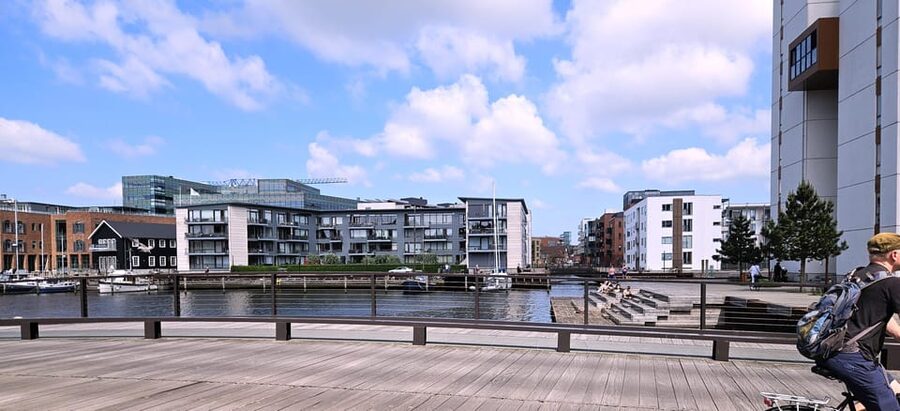
- The Port of Odense and the industrial past
- Storms Pakhus and the former industrial area
- H.C. Andersen Haven and the return to the center
- What the guide adds to the experience
- The 4-kilometer route and practical comfort
- Is $31 a fair price?
- Who should book this Odense city walk?
- Should you book it?
- FAQ
- Where does the Odense city walk begin?
- Where does the tour finish?
- How long is the tour?
- How far do you walk?
- Which languages are available?
- Is this a private tour?
- Can I cancel or pay later?
Key points at a glance
- A city told through change: Follow Odense from industrial center to planned green city.
- Old town to harbor: The route connects historic streets with the modern Port of Odense.
- A former six-lane road: See how a major traffic corridor was replaced by a new urban area.
- Small-group conversation: Ask questions and discuss Danish life instead of simply following a flag.
- About 4 kilometers on foot: Wear comfortable shoes and expect a steady city walk.
- English and German guiding: The tour is offered with a live guide in either language.
Why this Odense walk offers more than sightseeing
Most city tours help you identify the pretty parts of town. This one asks a different question: how does a city decide what it wants to become?
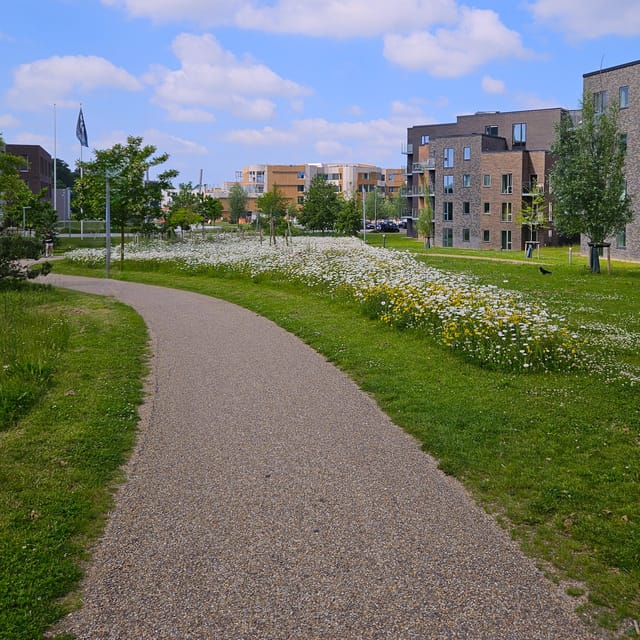
Odense is presented as a place moving from its industrial past toward a greener, more creative future. That sounds broad at first, but the walk gives the idea physical shape. You see where roads, harbor facilities, former industrial land, housing, and public spaces fit into the city’s plans.
I like this approach because urban change is easier to understand when you are standing in the middle of it. A guide can point out what used to be there, explain why a road was removed, and show how a new district is taking form. Those details often disappear from a standard brochure.
The discussion also reaches beyond construction projects. You can ask about the Danish education system, infrastructure, the local economy, housing, and everyday life. One particularly curious conversation even moved into the way people live in Greenland. That kind of detour depends on the guide and the questions in the group, but it shows the tour’s conversational nature.
This is not a performance built around grand speeches. It is closer to a walking discussion with a local who knows the city and wants you to understand its choices.
More Walking Tours in Denmark:
- Private Walking Grand Tour of Copenhagen
★ 5.0 · 3,953 reviews - Copenhagen Highlights Walking Tour
★ 5.0 · 2,324 reviews - Politically Incorrect Private Highlights Walking Tour
★ 5.0 · 1,244 reviews
Meeting at Overgade 3 in the old city
The walk begins at Overgade 3, on the pedestrian street in central Odense. Look for the small ruin in the area and a guide carrying a KnowledgeWalks sign. The meeting spot is described as compact, so finding the group should not be difficult.
Starting in the old part of the city is a smart choice. You begin with familiar urban clues: older streets, established buildings, and the traditional center of Odense. From there, the route gradually shifts your attention away from the historic core and toward the city’s newer ambitions.
That opening also gives the guide a useful point of comparison. You are not simply told that Odense has changed. You can see the contrast between the old center and the newer areas as the walk progresses.
Plan to arrive ready for a full walking route rather than a stop-and-start sightseeing circuit. The tour returns to Overgade 3, so you finish where you began. That makes it easier to fit into a day of exploring central Odense, since you will not need to arrange a ride back from the harbor.
Albani Torv and the first 30 minutes
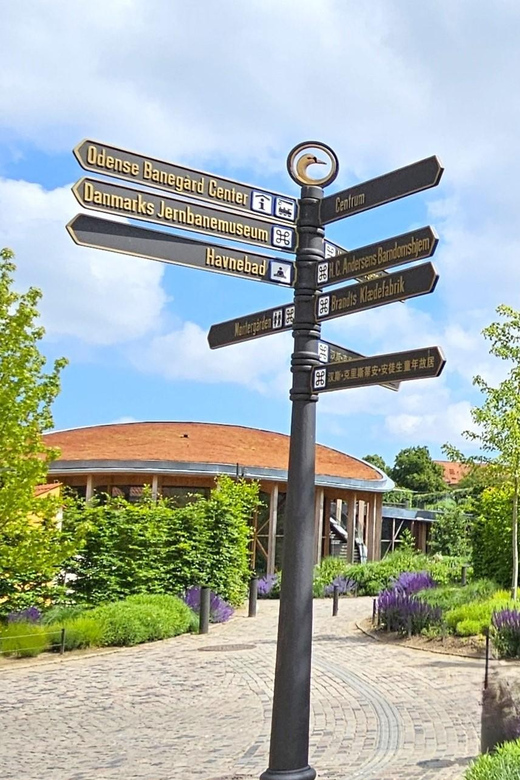
Albani Torv is the first named stop, with about 30 minutes of guided time. Here, the focus is less about ticking off an attraction and more about setting up the story of Odense’s development.
Expect the guide to connect the old center with the city’s changing priorities. The conversation can cover how urban areas are used, how people move through them, and how public decisions affect ordinary life. This is also where you can start asking questions that shape the rest of the walk.
I would pay close attention to old photographs if the guide brings them along. Past participants have particularly valued seeing images of earlier streets and comparing them with what is in front of them now. A photograph can make a planning decision much easier to grasp, especially when a whole road or district has changed.
The possible weakness of this stop is that it may feel less dramatic than a major church or palace. You are being asked to notice structure and policy, not just decoration. Give it time. The first part works as the foundation for everything that follows.
Donkey Republic and the way people move
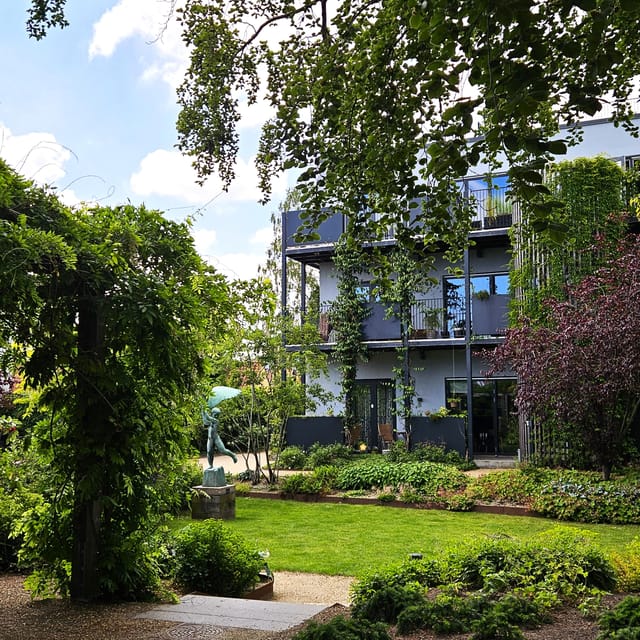
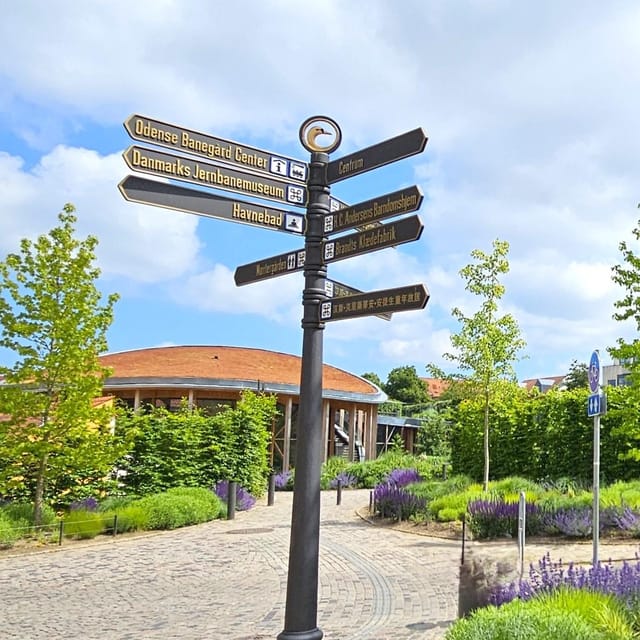
The route then reaches Donkey Republic, with another roughly 30-minute guided section. Donkey Republic is associated with bicycle rental, so this part provides a natural opening for discussing mobility and urban infrastructure.
The supplied information does not promise that you will rent or ride a bicycle. Treat this as an explanation of city movement, not a bike activity. You can expect the guide to use the setting to talk about how people get around and how transport choices affect the shape of a city.
This is one of the more useful themes for visitors because it moves the discussion from abstract planning to daily habits. A green city is not only about parks or attractive new buildings. It is also about how residents travel, where roads go, and how central areas are organized.
The guide’s role matters here. A friendly speaker who welcomes questions can help you connect Odense’s choices with your own city. German-speaking participants have found the language quality especially strong, while English is also available. Confirm your preferred language when booking, since the activity lists both English and German.
A few more Denmark tours worth putting side by side
- Copenhagen: 3-Hour City Highlights Bike Tour with Guide
★ 4.7 · 1,239 reviews - Copenhagen: Group Walking Tour – City Highlights – 2 Hours
★ 4.7 · 1,088 reviews - City Sightseeing Copenhagen Hop-On Hop-Off Bus Tour
★ 3.5 · 800 reviews - 3-hour Copenhagen City Highlights Bike Tour
★ 5.0 · 757 reviews
The Port of Odense and the industrial past
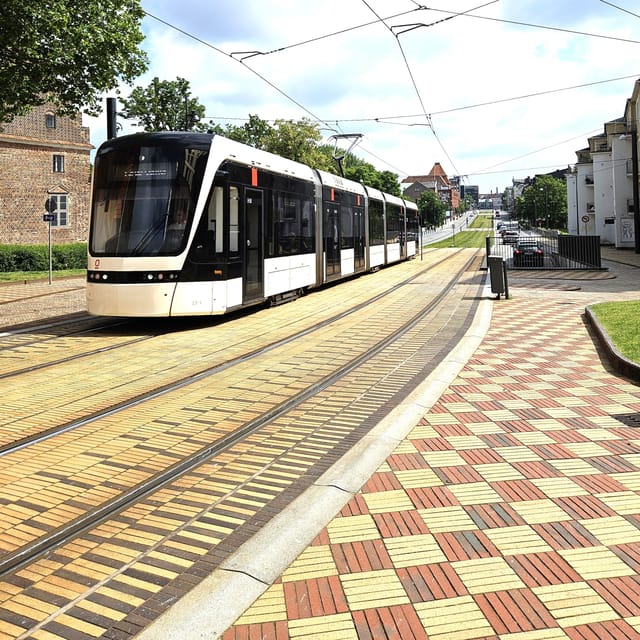
The Port of Odense is the clearest symbol of the city’s modern transformation. You spend about 30 minutes here, looking at an area that links Odense’s industrial identity with its newer plans.
Ports tell complicated stories. They support trade and work, but they can also separate parts of a city from one another. In Odense, the harbor helps explain how a place built around industry can rethink its central areas and make room for new uses.
The tour is not presented as a simple tale of old equals bad and new equals good. That is important. Redevelopment can bring attractive public areas and new housing, but it also raises questions about cost, access, and who gets to live in the center. The guide’s discussion of affordable housing for young people adds a practical human angle to the planning story.
I find this the strongest portion for anyone interested in how towns adapt. You are not only looking at finished buildings. You are also hearing about the decisions and goals behind them. Some sections may still feel like work in progress, since a completely new district is developing in the former industrial area.
Storms Pakhus and the former industrial area
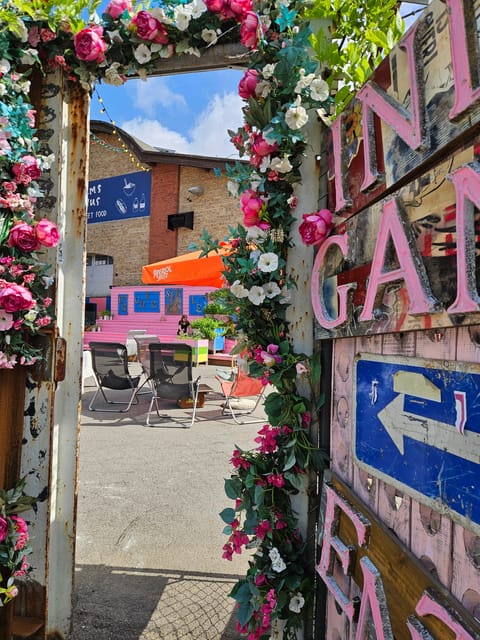
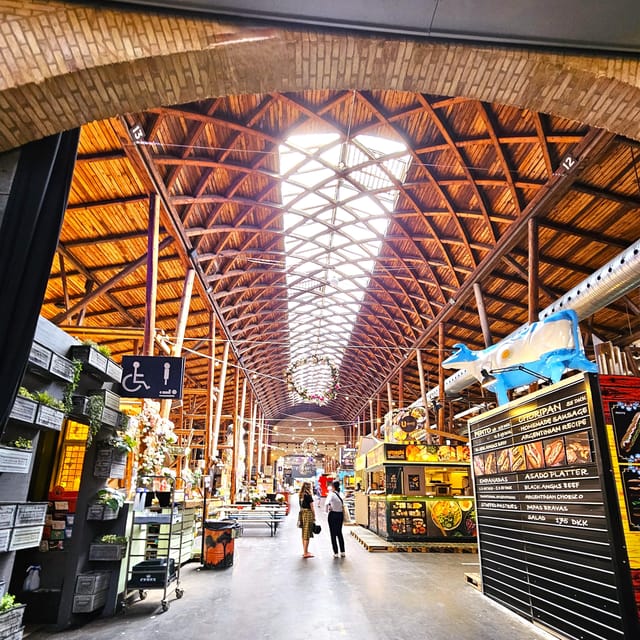
Storms Pakhus, also known as Odense Street Food, receives about 15 minutes on the route. This is a useful change of pace after the more policy-focused harbor discussion.
The food hall gives the walk a lived-in urban setting. Instead of looking only at plans and construction, you see a place where people gather, eat, and use a redeveloped area in ordinary ways. The tour does not include a meal, so do not arrive expecting a food tasting. The stop is part of the walking commentary.
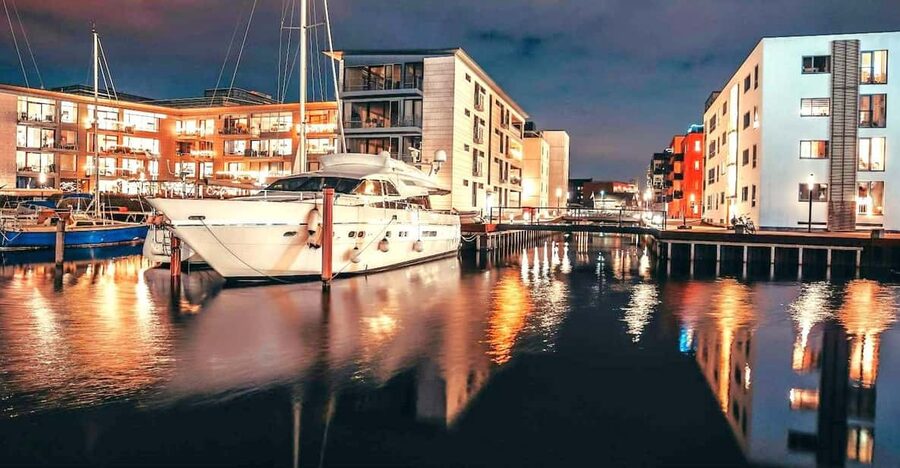
The former industrial district nearby is one of the places where Odense’s future is still taking shape. The guide can explain how old working areas are being reused and how the city hopes to attract creativity, younger residents, and new housing.
That aim deserves a realistic reading. Creating an appealing new district is not the same as making it affordable or lively at every hour. This tour is valuable because it can discuss those tensions rather than showing only polished results. You are encouraged to ask what works, what remains unfinished, and how residents fit into the plans.
H.C. Andersen Haven and the return to the center
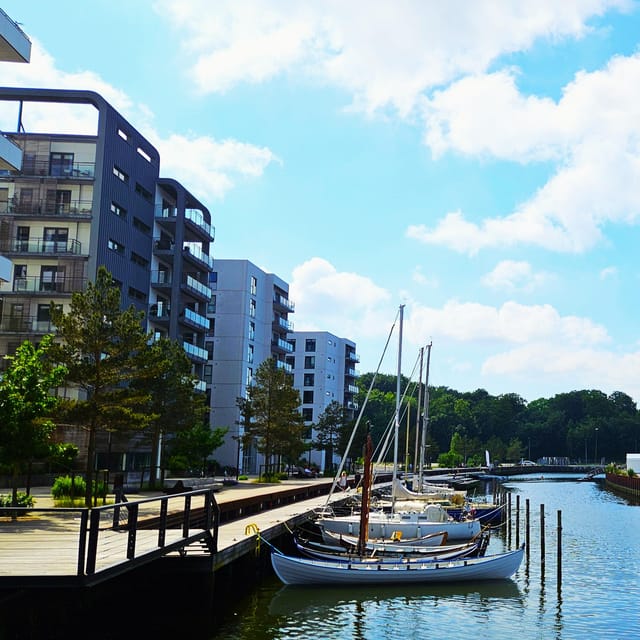
The final named stop is H.C. Andersen Haven, with about 15 minutes of guiding. The garden connects the walk back to the better-known Odense associated with Hans Christian Andersen.
This is not a separate fairy-tale tour. Instead, the garden offers a familiar cultural setting after a route focused on roads, housing, port facilities, and city policy. It reminds you that the new Odense exists alongside the historic and literary identity that draws many people here.
The return route has one of the most striking examples of recent change. You walk through a completed urban area built where a six-lane main road once ran through the city center. That single comparison captures the purpose of the tour: city planning is not just a diagram. It changes noise, movement, public space, and the way people experience the center.
The walk finishes at Overgade 3. Since the tour is circular, you can continue exploring nearby afterward without having to retrace a long route.
What the guide adds to the experience
The guide is the heart of this activity. The subject can become dry if it is delivered as a list of planning terms. The strongest accounts describe a warm, engaged guide who speaks excellent German, offers insider details, and keeps the conversation moving.
Jørn Asmussen is specifically thanked for explaining Odense’s development and answering every question. Johan is also named as a friendly guide who made the history of the city’s green change easy to follow. The important point for you is not memorizing a name. It is understanding that this is meant to be a local-led conversation, not an audio recording with fixed commentary.
Small groups make a real difference. You can ask why a road was removed, how young people might find housing, or what a new district means for residents. In a large group, those questions often get lost. Here, the guide has more room to respond and adapt.
Do keep your expectations sensible. Insider information does not mean access to private buildings or secret sites. It means context that you are unlikely to get from a basic sightseeing route, especially around infrastructure, economics, and local habits.
The 4-kilometer route and practical comfort
The walk lasts two hours and covers about 4 kilometers. The activity describes this as roughly 5,500 steps, so comfortable shoes are the obvious choice.
The route is a city walk rather than a hike. Still, you should be comfortable walking continuously through central streets and between the old center, harbor, former industrial areas, and newer districts. If you prefer frequent indoor stops, this may not be the right format.
The published route gives around 30 minutes each to Albani Torv, Donkey Republic, and the Port of Odense, followed by about 15 minutes at Storms Pakhus and H.C. Andersen Haven. Those timings add up to more than the stated two-hour duration, so I would treat them as approximate attention points rather than a strict schedule.
The tour is available in English or German and is described as suitable for small groups. It is also possible to reserve now and pay later, with free cancellation up to 24 hours before the start for a full refund. Check the available departure time when booking, since start times can vary.
Is $31 a fair price?
At $31 per person, this is not the cheapest way to spend two hours in Odense. You can walk through the center on your own for free. The value comes from interpretation, not transportation, entry tickets, or included food.
For me, the price is reasonable if you want to understand the city rather than simply photograph it. A local guide helps you connect the harbor, former industrial sites, bicycle infrastructure, housing goals, and the removal of the six-lane road. That is a lot of context to assemble by yourself in a short visit.
The value is especially strong for people interested in architecture, planning, sustainability, Danish society, or the practical side of city life. It is also useful after you have spent a day or two exploring independently, since the commentary can pull separate impressions into one clear story.
If your main goal is H.C. Andersen, medieval buildings, or a broad introduction to Odense’s top attractions, you may prefer a conventional city tour. This walk assumes you want a more focused subject and does not pretend to cover every major sight.
Who should book this Odense city walk?
I would recommend it to curious visitors who like asking why. It suits adults, students, architecture fans, urban planners, and anyone who wants to compare Danish city policy with changes at home.
It is also a good choice if you have already seen the obvious center and want a second layer. The route gives you a reason to visit areas that might otherwise seem peripheral, especially the port and former industrial district.
Families can enjoy it if children are happy walking and listening, but the subject is not built as a children’s entertainment tour. The same applies to visitors seeking a fast overview. The guide may answer questions about education, economics, housing, or even Greenlandic life, but that wider conversation means the route is less tightly focused on monuments.
German speakers have a strong reason to consider it, thanks to the praise for the guide’s German. English speakers are also accommodated. Small groups make the experience better for anyone who prefers discussion over a crowded procession.
Should you book it?
Book this walk if you want the reasons behind Odense’s changes, not just the names of its sights. The combination of old center, harbor, former industrial land, street-food hall, and rebuilt city-center road gives you a clear two-hour story about a city trying to become greener and more livable.
Skip it if you want indoor attractions, a short route, or a tour centered mainly on Hans Christian Andersen. At $31, the purchase makes sense when you value local explanation and conversation. For a thoughtful visitor, it can add the missing context that turns a pleasant stop in Odense into a city you actually understand.
FAQ
Where does the Odense city walk begin?
The meeting point is Overgade 3, 5000 Odense, on the pedestrian street. Look for the small ruin and a guide carrying a KnowledgeWalks sign.
Where does the tour finish?
The walk returns to Overgade 3, the same place where it begins.
How long is the tour?
The tour lasts two hours.
How far do you walk?
You walk approximately 4 kilometers, described as about 5,500 steps.
Which languages are available?
The live guide can conduct the tour in English or German.
Is this a private tour?
The activity is offered in a small-group format. The supplied information does not state that every departure is private.
Can I cancel or pay later?
You can cancel up to 24 hours in advance for a full refund. Reserve now and pay later is also available, so you do not need to pay at the time of booking.
Newly added in Denmark
- Castles of Kronborg and Frederiksborg from Copenhagen by Car★ 4.5 · 3 reviews
- Understanding Klaksvík: A Self-guided city tour in KlaksvÍk★ 5.0 · 3 reviews
- Private Transfer Copenhagen Airport CPH to Copenhagen by Sedan★ 4.5 · 3 reviews
- Copenhagen: Old Town and Nyhavn Private Family Tour★ 4.7 · 3 reviews
- Aarhus Self guided Mystery hunt Sabotage in Danish★ 4.5 · 3 reviews
- Copenhagen: Evening Gourmet Walk with Food & Drinks Tasting★ 5.0 · 3 reviews
- Súðuroy Island Day Tour, Faroe Islands★ 4.5 · 3 reviews
- Castles of Kronborg and Frederiksborg from Copenhagen by Car★ 4.3 · 3 reviews
City Tours, compared.
Group Walking Tour – City Highlights – 2 Hours
Read our review →
City Sightseeing Copenhagen Hop-On Hop-Off Bus Tour
Read our review →

City Card with 40+ Attractions & Hop-On/Off Bus
Read our review →
Browse the lists this tour appears in