
Reviewed · COPENHAGEN TOURS
The Art of Baking Danish Pastry
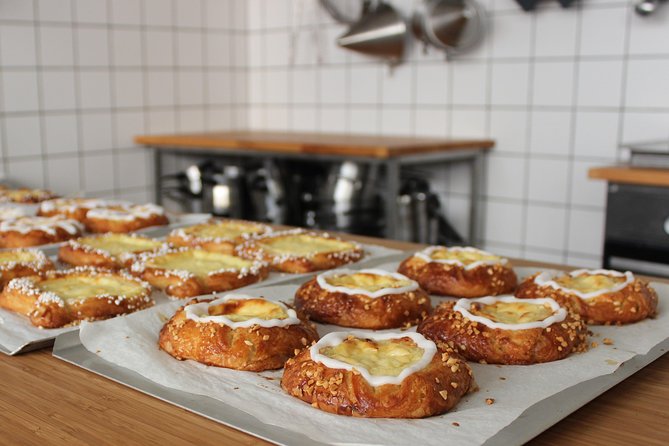
Come hungry, leave with pastry. This 3.5-hour Copenhagen baking class turns a morning in Frederiksberg into a hands-on lesson in Danish baking, with professional instruction, coffee, and a remarkable amount of food to carry away. I like the clear, practical format, and I like that you receive the recipes afterward, so the experience can continue in your own kitchen.
The class is limited to 12 people, which gives the chef time to check your dough and help when your hands are moving faster than your understanding. My main caution is the pace: Chef Frederik Terrible explains things clearly, but he can talk quickly when the dough is on the bench, so listen closely and ask questions at once. Also, you will probably make far more pastry than you can eat in one sitting.
In This Review
- Key points to know before you book
- Why this Copenhagen baking class is worth your morning
- Arriving in Frederiksberg at 9:00 am
- Inside the Terrible French Pastry School
- Kneading, rolling, and folding the dough
- Making cinnamon rolls, Spandauer, and twists
- Cinnamon rolls, or kanelsnegle
- Spandauer Danish pastry
- Poppy seed and sesame seed twists
- Coffee, tasting, and two boxes of pastry
- How much value do you get for $117.23?
- What the class does especially well
- A few drawbacks to keep in mind
- Who should book this baking experience?
- Should you book The Art of Baking Danish Pastry?
- FAQ
- Where does the Danish pastry class take place?
- What time does the class begin?
- How long does the experience last?
- What pastries will I make?
- Is the class taught in English?
- How many people can join the class?
- Do I receive the recipes afterward?
- Can I cancel or change my booking?
Key points to know before you book
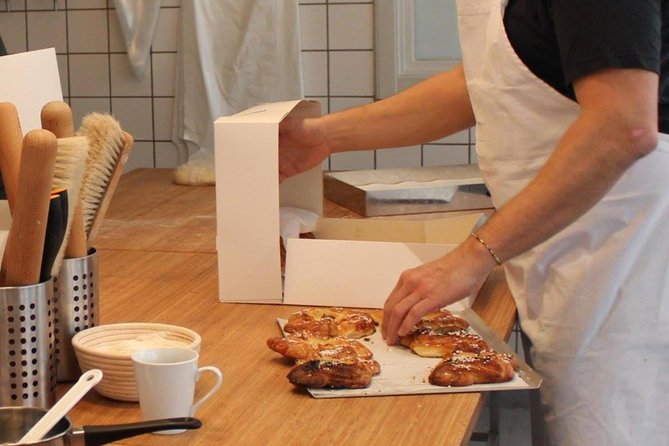
- You make several pastries by hand: The class includes cinnamon rolls, Spandauer Danish pastry, and poppy seed and sesame seed twists, with some sessions producing four varieties.
- Chef Frederik Terrible leads the class: His teaching style is organized, funny, patient, and direct, with plenty of practical advice.
- The group is small: A maximum of 12 people keeps this from feeling like a demonstration behind a glass wall.
- Expect a generous haul: Many participants leave with around a dozen pastries each, and some report taking home two full boxes.
- The class begins at 9:00 am: You get a useful morning activity and still have most of the day for Copenhagen.
- The location is in Frederiksberg: You must find your own way to Grundtvigsvej 10A, and the entrance can be slightly confusing from the street.
Why this Copenhagen baking class is worth your morning
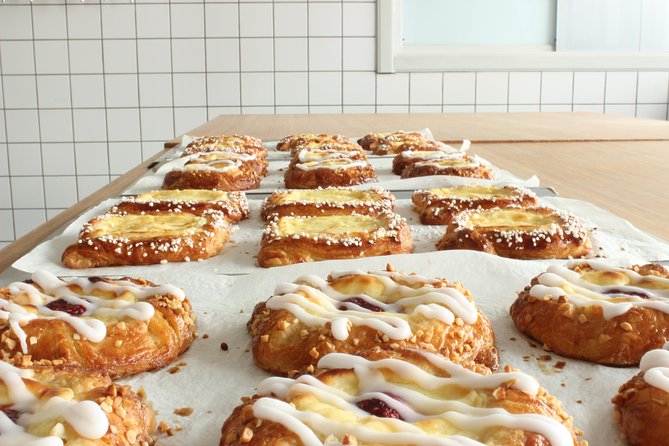
Danish pastry looks simple when it sits neatly behind a bakery window. In practice, the dough asks for care. You need to knead it properly, roll it evenly, fold it without crushing the layers, and shape each pastry so it bakes well.
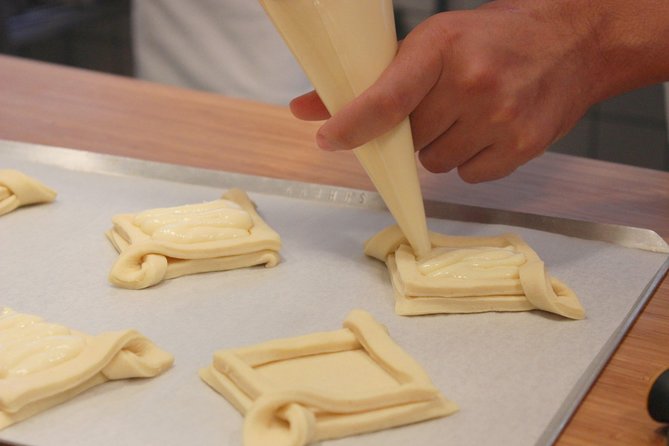
That is the real value of this class. You are not just watching a chef decorate finished pastries. You are learning the basic movements that make laminated dough work. The chef demonstrates each stage, then you repeat it at your own station with help nearby.
I especially like the mix of instruction and action. You are busy for most of the 3.5 hours, so the time does not drag. One moment you are listening to a demonstration, and soon after you are rolling dough, adding filling, twisting strips, or shaping a pastry that looks increasingly like something from a Copenhagen bakery.
The class also works well for beginners. You do not need to arrive as a serious baker. The preparation is organized to make the steps manageable, and the chef gives directions in a clear sequence. If you already bake, you can still pick up useful methods and recipe ideas.
Other Copenhagen tours people line up alongside this one:
- Copenhagen: Canal Cruise with Guide
★ 4.6 · 9,115 reviews - Copenhagen: Hop-On Hop-Off Bus Tour with Boat Tour Option
★ 3.9 · 4,122 reviews - Private Walking Grand Tour of Copenhagen
★ 5.0 · 3,953 reviews
Arriving in Frederiksberg at 9:00 am
The class begins at Grundtvigsvej 10A, 1864 Frederiksberg, west of Copenhagen’s central area. Frederiksberg is easy to reach by public transportation, but give yourself enough time to get oriented before the 9:00 am start.
The entrance has caused some confusion because map applications may point you toward the wrong side of the street. Check the address carefully and look around the building rather than trusting the first pin you see. One helpful detail from past participants is that the actual entrance is around the other side of the street from where some map directions suggest.
This is not a hotel pickup activity. You need to make your own way there, and the class ends at the same meeting point. That makes the morning simple once you arrive, but it also means a late start can cut into the first demonstration.
One person arrived late and still caught up with help from the chef. I would not use that as a reason to arrive late yourself. Dough work is easiest when you hear the first instructions, especially if you have never handled Danish pastry before.
Inside the Terrible French Pastry School
The listed stop is the Terrible French Pastry School, operated by Terrible, Konditorskole. The name may sound more dramatic than the class itself. The atmosphere is friendly and focused, with a professional kitchen setup and room for a small group to work.
Chef Frederik Terrible is central to the experience. His style combines firm direction with humor. He keeps the class moving, but he also checks individual work and steps in when someone needs help. That balance matters in a baking class because too much talking can leave you standing around, while too little instruction can leave you guessing.
You should expect a busy morning rather than a relaxed coffee workshop. There is little wasted time. The chef demonstrates, you work, and the class moves to the next stage. The pace is part of the fun, but it rewards close attention.
If you are baking with children or a mixed-age family group, the hands-on format gives everyone a job. One family enjoyed the class with daughters, and the small group made it easier for the chef to help people catch up. The activity also suits couples and friends because you can compare shapes, fillings, and results as you work.
Kneading, rolling, and folding the dough
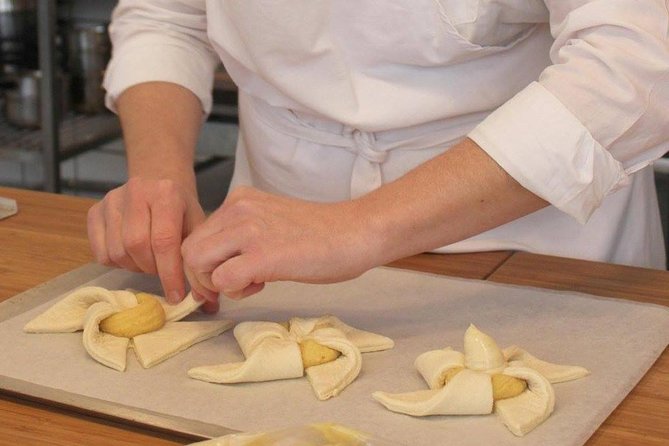
The class begins with essential techniques. You learn how to knead, roll, and fold the dough before moving into the individual pastries.
These steps may sound basic, but they are where much of the skill lies. Kneading affects the dough’s structure. Rolling determines thickness. Folding creates the layers that give Danish pastry its light, crisp texture. A small mistake at this point can affect every pastry that follows.
The chef’s demonstrations give you a visual guide, then you practice the movements yourself. This hands-on sequence is more useful than simply receiving a printed recipe because you can see how the dough should look and feel at each stage.
Listen carefully during the folding instructions. One participant noted that the chef speaks quickly while the class is assembling pastries. That is not a serious problem, since questions are welcome and help is close by, but you should not hesitate to pause and ask for clarification.
The class is also generous with ingredients and fillings. You are not making one tiny sample for a photograph. You produce enough pastry to enjoy during the class and take away afterward.
A different way to spend the same afternoon in Copenhagen:
- From Copenhagen: Lund and Malmö 2-Country Tour
★ 4.7 · 2,772 reviews - Copenhagen Highlights Walking Tour
★ 5.0 · 2,324 reviews - Copenhagen: Highlights 3 Hour Bike Tour with a Local Guide
★ 4.8 · 2,312 reviews - Hamlet and Sweden Tour – Two Countries in one day !
★ 5.0 · 2,223 reviews
Making cinnamon rolls, Spandauer, and twists
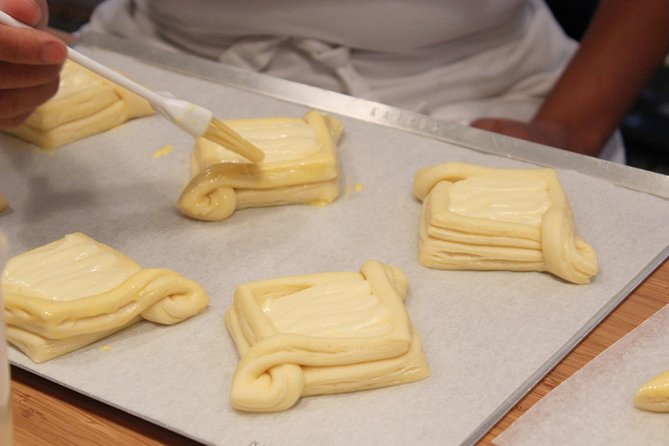
The exact selection can vary, but the sample menu includes three classic Danish pastries.
Cinnamon rolls, or kanelsnegle
Cinnamon rolls are a familiar starting point, but Danish-style dough gives them a different character from a standard soft breakfast roll. You work with the prepared pastry, add the cinnamon filling, shape the rolls, and prepare them for baking.
This is a good pastry for learning how shape affects the final result. Roll too tightly and the layers may not open as expected. Shape too loosely and the filling can escape. You get to see how small choices show up in the baked product.
Spandauer Danish pastry
Spandauer is one of the classic Danish forms, often recognized by its folded shape and central filling. It gives you practice with shaping and sealing the dough while keeping the pastry attractive and functional.
This part of the class is useful because Danish pastry is not only about taste. It is also about structure and presentation. You learn how to make something that looks deliberate, even if your first attempt is not perfectly symmetrical.
Poppy seed and sesame seed twists
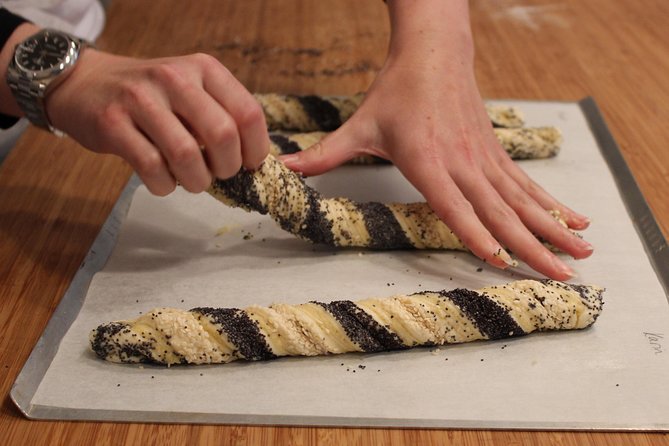
The poppy seed and sesame seed twists, called frøsnapper, are a particular favorite. Some versions also include marzipan, which adds a rich almond flavor beneath the seeds.
The twisting process makes this pastry especially enjoyable to prepare. You cut and shape the dough, then create the twist that gives it its distinctive appearance. It is also a good example of how a simple topping and shape can make a pastry feel distinctly Danish.
Past sessions have included four different pastry types, so the precise number can change. You should plan on making several varieties rather than a single recipe repeated throughout the morning.
Coffee, tasting, and two boxes of pastry

Once the pastries have baked, you sit down with tea and coffee and taste the results. This is the natural payoff of the class, but it is not the only reward. You also get to compare how different shapes and fillings behave in the oven.
Plan your appetite carefully. Several people have said they made around 12 pastries each, while another group left with 36 pastries among three participants. Some participants received two full boxes to carry away.
That quantity is generous, but it creates a practical issue. You may not be able to eat everything before it loses its freshness, especially if you schedule the class near the end of your Copenhagen stay. One couple shared its pastries with a larger holiday group, and another left a batch at a hotel.
For that reason, I prefer this class early or midway through your visit. You have more time to enjoy the results, share them with friends, or use them as a sweet breakfast the next day. If you book it on your final morning before a flight, think about how you will carry and store a large quantity of baked goods.
The recipes are emailed after the class. That detail adds real value. You are not left with only a pleasant memory and a box of leftovers. You can try the methods at home and repeat the pastries while the techniques are still fresh in your mind.
How much value do you get for $117.23?
At $117.23 per person, this is not a cheap breakfast. You are paying for a long, small-group class, professional instruction, ingredients, drinks, several pastries, and recipes to use later.
The value makes more sense if you compare it with the cost of separate Copenhagen food activities. A bakery visit gives you something delicious, but this class gives you a skill and a full morning of participation. You also take home enough pastry to share, which is unusual for a class at this price.
I would not book it simply because you want to eat one excellent Danish. You can do that for much less at a bakery. Book it because you want to understand how Danish pastry is made and enjoy the social side of working alongside other people.
The maximum group size of 12 helps justify the price. You are not one face in a large crowd. The chef can inspect your dough, correct your shaping, and answer questions. That personal attention is especially valuable if you are a novice.
The 99 percent recommendation rate and 5 out of 5 score suggest very strong satisfaction, but your enjoyment will depend on your attitude. You need to like following instructions, working with your hands, and producing a lot of food. If you want a slow, quiet morning, this may feel too active.
What the class does especially well
The teaching receives the strongest praise. Chef Frederik is described as organized, patient, funny, and careful with explanations. Those qualities matter more than fancy surroundings in a baking class.
The class also succeeds because it is well prepared. Participants report that the advance preparation made the process easier for beginners. You can focus on learning the dough and shaping the pastries instead of waiting for every ingredient to appear.
The amount of food is another major strength. You are not sent home with one token pastry. You make enough to share with family, friends, or fellow members of your group.
I also like the international, social quality of the morning. The small class brings together people who may not otherwise meet in Copenhagen. Baking gives you an easy reason to talk, compare results, and laugh at imperfect shapes.
Finally, the recipes extend the experience beyond the trip. The class teaches a method you can practice at home, which makes it more meaningful than a one-time tasting.
A few drawbacks to keep in mind
The morning is fast-paced. The chef explains the next step while you are still finishing the current one, so you must stay alert. If you prefer leisurely instruction with lots of pauses, you may feel rushed.
The entrance can be difficult to find. Build in extra time and verify the address before setting out. The activity is near public transportation, but the final approach still requires attention.
The pastry quantity can be a problem rather than a perk. You may take home two boxes, and that is wonderful if you have a family waiting for treats. It is less convenient if you are staying in a small room, moving between hotels, or flying home soon.
The cancellation terms are strict. The experience is non-refundable and cannot be changed after booking, except that if the minimum group size is not met and the provider cancels, you will be offered another option or a full refund. Check your schedule carefully before committing.
Who should book this baking experience?
I would recommend it to food lovers, curious home bakers, couples, families, and friends who want something more active than a standard city tour. It is especially good for first-time bakers because the chef breaks the process into clear steps.
It also suits anyone looking for a morning away from central Copenhagen. Frederiksberg gives you a change of setting, while the 9:00 am start leaves the afternoon open for museums, shopping, or a long lunch.
You may want to skip it if you have very limited luggage space, no way to share a large amount of food, or a schedule that makes an inflexible booking risky. It is also not the best pick if you want a polished pastry demonstration with no hands-on work.
Should you book The Art of Baking Danish Pastry?
Yes, if you want to do something rather than simply eat something. The combination of patient instruction, a small group, several pastry styles, coffee, recipes, and a huge box of treats gives the morning strong value for a food-focused visit to Copenhagen.
Book early if your dates are fixed, since the class is often reserved well in advance. Then schedule it near the beginning or middle of your stay, leave extra time to find the entrance, and arrive ready to listen closely.
You will work hard for your pastry, but that is the point. By the end, you understand more about Danish baking, you have something delicious to share, and you may have a new recipe waiting for you at home.
FAQ
Where does the Danish pastry class take place?
The class takes place at the Terrible French Pastry School, at Grundtvigsvej 10A, 1864 Frederiksberg, Denmark.
What time does the class begin?
The start time is 9:00 am.
How long does the experience last?
The class lasts approximately 3 hours and 30 minutes.
What pastries will I make?
The sample menu includes cinnamon rolls, called kanelsnegle, Spandauer Danish pastry, and poppy seed and sesame seed twists, called frøsnapper. Some sessions include four pastry types.
Is the class taught in English?
Yes. The experience is offered in English.
How many people can join the class?
The activity has a maximum of 12 participants.
Do I receive the recipes afterward?
Yes. The recipes used in the class are emailed to you after the experience.
Can I cancel or change my booking?
The experience is non-refundable and cannot be changed for any reason. If the provider cancels because the minimum number of participants is not reached, you will be offered another date or experience, or a full refund.
Newly added in Copenhagen
- Private Transfer Copenhagen Airport CPH to Copenhagen by Sedan★ 4.5 · 3 reviews
- Castles of Kronborg and Frederiksborg from Copenhagen by Car★ 4.5 · 3 reviews
- Copenhagen: Old Town and Nyhavn Private Family Tour★ 4.7 · 3 reviews
- Copenhagen: Evening Gourmet Walk with Food & Drinks Tasting★ 5.0 · 3 reviews
- Copenhagen Craft BeerWalk City Center★ 4.4 · 3 reviews
- The Forgotten Giants Private Tour★ 5.0 · 3 reviews
- Departure by Luxury Vehicule Copenhagen to Copenhagen airport CPH★ 5.0 · 3 reviews
- Copenhagen: Express Walk with a Local in 60 minutes★ 4.6 · 3 reviews
Copenhagen Tours, compared.

Hop-On Hop-Off Bus Tour with Boat Tour Option
Read our review →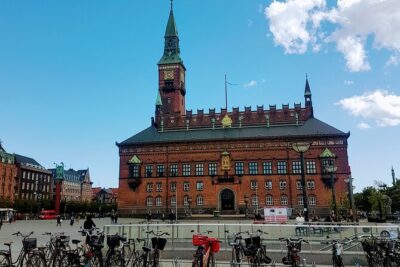

Highlights 3 Hour Bike Tour with a Local Guide
Read our review →
Hamlet and Sweden Tour – Two Countries in one day !
Read our review →
Browse the lists this tour appears in