
Reviewed · CANAL & HARBOUR CRUISES
Sights & Gems: Medieval Copenhagen & Nyhavn with a local host
Copenhagen reveals itself on foot. This two-hour walk links the Marble Church, Rosenborg Castle, Christiansborg Palace, and Nyhavn in a compact route that works well when your time is short. I like the small group, capped at 12 people, and the way the walk mixes famous sights with quieter streets such as Krusemyntegade. The main tradeoff is that most stops are viewed from outside, so this is an orientation tour rather than a palace-and-museum visit.
I also like the finish at Nyhavn, where you can stop for coffee or a pastry after the guide leaves. The guides appear to be a real strength: Maybritt has been praised for clear English and strong city knowledge, while another guide, Maybee, adapted a rainy walk by moving the history talk into a warm café. You should still expect a fair amount of walking and the occasional weather challenge.
In This Review
- Key points to know before booking
- Why this Copenhagen walk works on a short visit
- Starting beneath the Marble Church
- Nyboder and Krusemyntegade: a quieter side of the city
- Rosenborg Castle in Copenhagen’s oldest royal garden
- The Round Tower and Copenhagen’s curious side
- Gråbrødretorv and Amagertorv
- Christiansborg, where palace and government meet
- Nikolaj Church and Kongens Nytorv
- Finishing beside the colorful Nyhavn canal
- What the $28.43 price really buys you
- Who should book this walk?
- FAQ
- How long does the Copenhagen walking tour last?
- Where does the tour begin?
- Where does the tour end?
- What language is the tour offered in?
- How large is the group?
- Are entry tickets included?
- Will I go inside Rosenborg Castle or Christiansborg Palace?
- Is the tour suitable for someone with limited fitness?
- Can I cancel for a full refund?
- Should you book it?
Key points to know before booking
- Two hours, ten central Copenhagen stops: The route covers royal buildings, old squares, churches, a naval quarter, and Nyhavn without requiring public transport between sights.
- Small group capped at 12: This gives the walk a more personal feel and makes it easier to hear the guide in busy parts of the center.
- Mostly exterior sightseeing: Entry tickets are not included at Rosenborg Castle, Christiansborg Palace, the Round Tower, Nyboder’s Memorial Rooms, or Nikolaj Kunsthal.
- A useful first-day introduction: The walk gives you a map in your head, plus ideas for places to return to later.
- Ends in Nyhavn: You finish beside cafés and restaurants, with no need to rush away for your next snack.
- Good value at $28.43: For a local-led introduction to central Copenhagen, the price is modest, especially if you make use of the guide’s context and follow-up suggestions.
Why this Copenhagen walk works on a short visit
Copenhagen is easy to walk around, but its sights are spread through several distinct pockets. A first-time visitor can spend half a day wandering between them and still miss the stories that connect the royal quarter, the old center, and the harbor.
This route solves that problem in a practical way. You begin at Frederiksstaden, pass through the old town, cross toward Slotsholmen, and finish at Nyhavn. The order gives you a broad introduction without turning the experience into a forced march.
The pace is built around brief stops, usually about five minutes at each named sight. That means you will hear the essential story, take photographs, and keep moving. I see this as a good balance for a first look, but not enough time for long interior visits or extended free time at any single monument.
A local guide adds value here because Copenhagen’s buildings can look lovely without explaining themselves. The Marble Church’s long construction, Rosenborg’s royal role, the Round Tower’s scientific purpose, and Christiansborg’s modern political function all make more sense when someone connects the details.
More Canal and Harbour Cruises in Copenhagen:
- Copenhagen: Canal Cruise with Guide
★ 4.6 · 9,115 reviews - Copenhagen Sightseeing Classic Canal Tour With Live Guide
★ 4.5 · 1,906 reviews - Social Sailing – Copenhagen Canal Tour – Captain’s Favorite
★ 5.0 · 1,610 reviews
Starting beneath the Marble Church
The meeting point is between the stairs leading down to the Marble Church Metro Station, beside a 7-Eleven. That is a sensible place to begin because it is easy to identify and close to public transport.
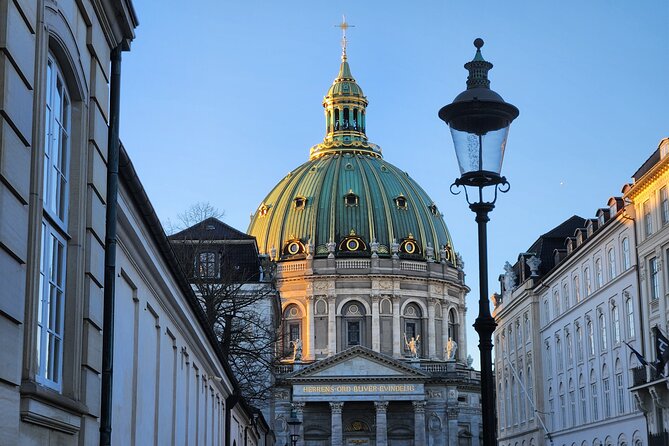
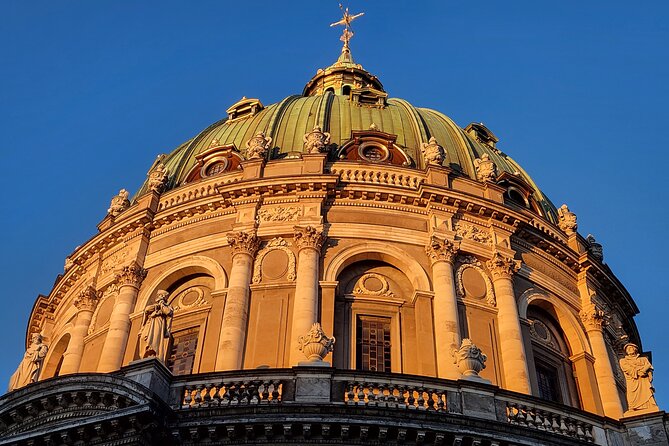
Frederik’s Church, usually called the Marble Church, is an elegant opening sight. Its huge dome is the largest in Scandinavia, and the building was inspired by St. Peter’s Basilica in Rome. Construction took more than 150 years, which gives the guide plenty to explain beyond the usual architectural praise.
The church is built from Norwegian marble, with detailed work that rewards a slow look upward. You will spend only about five minutes here, and admission is free, but the short pause is enough to understand why this is one of Copenhagen’s key landmarks.
The surrounding Frederiksstaden district adds useful context. This is the royal quarter, and the church helps set the tone for the grand streets and palace connections that follow. If you arrive early, this is a good place to get your bearings before the walk begins.
Nyboder and Krusemyntegade: a quieter side of the city
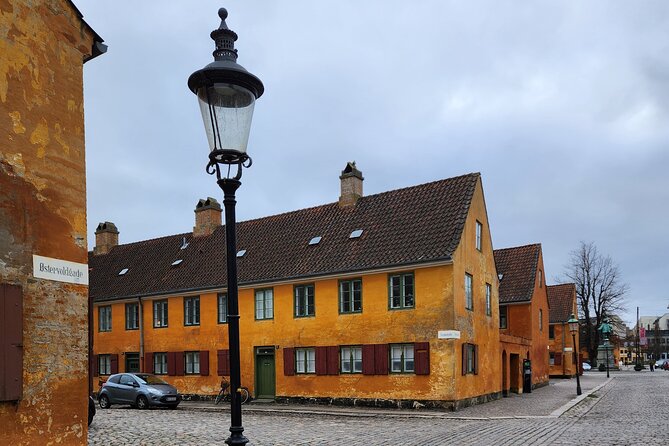
The route then turns toward Nyboder, a naval neighborhood founded by King Christian IV in 1631. Its original purpose was practical: housing for Denmark’s naval families. That background gives the area a different character from the royal squares and formal churches.
At Nyboder’s Memorial Rooms, you can look through the windows at preserved museum spaces. Original artifacts, uniforms, and maritime objects show something of daily life for sailors and their families. The stop lasts around five minutes, and admission is not included, so you should think of it as an exterior glimpse rather than a full museum visit.
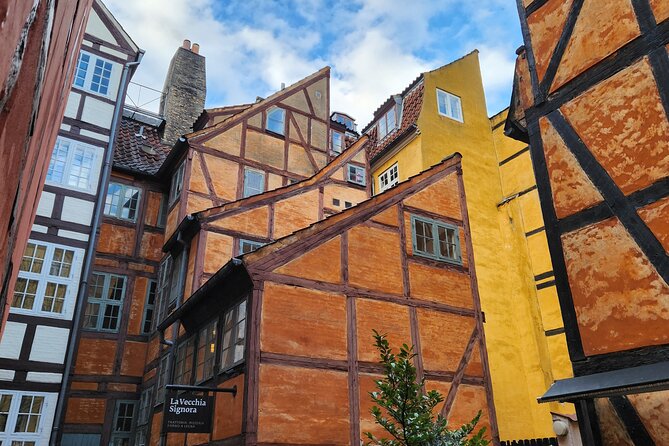
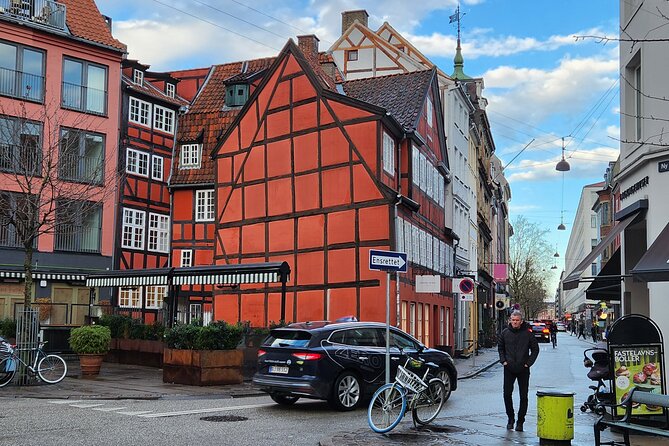
The nearby Krusemyntegade is one of the most appealing parts of the walk. Its colorful historic houses and quiet atmosphere make a pleasant contrast with Copenhagen’s grander monuments. The street also gives you a better sense of how the naval quarter functioned as a lived-in community.
This is the sort of stop I value on a city walk. You get more than a photograph of a famous building. You get a small piece of ordinary urban life, linked to the sailors who helped shape Denmark’s maritime past.
Rosenborg Castle in Copenhagen’s oldest royal garden
Rosenborg Castle appears next. Built by King Christian IV in the early 1600s, this Renaissance palace looks like a storybook castle, with strong photographic appeal even from outside.
The castle sits in Kongens Have, the King’s Garden, described as Denmark’s oldest and most elegant royal park. The walk uses the gardens as a calm setting for a short look at the palace and its royal connections. You will not enter the castle on this experience, and admission is not included.
That limitation matters. Rosenborg contains important royal interiors and collections, but this walk is designed to show you where the castle is and why it matters. If you want to see the inside, you will need to return on your own and buy a separate ticket.
For a short introductory tour, the exterior stop makes sense. You get the setting, the architecture, and a story about Christian IV without losing too much time indoors. The garden also offers a welcome change of pace before the route returns to the denser old center.
A different way to spend the same afternoon in Copenhagen:
- Copenhagen: Hop-On Hop-Off Bus Tour with Boat Tour Option
★ 3.9 · 4,122 reviews - Private Walking Grand Tour of Copenhagen
★ 5.0 · 3,953 reviews - From Copenhagen: Lund and Malmö 2-Country Tour
★ 4.7 · 2,772 reviews - Copenhagen Highlights Walking Tour
★ 5.0 · 2,324 reviews
The Round Tower and Copenhagen’s curious side
The Round Tower, or Rundetårn, is another Christian IV project, completed in 1642. It was built as a royal observatory and is described as Europe’s oldest functioning observatory.
From outside, you can admire the unusual spiral design and copper-clad roof. The guide can explain how this building reflects Copenhagen’s interest in science and innovation, not just royal display.
Again, the stop is brief and exterior only. The interior route and observatory are not part of the included experience. If climbing or entering the tower is high on your list, treat this walk as a preview and plan separate time afterward.
I like the way the Round Tower broadens the tour. Copenhagen is not presented only as a city of kings, churches, and canals. This stop adds learning, measurement, and curiosity to the story.
Gråbrødretorv and Amagertorv
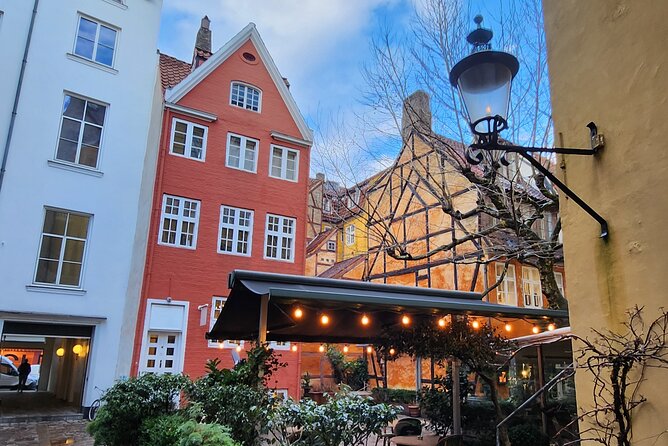
Gråbrødretorv is one of the prettiest pauses in the old center. Historic townhouses in several colors surround the square, while large trees and cafés create a softer atmosphere than the nearby shopping streets.
Admission is free, and the stop lasts about five minutes. You will have time to look around and note the cafés and restaurants, but not enough time for a proper meal. I would mark the square on your phone if you want to return later for a slower break.
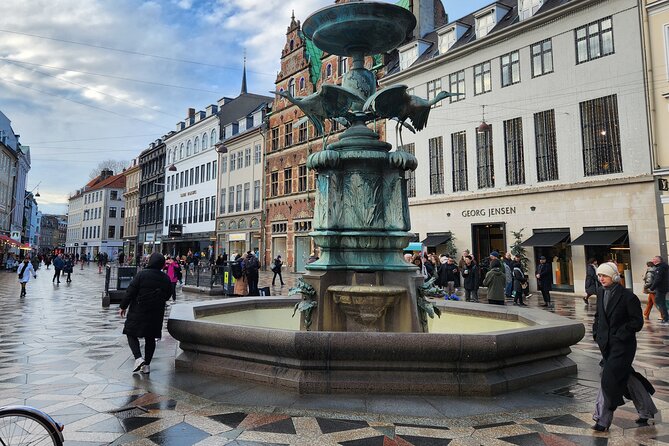
The route continues to Amagertorv and the Stork Fountain in the heart of Strøget. This is a more active part of town, with shopping, people watching, and grand city architecture. The fountain gives the guide a clear meeting point and a chance to explain how Copenhagen’s old center functions today.
These two squares work well together. Gråbrødretorv gives you charm and quiet, while Amagertorv shows the city in motion. The contrast helps you understand the center as a place where old buildings and everyday city life share the same streets.
Christiansborg, where palace and government meet
Christiansborg Palace is one of the most important stops because it connects Copenhagen’s royal past with Denmark’s present political system. The complex sits on Slotsholmen and houses Parliament, the Supreme Court, and the Royal Reception Rooms.
That combination is unusual. The building brings all three branches of government together under one roof, while also carrying more than 800 years of royal foundations and stories. Your guide can point out the grand façade and copper spire, then explain the fires, rulers, and political changes tied to the site.
You see Christiansborg from outside, and entry is not included. This is another place where the walk gives you the essential context but leaves the interior experience for a separate visit.
The five-minute pause may feel short for such a major site, but it is enough to place the palace on your map. If you later visit the reception rooms or other parts of the complex, you will already understand why the building matters.
Nikolaj Church and Kongens Nytorv
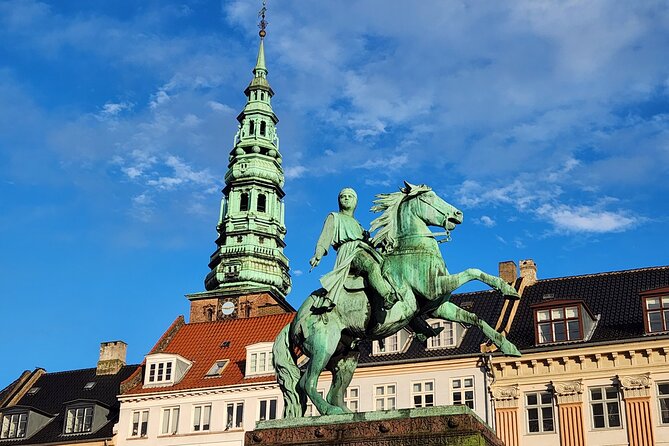
Nikolaj Church, now known as Nikolaj Kunsthal, offers another quick architectural stop. The original church dates from the 1200s, and its distinctive spire helps define the Copenhagen skyline.
The building is viewed from outside, and admission is not included. That is useful to know if you are hoping to visit an exhibition. The guide’s role here is to provide a glimpse of the city’s older religious architecture and its later cultural life.
From there, the route heads to Kongens Nytorv, Copenhagen’s grand central square. The Royal Danish Theatre, Hotel d’Angleterre, the equestrian statue of King Christian V, and the road toward Nyhavn all gather around this elegant open space.
Kongens Nytorv is a useful transition point. You have moved from medieval streets and government buildings toward the harbor, and the square shows Copenhagen at its most formal and polished.
Finishing beside the colorful Nyhavn canal
Nyhavn is the natural finale. Its colorful 17th-century townhouses, old wooden ships, and canal-side cafés create the picture many people carry home from Copenhagen.
The area began as a working trading harbor filled with sailors and cargo. It later became a social waterfront, and the guide explains that change while pointing out the connection to Hans Christian Andersen, who once lived here.
You finish at Nyhavn 28, close to cafés and restaurants. This is more than a convenient endpoint. It lets you turn the tour into the start of your own afternoon. Stop for coffee, choose a pastry, sit by the canal, or continue toward another central sight.
Nyhavn can be crowded and expensive by Copenhagen standards, so I would compare café menus before settling in. Still, ending here gives the experience a clear payoff, especially if you want a classic Copenhagen scene without having to find it yourself.
What the $28.43 price really buys you
At $28.43 per person, the walk is reasonably priced for a two-hour English-language experience with a local guide and a maximum of 12 people. You are not paying for admission to the major buildings, so the value rests in the route, the explanations, and the time saved.
I would consider it good value if this is your first visit, you have only a day or two in Copenhagen, or you prefer a guided overview before choosing which interiors to visit. The route covers enough ground to help you plan the rest of your stay.
It is less useful for you if you already know central Copenhagen well or want extended time inside Rosenborg, Christiansborg, the Round Tower, or Nikolaj Kunsthal. In that case, you may prefer to spend the same two hours visiting one or two sites properly.
The small-group limit is important. Twelve people is still a group, but it is far easier to hear a guide and ask a question than in a large city walk. The positive feedback about clear English and engaging delivery, especially from Maybritt, supports the idea that communication is a strong part of the experience.
Weather also deserves a practical note. Copenhagen can be wet and windy, and one guide, Maybee, responded to poor weather by finding a warm coffee lounge and continuing the city commentary indoors. That shows useful flexibility, though you should still wear comfortable shoes and bring weather protection.
Free cancellation is available up to 24 hours before the start time. The tour is offered in English, confirmation arrives at booking, and the route begins and ends near central public transport. A moderate level of fitness is expected.
Who should book this walk?
I would choose this tour for a first-time visitor who wants a clear introduction without spending a full day on a formal sightseeing program. It also suits anyone arriving by train, staying in central Copenhagen, or trying to fit major sights into a tight schedule.
Families with older children may appreciate the short stops and variety. Architecture fans get churches, castles, squares, and the Round Tower. History fans get naval housing, royal power, government, and the harbor. Food-minded visitors get an easy café finish.
You should look elsewhere if your main goal is interior access. This is an outside-focused city walk, with no included entry tickets and only about five minutes at each stop. Think of it as a well-organized first chapter, not the whole Copenhagen book.
FAQ
How long does the Copenhagen walking tour last?
The experience lasts approximately two hours.
Where does the tour begin?
It begins between the stairs leading down to the Marble Church Metro Station, next to a 7-Eleven, at Frederiks Kirke in Copenhagen.
Where does the tour end?
The tour ends at Nyhavn 28 in central Copenhagen, close to cafés and restaurants.
What language is the tour offered in?
The tour is offered in English.
How large is the group?
The group has a maximum of 12 travelers.
Are entry tickets included?
The experience includes a live local guide, but entry is not included for Nyboder’s Memorial Rooms, Rosenborg Castle, the Round Tower, Christiansborg Palace, or Nikolaj Kunsthal. Several exterior viewing stops are free.
Will I go inside Rosenborg Castle or Christiansborg Palace?
The route describes exterior visits to both buildings. Admission is not included.
Is the tour suitable for someone with limited fitness?
A moderate level of physical fitness is required. The experience is a walking tour lasting about two hours.
Can I cancel for a full refund?
Yes. You can cancel at least 24 hours before the experience start time for a full refund. Changes or cancellations made less than 24 hours before the start are not accepted for a refund.
Should you book it?
Book this walk if you want a compact, personal introduction to central Copenhagen and like having a local explain the stories behind the buildings. The route is especially useful early in your visit, when you can return later to the interiors that catch your interest.
Skip it if you want long museum visits or detailed palace tours. For everyone else, $28.43 buys a sensible route, a small group, strong local storytelling, and a finish at one of Copenhagen’s most memorable waterfronts.
Newly added in Copenhagen
- Private Transfer Copenhagen Airport CPH to Copenhagen by Sedan★ 4.5 · 3 reviews
- Castles of Kronborg and Frederiksborg from Copenhagen by Car★ 4.5 · 3 reviews
- Copenhagen: Old Town and Nyhavn Private Family Tour★ 4.7 · 3 reviews
- Copenhagen: Evening Gourmet Walk with Food & Drinks Tasting★ 5.0 · 3 reviews
- Copenhagen Craft BeerWalk City Center★ 4.4 · 3 reviews
- The Forgotten Giants Private Tour★ 5.0 · 3 reviews
- Departure by Luxury Vehicule Copenhagen to Copenhagen airport CPH★ 5.0 · 3 reviews
- Copenhagen: Express Walk with a Local in 60 minutes★ 4.6 · 3 reviews
Canal & Harbour Cruises, compared.

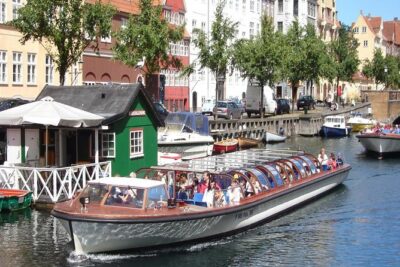
Copenhagen Sightseeing Classic Canal Tour With Live Guide
Read our review →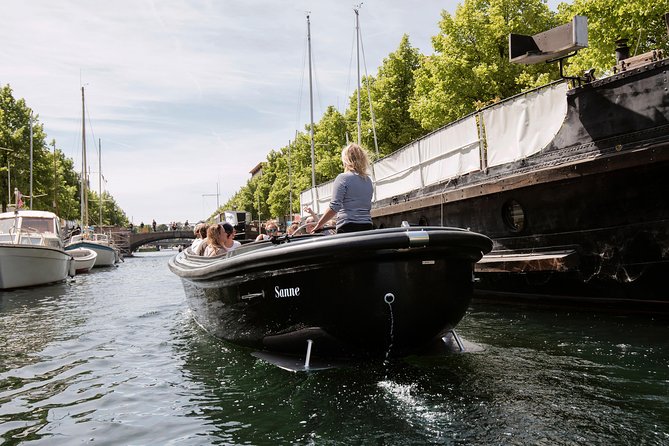
Social Sailing – Copenhagen Canal Tour – Captain’s Favorite
Read our review →
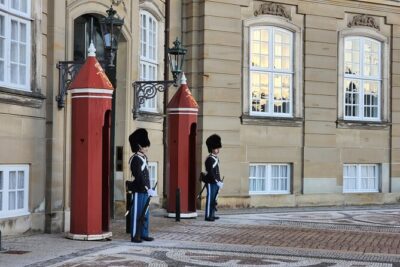
Walk & Canal Tour: Copenhagen Highlights + Changing of the Guards
Read our review →
Browse the lists this tour appears in