
Reviewed · HYGGE EXPERIENCES
Good Morning, Copenhagen: Feel The Danish Hygge & Happiness
Slow down, Copenhagen rewards you. This 3.5-hour walk pairs local culture with cobbled lanes, royal landmarks, pastries, coffee, and the Danish idea of hygge. I like the small maximum of 10 people, and I like the chance to ask a local guide direct questions about daily life, Danish trust, food, and happiness. The main drawback is that the tour visits major buildings from outside, so it is not a substitute for a castle or palace visit.
The route is gentle rather than athletic, though you will walk through much of central Copenhagen. Guides such as Karoline, Therese, Oskar, Laura, Peter, Sandra, and Jacob have been praised for warmth, humor, clear explanations, and useful restaurant advice. One practical caution: the relaxed theme does not always mean a slow pace. A few stops can feel brisk, especially when city streets are busy.
In This Review
- Key points to know before booking
- Why this Copenhagen walk feels different
- Starting among Nyboder’s yellow houses
- Cobblestones, timber houses, and a slower city
- Danish pastry as a lesson in everyday life
- Kongens Have and the royal story behind the calm
- Rosenborg Castle from the outside
- A quiet alley and the flødeboller pause
- Nikolaj Kunsthal and Copenhagen’s changing religious identity
- Christiansborg and the Danish idea of happiness
- Magstræde and the old Copenhagen you came to find
- Coffee, cake, and practical advice in the city center
- What $82.23 buys you
- Pace, fitness, and who should choose it
- Should you book this Copenhagen hygge tour?
- FAQ
- Where does the tour start?
- Where does the tour end?
- How long does the experience last?
- How large is the group?
- Is the tour offered in English?
- Are the buildings visited from the inside?
- What food and drinks are included?
- Can children join the tour?
Key points to know before booking
- Small groups make the tour personal: The maximum is 10 people, giving you room to ask questions and speak with the guide.
- Hygge is explained through real places: Quiet lanes, parks, cafés, shared treats, and Danish customs give the idea a practical shape.
- The food stops are modest but worthwhile: Expect a Danish pastry, flødeboller, coffee or tea, and a small Copenhagen souvenir.
- Most major sights are outside visits: You see Rosenborg Castle, Christiansborg Palace, Nikolaj Kunsthal, and other landmarks without entering.
- The route works best early in your stay: It gives you orientation, local recommendations, and ideas for places to revisit later.
- The price includes more than a standard walk: At $82.23 per person, the value rests on the guide, small group, tastings, drinks, and personal advice.
Why this Copenhagen walk feels different
Many city walks rush from landmark to landmark, collecting photographs along the way. This one takes a softer approach. You still see important Copenhagen sights, but the real subject is how Danes use public spaces, food, tradition, trust, and time together to create a comfortable daily life.
That makes the tour especially useful if you want more than dates and architectural labels. Your guide explains what hygge means in practice. It is not simply candles, wool sweaters, and expensive coffee. It can be a quiet alley, a shared pastry, a short break in a park, or the pleasure of sitting with other people without hurrying.
The local angle matters. Your guide is a Copenhagener, not just someone reciting a script about the city. Past guides have included Therese, Oskar, Laura, Peter, Sandra, Karoline, and Jacob. Their strongest contribution is the personal perspective: how food connects with childhood, how Danish social rules shape behavior, and how Copenhageners view religion, politics, and public life.
I would book this near the start of a Copenhagen stay. The route introduces several central districts, then ends with time for recommendations. You can ask where to eat, which areas deserve another walk, or how to plan the rest of your visit.
More hygge to book in Copenhagen:
- Copenhagen: Hygge and Happiness Culture Walking Tour
★ 4.9 · 539 reviews - Copenhagen Walking Tour: Highlights and Hygge w/Lunch
★ 5.0 · 272 reviews - Copenhagen: Highlights & Hygge Guided Walking Tour w/ Lunch
★ 4.9 · 75 reviews
Starting among Nyboder’s yellow houses
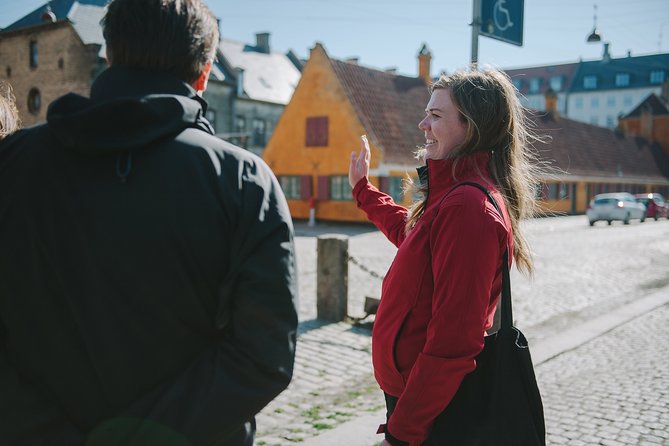
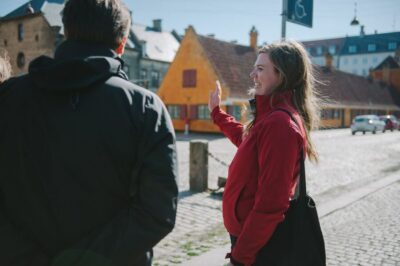
The meeting point is near Nyboders Mindestuer at Krokodillegade 21. The area is known for its rows of distinctive yellow houses, and it gives the morning a sense of place before the walking begins.
This opening stop lasts about 15 minutes and is less about entering a building than setting the tone. Your guide welcomes the group, explains the day, and begins placing modern Danish life against older Copenhagen. Since the group can be as large as 10 people, you are not lost in a crowd. The guide has a fair chance to learn your interests and answer questions.
This is also a useful point to check your footwear and rain gear. Copenhagen weather can change quickly, and the tour continues outdoors. Wear shoes that handle cobblestones comfortably, and bring an umbrella or rain jacket if rain is possible.
Cobblestones, timber houses, and a slower city
From Nyboder, the route moves through older parts of Copenhagen. You pass cobblestone streets, timber-framed houses, and small green spaces that feel removed from the main traffic.
Krusemyntegade is one of the clearest examples. The street is short, old-fashioned, and easy to appreciate without a grand monument in sight. Your guide uses places like this to explain why hygge is connected to atmosphere. A street does not need to be famous to feel welcoming.
You spend only about 10 minutes at this stage, so do not expect a long architectural lecture. The benefit is learning how to notice Copenhagen’s quieter details. After the tour, you may find yourself taking the slower side street instead of following the busiest route between attractions.
Danish pastry as a lesson in everyday life
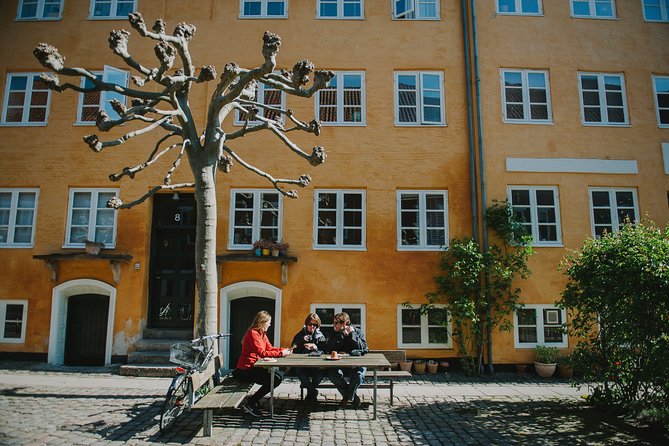
Food enters early, and that is a smart choice. Danish pastries are not treated as a decorative extra. Your guide connects them with Danish childhood and the simple pleasure of a familiar weekly ritual.
The pastry stop takes about 20 minutes. It gives the group a natural pause and shows how hygge often happens around a table, not at a major attraction. You get a taste of Danish food culture while hearing why these sweets matter to local life.
The portions are not meant to replace breakfast or lunch. One direct assessment found the food modest, though still useful as part of the walk. Think of the tastings as small cultural samples rather than a full food tour.
A different way to spend the same afternoon in Copenhagen:
- Copenhagen: Canal Cruise with Guide
★ 4.6 · 9,115 reviews - Copenhagen: Hop-On Hop-Off Bus Tour with Boat Tour Option
★ 3.9 · 4,122 reviews - Private Walking Grand Tour of Copenhagen
★ 5.0 · 3,953 reviews - From Copenhagen: Lund and Malmö 2-Country Tour
★ 4.7 · 2,772 reviews
Kongens Have and the royal story behind the calm
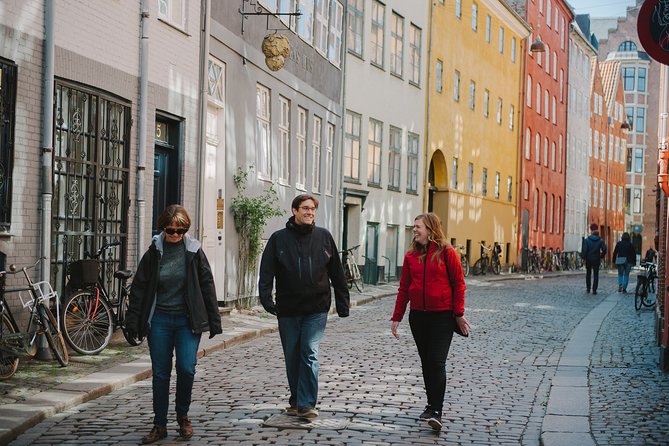
Kongens Have, or the King’s Garden, provides one of the tour’s best changes of mood. After narrow streets and city traffic, you enter a broad green park in the middle of the historic center.
The stop lasts about 15 minutes. Your guide tells the dramatic story of how a royal garden became one of the world’s early public parks. The tale involves grand royal ambitions, mental illness, and an improper love triangle. It is a reminder that Danish history is not always a dry procession of kings and dates.
You will not spend enough time here for a full park visit. Still, the stop explains why public green space matters in Copenhagen. It also creates one of the easiest places to pause, take photographs, and catch your breath.
Rosenborg Castle from the outside
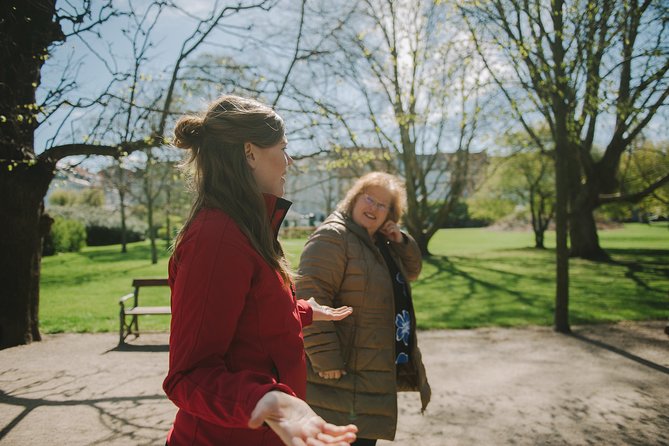
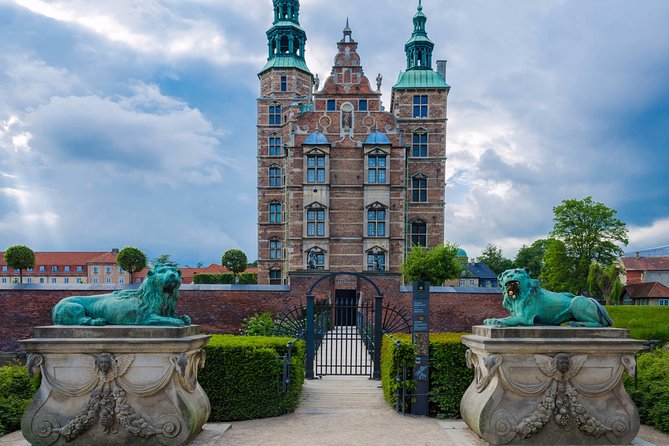
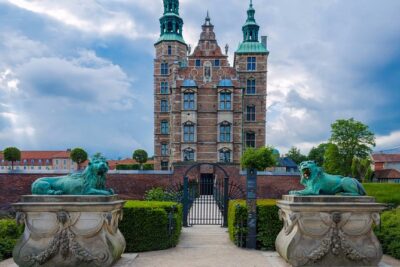
Rosenborg Castle is one of Copenhagen’s most appealing sights, with its compact scale and storybook appearance. The tour stops outside for around 15 minutes.
Your guide introduces King Christian IV, who built the castle in the 17th century, and points out the ruler’s inventive ideas about the building. This is a good example of the tour’s approach: you get context and a view, but not a long interior visit.
Be clear about the limitation. Entry to Rosenborg is not included, and the group does not go inside. If you want the crown jewels, royal rooms, and museum displays, arrange a separate visit. The walking tour works better as an introduction that helps you decide which places deserve more of your time.
A quiet alley and the flødeboller pause
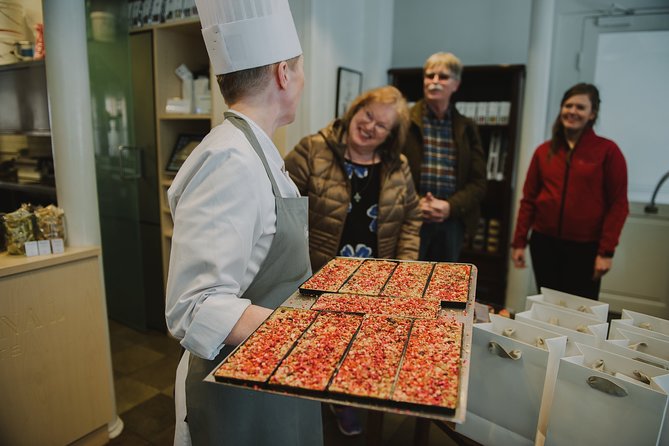
Pistolstræde offers another shift in atmosphere. This tucked-away alley has old-world character and provides a calmer place for the group to sit.
Here, your guide brings out flødeboller, a Danish sweet made with a soft marshmallow-style filling and a chocolate coating. The guide explains how the treat connects with Danish childhood and hygge before you eat it.
The pause lasts about 20 minutes, making it one of the more social parts of the morning. You share a small treat with the group rather than simply eating while walking. That distinction matters. The tour is trying to show hygge as an activity you practice, not a style you purchase.
The route later crosses one of Europe’s busiest pedestrian streets. The contrast is intentional. You notice how quickly the mood changes when a quiet lane gives way to crowds, shops, and city noise. It is a simple but effective lesson in why Copenhagen’s small calm spaces feel valuable.
Nikolaj Kunsthal and Copenhagen’s changing religious identity
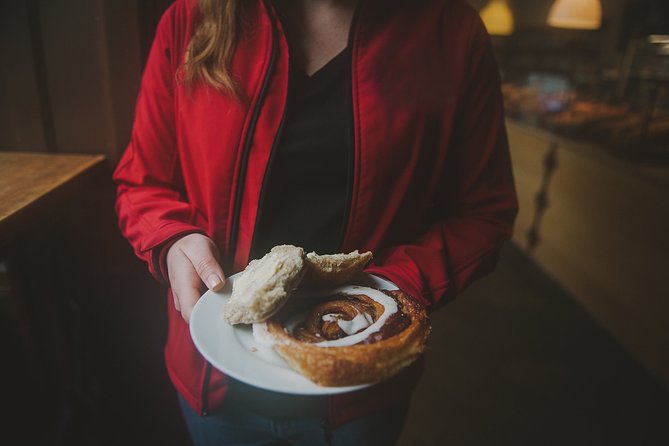
The next stop takes you to a quiet cobbled square near Nikolaj Kunsthal. You look up at the tall spire and hear why the building may not be exactly what it first appears to be in modern Copenhagen.
The guide discusses Danish views of religion and how those attitudes fit into present-day culture. This is one of the more thoughtful moments of the route because it moves beyond buildings and into questions of identity.
You spend about 15 minutes here. The visit remains outside, and the guide may briefly step into a nearby shop while you take photographs and look around. That detail means the stop is informal rather than a formal museum visit.
Christiansborg and the Danish idea of happiness
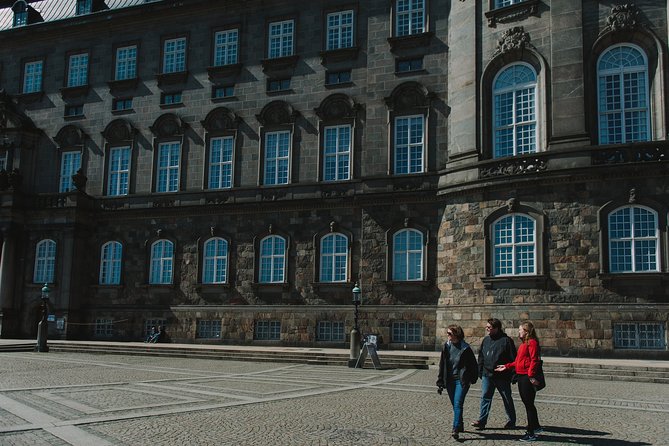
Christiansborg Palace gives the tour its strongest civic angle. The building now houses the Danish parliament, and the guide uses it to discuss politics, social welfare, public trust, and the cultural idea of Jante.
This stop lasts about 20 minutes. The subject is ambitious, especially because the tour is not a political seminar. Still, it offers useful context for understanding why Denmark often ranks highly in international happiness reports.
The discussion is not simply that Danes are happy because life is easy. Your guide connects happiness with trust, social systems, and expectations about how people treat one another. You may also hear about the two-tiered welfare structure described during the tour and how it supports a high level of confidence in public institutions.
Jante is especially interesting because it reflects a social pressure toward modesty and not acting superior to others. The idea has both comforting and restrictive sides. A good guide will help you see both, rather than presenting Danish culture as a perfect postcard.
If political history is your main interest, this stop may feel too short. If you want a plain-language introduction to Danish society, it is one of the more useful sections.
Magstræde and the old Copenhagen you came to find
On the way back, the group passes along Magstræde, one of the city’s most charming old streets. Its narrow shape and worn character make it an easy place to picture earlier Copenhagen.
You spend only about five minutes here, so the stop is brief. The point is not to give a full history of the street. Instead, your guide uses it to talk about community and the places where people connect.
This is also a good photograph stop. Keep your camera ready, but do not block the lane. The street’s appeal comes from its quiet scale, and it is best appreciated without treating it like a stage set.
Coffee, cake, and practical advice in the city center
The final hygge portion ends at a small café on a quiet central street. You sit down with a cup of coffee or tea and receive a Danish slice as a souvenir of the experience.
The official route allows about 20 minutes here. This is where the tour’s theme makes the most sense: stop, share food, talk, and let the city wait. The café also gives you a natural chance to ask for recommendations.
The ending point is on Læderstræde, in central Copenhagen, near artisan shops. That is convenient for continuing your day on foot. You can browse, find lunch, or return to a street or square that caught your eye during the morning.
Several guides have been praised for giving useful restaurant suggestions after the tour. I would take advantage of that. Ask for advice suited to your budget and preferred food, rather than accepting a generic list.
What $82.23 buys you
At $82.23 per person, this is not the cheapest way to see central Copenhagen. You are paying for a small group, an English-speaking local guide, tastings, coffee or tea, a pastry, flødeboller, and personal recommendations.
The value is strongest if you want interpretation rather than transport from sight to sight. A free self-guided walk can show you Nyboder, Rosenborg, Christiansborg, and Magstræde. It cannot easily explain how those places connect with Danish habits, trust, food, and social life.
The food is a bonus, not the main reason to book. If you expect a substantial breakfast or a full tasting menu, you may feel shortchanged. If you see the pastry, chocolate-covered sweet, drink, and cake as part of a cultural lesson, the price is easier to justify.
The free cancellation deadline is 24 hours before the start time. After that, the payment is not refunded, and late changes are not accepted.
Pace, fitness, and who should choose it
You need a moderate level of fitness and suitable shoes. The walk lasts around three and a half hours, includes cobblestones, and moves between several parts of central Copenhagen.
The pace is generally manageable. It has regular stops for food, stories, photographs, and conversation. Still, one account found the experience rushed at times, despite lasting close to four hours from beginning to end. If you have limited mobility, ask yourself whether repeated outdoor stops and city walking will be comfortable.
The tour is family-friendly. Children ages six through 11 pay the listed child rate, and children under six can join free when the operator is told in advance. Service animals are allowed, and the route is near public transportation.
I would recommend it most to:
- First-time visitors who want an easy introduction to Copenhagen
- Couples and small groups who enjoy food and conversation
- Solo visitors who like meeting other people in a small setting
- Parents looking for a gentle cultural walk rather than a museum-heavy schedule
- Anyone curious about Danish customs, trust, welfare, and hygge
I would choose another experience if your priority is entering Rosenborg or Christiansborg, getting a detailed architectural lecture, or eating enough food to count as lunch.
Should you book this Copenhagen hygge tour?
Book it if you want Copenhagen explained by a local, not just pointed out on a map. The strongest parts are the small group, the friendly guides, the quiet streets, the Danish sweets, and the honest discussion of how culture shapes daily life.
Do not book it expecting a full castle tour, a major food crawl, or a slow café morning from start to finish. The route covers a lot, and some sections move quickly. But if you arrive with comfortable shoes, realistic expectations, and an appetite for stories rather than large meals, this is a warm and useful way to get your bearings.
The best time is near the beginning of your stay. You will leave with a clearer sense of Copenhagen’s layout, a few local ideas for later, and a better understanding of why hygge is about shared time and attention, not simply Scandinavian decoration.
FAQ
Where does the tour start?
The tour starts at Krokodillegade 21, 1326 København K, Denmark, near Nyboders Mindestuer.
Where does the tour end?
It ends on Læderstræde in Copenhagen city center, on a street with artisan shops.
How long does the experience last?
The tour lasts approximately 3 hours and 30 minutes.
How large is the group?
The maximum group size is 10 people.
Is the tour offered in English?
Yes. It includes a native English-speaking guide.
Are the buildings visited from the inside?
No. Rosenborg Castle, Christiansborg Palace, Nikolaj Kunsthal, the King’s Yellow Houses, and the Old Stock Exchange are experienced from the outside.
What food and drinks are included?
The tour includes coffee or tea, a Danish pastry, flødeboller, and a Danish slice at the final café stop. Additional food and drinks are not included.
Can children join the tour?
Yes. Children ages six through 11 can join at the listed child rate. Children under six may join free, but you must inform the operator when booking.
Newly added in Copenhagen
- Private Transfer Copenhagen Airport CPH to Copenhagen by Sedan★ 4.5 · 3 reviews
- Castles of Kronborg and Frederiksborg from Copenhagen by Car★ 4.5 · 3 reviews
- Copenhagen: Old Town and Nyhavn Private Family Tour★ 4.7 · 3 reviews
- Copenhagen: Evening Gourmet Walk with Food & Drinks Tasting★ 5.0 · 3 reviews
- Copenhagen Craft BeerWalk City Center★ 4.4 · 3 reviews
- The Forgotten Giants Private Tour★ 5.0 · 3 reviews
- Departure by Luxury Vehicule Copenhagen to Copenhagen airport CPH★ 5.0 · 3 reviews
- Copenhagen: Express Walk with a Local in 60 minutes★ 4.6 · 3 reviews
Hygge Experiences, compared.
Copenhagen Walking Tour: Highlights and Hygge w/Lunch
Read our review →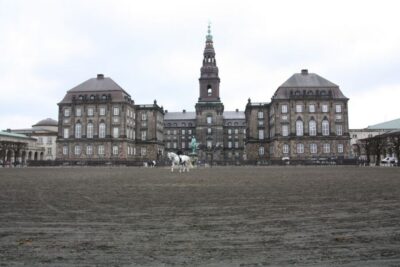
Highlights & Hygge Guided Walking Tour w/ Lunch
Read our review →
Hygge & Highlights Walking Tour with Local Guide
Read our review →
Browse the lists this tour appears in