
Reviewed · COPENHAGEN TOURS
Explore Copenhagen’s Art and Culture with a Local
Copenhagen reveals itself in layers. This 90-minute walk links street art, royal sights, museums, and old-town squares with the help of a local guide, making it a useful first look at the city’s cultural center. I like the compact route and the small maximum group of eight, which should make questions and conversation easier. I also like the mix of famous landmarks and small details, including Danish food customs and the Norse story behind Gefion Fountain.
The main thing to consider is the pace. At $128.94 per person, this is a costly short tour, and one published 3 out of 5 assessment found that some stretches felt quiet and that the route did not include closer looks at the art museum or King’s Theatre. You get a well-shaped overview, but not a full museum visit or a long art walk.
In This Review
- Key points at a glance
- Starting at Stork Fountain in old Copenhagen
- Street art by Stine Hvid
- A castle, gardens, and Hans Christian Andersen
- Kastellet and the Gefion Fountain legend
- The Rococo church and Kierkegaard
- The royal square and the Opera House view
- Finishing beside the colorful canal at Nyhavn
- What $128.94 buys you
- Who should book this Copenhagen walk?
- Timing, language, and cancellation details
- Should you book Explore Copenhagen’s Art and Culture with a Local?
- FAQ
- How long is the Copenhagen art and culture tour?
- How much does the experience cost?
- What language is the tour offered in?
- Where does the tour start?
- Where does the tour end?
- How many people can join the tour?
- Are food and drinks included?
- Can I cancel for a full refund?
Key points at a glance
- A 90-minute route from Stork Fountain to Nyhavn: The walk begins in the old town and ends beside Copenhagen’s famous colorful harbor.
- Small groups capped at eight people: This is a more personal setup than a large sightseeing crowd.
- Art and royal Copenhagen in one outing: You see street art, a castle and gardens, Kastellet, a major church, a royal square, and the Opera House across the water.
- Local stories add flavor: The guide covers the legend of the Norse goddess Gefion and Danish food customs, not only buildings and dates.
- Useful for first-day orientation: The central route introduces several key areas without taking up an entire morning or afternoon.
- A short tour with a premium price: At $128.94 per person, its value depends on how much you want personal context rather than extended sightseeing.
Starting at Stork Fountain in old Copenhagen
The meeting point is Stork Fountain at Amagertorv 6, in the middle of Copenhagen’s old town. This is a practical place to begin because the square is surrounded by handsome historic buildings and has a mosaic floor that gives the setting a distinctive character before the walk even starts.
I like this opening because it gets you into Copenhagen’s architectural heart at once. You are not spending the first part of the outing walking through an unremarkable transfer area. You begin among central sights, with the fountain and square providing an easy visual anchor.
The guide uses this first stop to set the tone for the city. Copenhagen is presented not simply as a collection of royal buildings, but as a place where public squares, art, stories, and everyday customs overlap. That approach is especially helpful if you have just arrived and want a quick sense of how the center fits together.
Still, remember that the tour lasts only about an hour and a half. The time at each stop will be limited, so you should not expect lengthy architectural explanations or a guided visit inside every building.
Other Copenhagen tours people line up alongside this one:
- Copenhagen: Canal Cruise with Guide
★ 4.6 · 9,115 reviews - Copenhagen: Hop-On Hop-Off Bus Tour with Boat Tour Option
★ 3.9 · 4,122 reviews - Private Walking Grand Tour of Copenhagen
★ 5.0 · 3,953 reviews
Street art by Stine Hvid
One of the more unusual parts of the route is a look at street art by Stine Hvid. This gives the outing a welcome change of rhythm after the formal old-town setting. Copenhagen’s cultural identity is not limited to churches, palaces, and museum collections, and the street-art stop makes that clear.
The guide also points you toward other street-art examples in different parts of the city. That wider context matters. You may not visit those neighborhoods during this short walk, but you get ideas for places to seek out later if contemporary art interests you.
This is one of the experience’s strongest features for people who find standard landmark tours too predictable. A fountain, a palace square, and a piece of public art tell different stories about the city. Together, they give you more variety than a route focused only on royal Copenhagen.
The limitation is equally clear. You will see and discuss art, but this is not an exhibition tour with time to study a large number of works. If your main goal is the National Gallery or a dedicated museum visit, you will need to plan that separately. One published assessment specifically wished the walk had taken a less direct path to include the art museum and King’s Theatre.
A castle, gardens, and Hans Christian Andersen
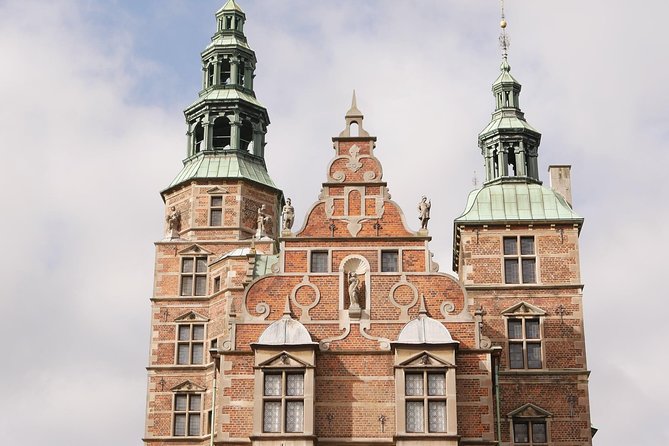
The next major stop brings you to a historic castle and its gardens, along with a sculpture of Hans Christian Andersen. Even without an indoor visit, this part of the walk adds a quieter note to the route and connects the city’s royal setting with one of Denmark’s best-known literary figures.
I like the pairing of gardens and sculpture because it gives you more than a facade to photograph. The setting lets the guide move between architecture, public memory, and Danish culture. Andersen is an especially useful figure for that conversation, since his name is closely linked with the country’s literary identity.
You should keep your expectations in check. The supplied details identify the castle, gardens, and sculpture, but they do not promise entry into the castle or a private look inside. Treat this as an outdoor sightseeing stop, not a substitute for a ticketed castle visit.
For a first introduction, that may be enough. You get a sense of the place, hear why it matters, and can decide later if you want to return for a longer visit.
Kastellet and the Gefion Fountain legend
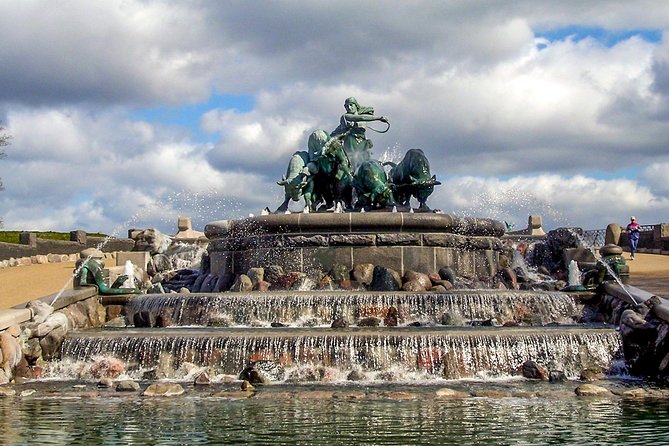
The route then reaches Kastellet, the star-shaped fortress built in 1664. Its unusual shape is one of the most memorable features on the walk, and the fortification gives you a clear reminder that Copenhagen was not only a royal capital but also a defended city.
The guide also explains the legend of Gefion, the Norse goddess shown in the impressive fountain nearby. This is the kind of story that helps a landmark stay in your memory. A date such as 1664 can blur together with other dates, but a dramatic myth tied to a large fountain is easier to recall.
This stop should appeal to you if you enjoy a mixture of fact and folklore. The tour does not only point out what you are looking at. It adds a cultural story that gives the sculpture and its setting a place in the wider Danish tradition.
Because the walk is short, you should not expect a detailed fortress study. The experience offers an introduction to Kastellet and its story rather than a full exploration of every path and defensive feature.
A different way to spend the same afternoon in Copenhagen:
- From Copenhagen: Lund and Malmö 2-Country Tour
★ 4.7 · 2,772 reviews - Copenhagen Highlights Walking Tour
★ 5.0 · 2,324 reviews - Copenhagen: Highlights 3 Hour Bike Tour with a Local Guide
★ 4.8 · 2,312 reviews - Hamlet and Sweden Tour – Two Countries in one day !
★ 5.0 · 2,223 reviews
The Rococo church and Kierkegaard
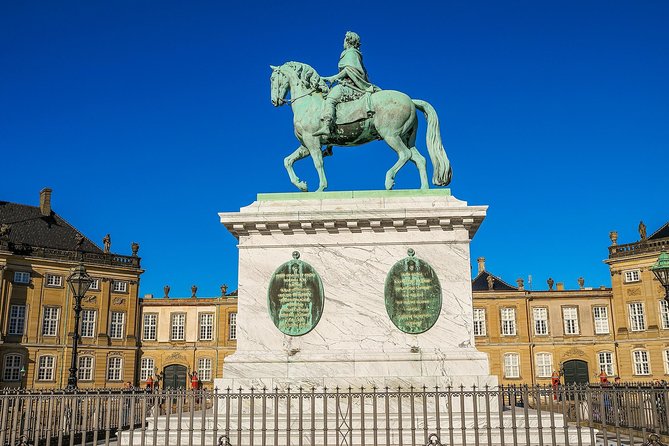
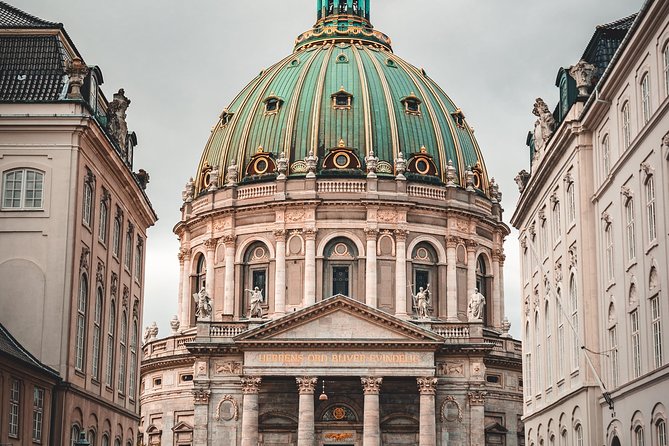
Another stop focuses on a Rococo structure with Scandinavia’s largest dome and a statue of Kierkegaard in its grounds. The dome gives this part of the route a grand architectural focus, while the Kierkegaard statue adds a distinctly Danish intellectual touch.
This is a good example of the tour’s range. In a single short outing, you move from street art to royal spaces, military architecture, mythology, religion, and philosophy. I like that balance because it avoids presenting Copenhagen as only a pretty collection of buildings.
The Kierkegaard reference also gives the guide a chance to point toward Denmark’s literary and philosophical culture. The details provided do not promise an extended discussion of his work, so you should expect a concise introduction rather than a lecture.
The structure is described as Rococo, and the dome is the visual centerpiece. If you enjoy architecture, this is likely one of the more rewarding stops, though the tour’s schedule means you will be taking in the exterior setting quickly.
The royal square and the Opera House view
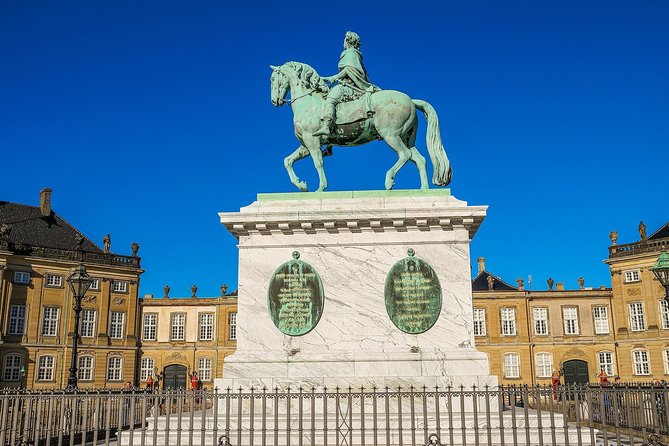
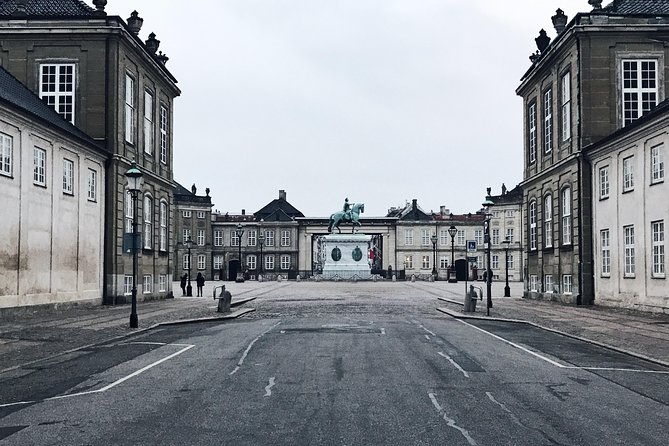
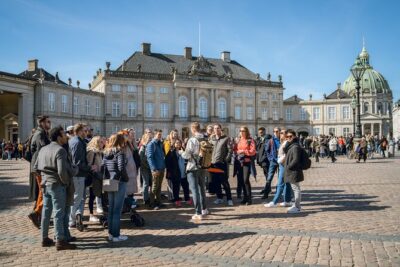
The walk continues through an imposing square with a palace and garden. From here, you can look across the water toward the Danish Royal Opera House. This view brings together ceremonial Copenhagen on one side and a modern cultural institution on the other.
I like this part because it shows how the city’s cultural life is spread across the waterfront. You are not simply looking at an isolated palace. You are seeing a relationship between royal space, public gardens, water, and performance architecture.
The stop is also useful for orientation. Since the tour ends at Nyhavn, this section helps you understand how several central areas relate to one another. The guide’s job here is less about giving you access and more about helping you read the city around you.
Again, the tour does not include admission to the palace or Opera House. You should see this as a viewpoint and storytelling stop. If you want interiors, performances, or museum-style displays, those require separate plans and costs.
Finishing beside the colorful canal at Nyhavn
The final walk leads through Nyhavn, Copenhagen’s picturesque 17th-century harbor. Its colorful waterfront facades make it a natural ending, and the location is convenient if you want to continue sightseeing, find a meal, or simply stay near the water after the tour.
Ending here is smart. You finish with one of Copenhagen’s most recognizable scenes rather than returning to the starting point. That makes the tour useful not only as a history introduction but also as a practical way to reach another central area.
The harbor also brings the route back to everyday Copenhagen. After castles, monuments, and formal squares, Nyhavn has a more relaxed waterfront character. The colorful facades create an easy final image of the city, though the area itself is one of Copenhagen’s best-known sightseeing spots and can feel more polished than local.
You will not receive food, drinks, or snacks as part of the experience. That is easy to manage because the tour ends in an area where you can make your own plans, but you should account for those costs when considering the total price of the outing.
What $128.94 buys you
At $128.94 per person, this is not a bargain walk. The price makes the most sense if you place a high value on having a local guide connect several different parts of Copenhagen in a small group.
You are paying for access to a person who wants to show you the city, not for admissions, refreshments, or a long sightseeing program. The route covers many highlights, but the experience stays outdoors and moves at a brisk pace.
The group maximum of eight is important here. A small group can make it easier to hear the guide, ask questions, and keep the walk moving without the stop-and-start feel of a large crowd. It may also feel more personal than a standard city tour.
On the other hand, the published rating is 4.5 from four assessments, while one detailed assessment gave the experience 3 out of 5. That lower assessment appreciated the historical highlights and small pieces of information but wanted more explanation, fewer silent stretches, and a less direct route that included the art museum and King’s Theatre. I would take that as a fair warning: the tour’s strength is breadth, not exhaustive detail.
Who should book this Copenhagen walk?
I would recommend it most strongly to people arriving in Copenhagen for the first time. The route introduces the old town, street art, royal settings, a fortress, a major church, the waterfront, and a famous harbor without demanding a full day.
It also suits returning visitors who want a fresh cultural angle. If you have already seen the standard sights, the street-art discussion, Danish food customs, and Gefion legend may give you a different way to think about familiar areas.
You should book with more caution if you want a specialist art tour, an in-depth royal history program, or museum entry. The experience touches all those subjects, but it does not spend enough time on any one of them to replace a focused visit.
The compact duration can work well for families and people with limited time, since most travelers can participate and the tour is near public transportation. Service animals are allowed. The details do not state the exact walking conditions or distance, so you may want to ask the provider if that matters for your plans.
Timing, language, and cancellation details
The experience is offered in English and uses a mobile ticket. Confirmation arrives when you book, and the maximum group size is eight people.
The tour starts at Stork Fountain, Amagertorv 6, 1160 København, Denmark, and ends at Nyhavn in Indre By. Since the start and finish are different, plan your next activity from Nyhavn rather than assuming you will return to the fountain.
Free cancellation is available if you cancel at least 24 hours before the local start time. Cancellations made less than 24 hours in advance are not refunded, and changes inside that period are not accepted.
Should you book Explore Copenhagen’s Art and Culture with a Local?
Book it if you want a short, small-group introduction that mixes Copenhagen’s famous sights with street art, folklore, architecture, and local food customs. The route is well suited to a first day, especially when you want a guide to help you get your bearings quickly.
Skip it if $128.94 feels high for 90 minutes, or if you want detailed museum and art coverage. For the best value, treat this as an orientation walk, then use the ending at Nyhavn to continue exploring on your own.
FAQ
How long is the Copenhagen art and culture tour?
The experience lasts approximately 1 hour and 30 minutes.
How much does the experience cost?
The listed price is $128.94 per person.
What language is the tour offered in?
The experience is offered in English.
Where does the tour start?
It starts at Stork Fountain, Amagertorv 6, 1160 København, Denmark.
Where does the tour end?
The tour ends at Nyhavn in Indre By, Copenhagen.
How many people can join the tour?
The maximum group size is eight people.
Are food and drinks included?
No. Personal expenses, food, drinks, and snacks are not included.
Can I cancel for a full refund?
Yes, if you cancel at least 24 hours before the experience start time. Cancellations made less than 24 hours before the start are not refunded.
Newly added in Copenhagen
- Private Transfer Copenhagen Airport CPH to Copenhagen by Sedan★ 4.5 · 3 reviews
- Castles of Kronborg and Frederiksborg from Copenhagen by Car★ 4.5 · 3 reviews
- Copenhagen: Old Town and Nyhavn Private Family Tour★ 4.7 · 3 reviews
- Copenhagen: Evening Gourmet Walk with Food & Drinks Tasting★ 5.0 · 3 reviews
- The Forgotten Giants Private Tour★ 5.0 · 3 reviews
- Copenhagen Craft BeerWalk City Center★ 4.4 · 3 reviews
- Copenhagen: Express Walk with a Local in 60 minutes★ 4.6 · 3 reviews
- Departure by Luxury Vehicule Copenhagen to Copenhagen airport CPH★ 5.0 · 3 reviews
Copenhagen Tours, compared.

Hop-On Hop-Off Bus Tour with Boat Tour Option
Read our review →

Highlights 3 Hour Bike Tour with a Local Guide
Read our review →
Hamlet and Sweden Tour – Two Countries in one day !
Read our review →
Browse the lists this tour appears in