

Reviewed · HISTORICAL TOURS
Copenhagen: Danish-Jewish History Tour
Copenhagen’s Jewish story is full of surprises. This 2.5-hour private walk connects the Danish Jewish community’s arrival in 1622 with its remarkable survival during the Nazi Occupation, while also showing how Jewish citizens shaped Danish culture. I like the personal format, which lets you ask questions and set the pace, and I like the way the tour links famous names such as Niels Bohr, Victor Borge, and Georg Brandes to everyday Danish life. The main drawback is that entrance to the Great Synagogue is not included, so your experience may focus on its exterior and nearby history unless access is arranged separately.
The tour also handles painful subjects with care. Guide Gitta is praised for her clear, passionate presentation and thoughtful answers, while another guide helped add useful local advice, including nearby bakery and sausage food truck suggestions. You should wear good walking shoes, bring water, and dress for Copenhagen’s changeable weather.
In This Review
- Key points to know before you book
- Why Copenhagen’s Jewish story deserves a walking tour
- Following synagogues and prayer rooms through central Copenhagen
- The Great Synagogue and its Egyptian Revival design
- H.C. Andersen, the Melchiors, and Jewish life in personal terms
- The 1943 rescue and the statistic behind it
- A private guide changes the pace and tone
- Who will get the most from this experience
- Practical details that affect your visit
- Should you book the Danish-Jewish History Tour?
- FAQ
- How long does the Danish-Jewish History Tour last?
- How much does the tour cost?
- Is this a private tour?
- Which languages are available?
- Is hotel pickup available?
- Is entrance to the Great Synagogue included?
- Is the tour wheelchair accessible?
- Can children join the tour?
- What should I bring?
- Can I cancel for a refund?
Key points to know before you book
- The 1943 rescue is central: Learn how about 97 percent of Danish Jews survived the German Occupation.
- Copenhagen becomes the classroom: The route traces former Jewish neighborhoods, synagogues, and prayer rooms in the city center.
- The Great Synagogue is a major landmark: Its Egyptian Revival design is part of the walk, but entry is not included.
- Private means flexible: You can ask questions freely and spend more time on subjects that matter to you.
- The story reaches beyond religion: Hear about H.C. Andersen’s friendship with the Melchior family and the Hirschsprungs’ support for Danish art.
- Good for adults and older children: The tour is not suitable for children under six, and its subject matter calls for attentive listening.
Why Copenhagen’s Jewish story deserves a walking tour

Copenhagen can feel compact and easy to cross on foot, but its Jewish history is spread through ordinary streets and central landmarks. That makes a walking tour especially useful. Instead of seeing the city only as a collection of palaces, canals, and shopping streets, you begin to notice the places where Jewish life took root, changed, suffered, and endured.
The story begins in 1622, when Jewish people started arriving in Denmark. From there, the tour follows the growth of a community that became part of the country’s business, science, music, art, and public life. I appreciate that this is not presented as a separate story floating beside Danish history. The focus is on how Jewish residents helped shape Denmark itself.
You will hear about well-known figures such as physicist Niels Bohr, entertainer Victor Borge, and writer Georg Brandes. The tour also connects Jewish influence to familiar Danish products, including Tuborg Beer and Bang & Olufsen porcelain. Those examples help turn a broad historical claim into something concrete. You are not simply hearing that Jewish citizens contributed to Denmark. You are learning where those contributions appeared in science, culture, industry, and daily life.
The tone matters here. This is not a light sightseeing stroll with a few historical facts added for decoration. It deals with exclusion, persecution, rescue, and memory. The strongest part of the experience may be the balance between sorrow and ordinary life. You learn about danger and loss, but also about families, friendships, creative work, and the continuing life of Copenhagen’s Jewish community.
More history tours in Copenhagen:
- Copenhagen’s Royal History: A Self-Guided Walking Tour
★ 4.5 · 7 reviews - Afternoon Hamlet Castle Tour to a UNESCO World Heritage Site.
★ 4.5 · 7 reviews - Private E-Biking Copenhagen History and Nature Adventures
★ 5.0 · 5 reviews
Following synagogues and prayer rooms through central Copenhagen
The walking route traces the places where Jewish religious life developed in and around central Copenhagen. You can expect to hear about synagogues and prayer rooms, as well as former Jewish neighborhoods and areas sometimes described as Jewish ghettos.
The word ghetto needs careful context. On this tour, it refers to historic Jewish areas in Copenhagen, not just the forced ghettos associated with the Nazi period elsewhere in Europe. Your guide can explain how Jewish residents lived, worshipped, worked, and built a place in Danish society over time.
This is where the private format earns its keep. If you want more detail about religious practice, architecture, family life, or the legal position of Jews in Denmark, you can ask directly. A large group tour often has to keep moving. A private group gives the guide more room to respond to your interests and explain a point in plain language.
The tour is conducted in English, German, Danish, Swedish, or French. That range is helpful for families or friends who want to listen in a language they understand best. The guide is live rather than audio-based, so you can ask questions as the route unfolds.
You should not expect a museum-style display at every stop. Much of the value comes from connecting buildings and streets to events that are easy to miss when you walk through Copenhagen on your own. Bring water and wear comfortable shoes, since this is a city walk lasting two and a half hours.
The Great Synagogue and its Egyptian Revival design

The Great Synagogue of Copenhagen is one of the visual anchors of the tour. Its Egyptian Revival style gives it a distinctive appearance, and the building helps explain the importance of organized Jewish life in Copenhagen.
The tour does not include entrance to the synagogue. That is an important practical point, especially if you are booking because you want to see the interior. The listed experience includes the private guide and an optional hotel pickup, but not admission. Ask about access when booking rather than assuming the walking tour includes a visit inside.
Even without entry, the synagogue adds weight to the route. Architecture can make history easier to grasp. A building used for worship, gathering, and community life says more than a date on a timeline. Your guide can place the synagogue within the wider story of Jewish settlement and changing community life in Denmark.
Because the experience is private, you can also ask about the building’s design and purpose instead of simply passing by for a quick photograph. If the synagogue is your main reason for booking, confirm exactly what you will see before paying. If your priority is the wider history of Copenhagen’s Jewish community, the lack of included admission is less serious.
H.C. Andersen, the Melchiors, and Jewish life in personal terms
One of the more appealing parts of this tour is its attention to personal relationships. You learn about H.C. Andersen’s close friendship with the Melchior family and the care they provided for him late in his life.
This detail gives the tour a human scale. Andersen is often treated as a national literary monument, but friendships show the social world around him. The Melchior family becomes more than a name attached to a famous writer. Their relationship with Andersen illustrates how Jewish families were part of Copenhagen’s cultural and personal networks.
I find these stories useful because they keep the tour from becoming a parade of famous men and major events. A city’s history is also built through hospitality, friendship, family ties, and shared cultural life. The Melchior story offers that softer counterpoint before the tour turns toward the harsher years of the twentieth century.
The same approach appears in the discussion of Heinrich and Pauline Hirschsprung. As art patrons, they helped support the Danish Impressionist movement. Their role shows how Jewish residents contributed not only through business or science, but also through the arts and the institutions that helped Danish art develop.
A different way to spend the same afternoon in Copenhagen:
- Copenhagen: Canal Cruise with Guide
★ 4.6 · 9,115 reviews - Copenhagen: Hop-On Hop-Off Bus Tour with Boat Tour Option
★ 3.9 · 4,122 reviews - Private Walking Grand Tour of Copenhagen
★ 5.0 · 3,953 reviews - From Copenhagen: Lund and Malmö 2-Country Tour
★ 4.7 · 2,772 reviews
The 1943 rescue and the statistic behind it
The most powerful section concerns October 1943, when German occupiers moved against Denmark’s Jews. Over a few weeks, most Danish Jews were hidden and smuggled to safety.
The survival rate is extraordinary: about 97 percent of Danish Jews survived the Nazi Occupation. That number is often repeated as a simple fact, but a good guide gives it human meaning. You learn about the risks faced by Jewish families, the danger of German detection, and the network of people who helped move them out of reach.
This is also where a balanced guide matters most. The story should not become a feel-good tale that erases fear, betrayal, hardship, or the people who were not saved. The tour’s appeal lies in treating the rescue as both courageous and complicated. Sensitive subjects require room for questions, and the private format lets you pause when the story calls for it.
The guide’s presentation has been praised for being logical and open to questions. That is especially useful here. The events of 1943 can be confusing when reduced to dates and slogans, but a clear sequence helps you understand how quickly the rescue unfolded and why timing mattered.
If you have a family connection to Danish Jewish history, say so before the tour. The practical information specifically asks you to mention if you are seeking relatives or historical records. That does not promise a genealogy service or archival research, but it gives the guide a chance to understand your purpose and frame the walk appropriately.
A private guide changes the pace and tone
This is a private tour, not a fixed group outing. That makes the price easier to judge. At $129 per person, it is not the cheapest way to spend two and a half hours in Copenhagen, especially for one person. For a small private group, however, the cost buys a focused conversation with a guide rather than a standard script delivered to a crowd.
I like private tours when the subject is personal, complex, or emotionally difficult. You can ask why a particular street mattered, request more context about a person, or spend less time on a topic you already know. The guide can also adjust the presentation for a family, a group of students, or adults with a strong interest in Jewish history.
The experience has received a top rating from nine reviews, with particular praise for Gitta’s knowledge and passion. One guide was also helpful with local food suggestions, including a bakery and a nearby sausage food truck. If you are vegetarian, the veggie sausage sandwich with all the toppings was singled out as a good choice. That sort of small local advice is not the main reason to book, but it is a pleasant bonus at the end of a serious morning or afternoon.
Hotel pickup is offered, though the details of the pickup arrangement are not specified. Confirm the meeting point and pickup plan when you reserve. The tour is wheelchair accessible, but Copenhagen’s streets and the exact route can affect comfort, so share any mobility needs in advance.
Who will get the most from this experience
I would recommend this walk to anyone who wants more than Copenhagen’s usual royal and design highlights. It suits adults, history-minded visitors, Jewish heritage seekers, and people interested in the way minority communities shape national culture.
It is also a good choice if you prefer asking questions rather than listening quietly in a large group. The private setup is particularly useful for families with older children, though the tour is not suitable for children under six. The material about occupation and persecution may be too heavy for very young children in any case.
You do not need to be Jewish to appreciate the tour. The story covers Danish society, architecture, science, art, literature, and wartime choices. I would simply suggest approaching it with patience. This is not a quick collection of entertaining anecdotes. Its strongest moments ask you to think about belonging, courage, responsibility, and memory.
You might choose a different activity if you want a purely architectural walk, a food tour, or a broad introduction to Copenhagen. The route is focused on Danish Jewish history, and that focus is its strength. It will not replace a general city tour.
Practical details that affect your visit
The tour lasts 2.5 hours, with starting times available according to the date you choose. That length is enough for a serious introduction without taking an entire day, but it is long enough that footwear matters. Wear comfortable shoes, bring water, and dress for the weather.
English, German, Danish, Swedish, and French are available. The guide is live, and the group is private. The activity is wheelchair accessible, and hotel pickup is offered. Since the Great Synagogue admission is not included, check the planned route and access arrangements if seeing the interior is important to you.
You can cancel up to 24 hours in advance for a full refund, and you can reserve now and pay later. Those policies are useful if your Copenhagen schedule is still shifting. The tour also offers skip-the-ticket-line access where a ticketed element applies, though the synagogue entrance itself is not included.
Should you book the Danish-Jewish History Tour?
Book it if you want a thoughtful, personal walk that explains how Jewish life is tied to Copenhagen’s wider story. The strongest reasons are the private format, the clear handling of the 1943 rescue, and the range of connections to people such as H.C. Andersen, Niels Bohr, Victor Borge, Georg Brandes, and the Hirschsprungs.
At $129 per person, I see the best value for couples, families, or small groups who will make active use of the guide’s flexibility. Solo visitors should weigh the cost more carefully. Also, do not book expecting automatic entry to the Great Synagogue or a full genealogy search.
For a focused introduction to Danish Jewish history, this is a strong choice. Come prepared to walk, listen, and ask questions. The reward is a better understanding of Copenhagen as a city shaped not only by famous Danes, but also by a community that has lived, worked, created, and endured here for centuries.
FAQ
How long does the Danish-Jewish History Tour last?
The tour lasts 2.5 hours. Starting times vary, so check availability for your chosen date.
How much does the tour cost?
The listed price is $129 per person.
Is this a private tour?
Yes. It is offered as a private group experience with a private tour guide.
Which languages are available?
The live guide can conduct the tour in English, German, Danish, Swedish, or French.
Is hotel pickup available?
Hotel pickup is offered. Confirm the pickup details when booking.
Is entrance to the Great Synagogue included?
No. Entrance to the Great Synagogue of Copenhagen is not included in the tour price.
Is the tour wheelchair accessible?
Yes, the activity is listed as wheelchair accessible.
Can children join the tour?
Children under six are not permitted to join. The tour’s historical subject matter is best suited to older children and adults.
What should I bring?
Bring comfortable shoes, water, and clothing suitable for the weather.
Can I cancel for a refund?
Yes. You can cancel up to 24 hours in advance for a full refund. You can also reserve now and pay later.
Newly added in Copenhagen
- Private Transfer Copenhagen Airport CPH to Copenhagen by Sedan★ 4.5 · 3 reviews
- Castles of Kronborg and Frederiksborg from Copenhagen by Car★ 4.5 · 3 reviews
- Copenhagen: Old Town and Nyhavn Private Family Tour★ 4.7 · 3 reviews
- Copenhagen: Evening Gourmet Walk with Food & Drinks Tasting★ 5.0 · 3 reviews
- The Forgotten Giants Private Tour★ 5.0 · 3 reviews
- Copenhagen Craft BeerWalk City Center★ 4.4 · 3 reviews
- Copenhagen: Express Walk with a Local in 60 minutes★ 4.6 · 3 reviews
- Departure by Luxury Vehicule Copenhagen to Copenhagen airport CPH★ 5.0 · 3 reviews
Historical Tours, compared.
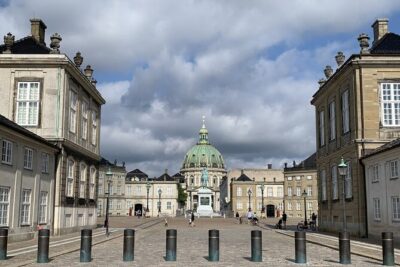
Copenhagen’s Royal History: A Self-Guided Walking Tour
Read our review →
Afternoon Hamlet Castle Tour to a UNESCO World Heritage Site.
Read our review →
Private E-Biking Copenhagen History and Nature Adventures
Read our review →Browse the lists this tour appears in