
Reviewed · GUIDED
Copenhagen Architecture and Sustainability Tour with local Guide
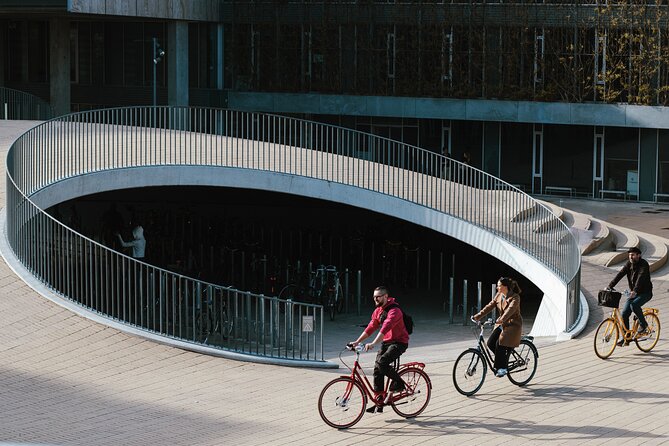
Copenhagen’s best ideas are built into its streets. This three-hour bicycle tour takes you beyond the postcard center to see how the city reuses old spaces, cleans up its harbor, manages rainwater, and gives bikes and pedestrians room to move. I especially like the small group of no more than 15 people and the way the route links architecture with daily life, rather than treating buildings as isolated photo stops.
I also like the chance to cover about 11 kilometers without committing to a full-day outing. Guides Jörn and Julia have been praised for making recent city development clear and interesting. The main consideration is physical: you need a moderate fitness level, and some parts of the route pass through crowded areas or depend on decent weather.
In This Review
- Key points worth knowing before you book
- Why this route feels different from a standard Copenhagen tour
- Starting at Blox and crossing Lille Langebro
- Islands Brygge and the social side of city planning
- DR Koncerthuset and the edge of Amager Fælled
- Cykelslangen and Copenhagen’s bicycle logic
- Enghave Park and rainwater control
- Absalon and the Meatpacking District
- Israel’s Square and Ørstedsparken
- The cycling time, group size, and physical demands
- Is $72.57 a fair price?
- Who should book this bicycle tour?
- Booking advice and cancellation details
- Should you book it?
- FAQ
- How long does the Copenhagen architecture and sustainability tour last?
- How far do you cycle?
- Where does the tour start and finish?
- Is bicycle use included?
- Is a helmet included?
- Can I reserve an e-bike or another special bicycle?
- Are baskets and phone holders included?
- How many people can join the tour?
- What happens if the weather is poor?
Key points worth knowing before you book
- About 11 kilometers of cycling: You spend roughly 65 minutes riding between stops, with short visits at each site.
- A modern view of Copenhagen: The focus is on sustainability, public space, housing, transport, and adaptive reuse.
- Small-group format: The tour is capped at 15 people, making it easier to follow the guide and ask questions.
- Mostly quick stops: Most buildings and public spaces receive five to 15 minutes, so this is an overview rather than an extended architectural study.
- Bike and helmet included: Standard bicycle use is covered, while baskets, phone holders, child seats, cargo bikes, tandems, and e-bikes cost extra.
- Good value for curious first-time visitors: At $72.57 per person, the price is reasonable if you want transport, local explanation, and a broad route in one outing.
Why this route feels different from a standard Copenhagen tour
Many Copenhagen tours stay close to the old center, where the sights are easy to recognize and the streets can be packed. This one follows the city’s newer story. You see former industrial areas, reclaimed land, student housing, cultural buildings, public parks, harbor crossings, and spaces designed to handle climate pressure.
That gives the ride a useful theme. Sustainability here is not limited to solar panels or energy-efficient construction. You look at social sustainability too: shared kitchens, common rooms, public swimming, pedestrian bridges, community centers, and parks that store rainwater.
The guide is important because several stops need explanation. A building may look unusual, but the interesting question is why it was made that way and what problem it solves. The guide also helps connect one neighborhood to the next, so the 11-kilometer route becomes a story about Copenhagen’s recent growth.
The pace is brisk but not frantic. Most stops last ten minutes, with shorter pauses at Lille Langebro and Folkehuset Absalon. You will not tour the interiors of every building, and admission is not needed at the listed stops. Think of it as a moving city lesson with plenty of street-level observation.
A few more Copenhagen tours worth putting side by side
- Copenhagen: Canal Cruise with Guide
★ 4.6 · 9,115 reviews - Copenhagen: Highlights 3 Hour Bike Tour with a Local Guide
★ 4.8 · 2,312 reviews - Copenhagen Sightseeing Classic Canal Tour With Live Guide
★ 4.5 · 1,906 reviews
Starting at Blox and crossing Lille Langebro
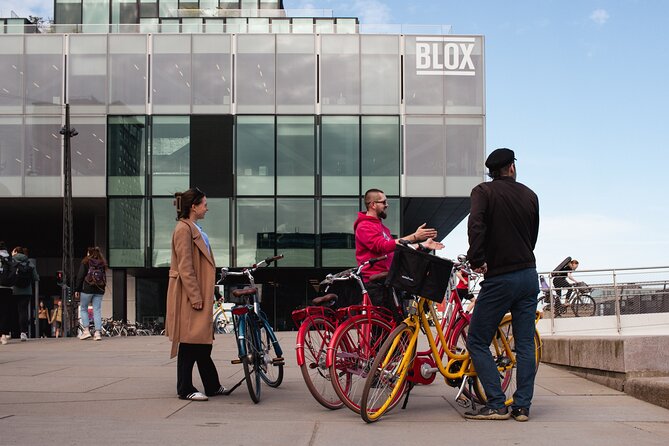
The ride begins at Vester Voldgade 2, close to public transportation. Blox is a fitting first stop because it introduces the tour’s main subject: a mixed-use building planned with technical and social sustainability in mind.
The most prominent tenant is the Danish Architecture Center, which presents exhibitions about Copenhagen architecture. The exact exhibition changes, so the guide can explain what is currently on display, but the main value of the stop is the building itself and its role in the city’s architectural conversation. You get about ten minutes here, enough for an introduction rather than a full museum visit.
From Blox, the route moves to Lille Langebro. This bridge connects the harbor for cyclists and people on foot. It is part of Copenhagen’s effort to turn the old merchant and naval harbor into a place for recreation and everyday movement.
The stop lasts only five minutes, so expect a quick explanation and a chance to look along the water. One practical warning: the harbor area can be very crowded in summer, especially around the first stop. If you dislike busy public spaces, you may find this opening section less relaxed than the later neighborhoods.
Islands Brygge and the social side of city planning
At Havnebadet Islands Brygge, you see one of the clearest examples of Copenhagen changing its relationship with the harbor. When the harbor bath opened in 2003, it marked a major shift. Water that had been associated with working harbor activity became a place for public recreation.
The ten-minute stop is less about architectural detail and more about public access. The point is simple: a cleaner harbor can become part of ordinary city life. This is a useful contrast with cities where waterfronts remain fenced off, private, or dominated by traffic.
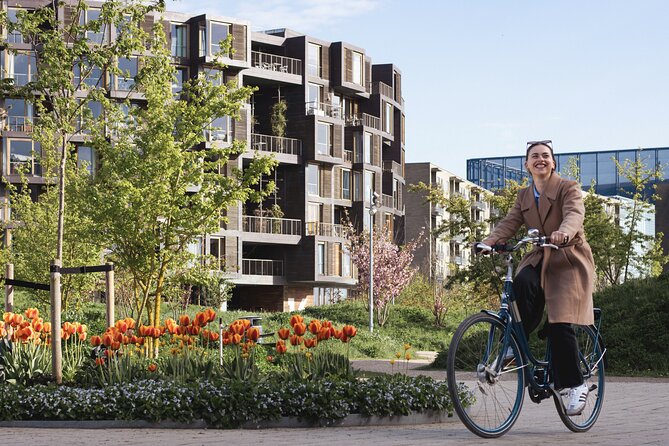
The route then reaches the Tietgen Residence Hall, a student building designed around both individual space and community life. About 400 people live there. The private rooms are small and include washrooms, while living rooms, kitchens, and other facilities are shared by some or all residents.
This is one of the tour’s more interesting stops because it puts social sustainability into concrete terms. The design asks how much private space a person needs and what can be shared. You will have around ten minutes to hear about the concept and see the building from outside. Do not expect to enter private areas.
The Tietgen Residence Hall also shows why this tour suits people who care about urban policy, not just attractive facades. It asks practical questions about housing, community, and the cost of space in a growing city.
DR Koncerthuset and the edge of Amager Fælled
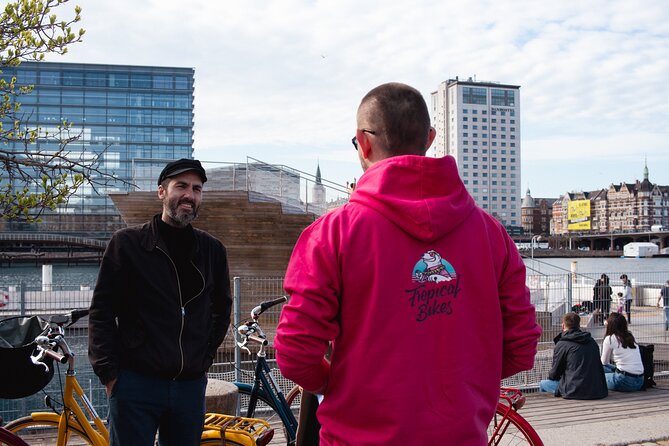
DR Koncerthuset provides a change of scale and purpose. The building contains a concert hall with 1,800 seats, home to the Royal Symphony Orchestra, along with smaller stages and recording studios.
The ten-minute stop gives you an exterior view and an explanation of the complex’s cultural role. This is not a concert visit, so you should not expect a performance or an interior tour. Still, it helps show how large public institutions fit into Copenhagen’s newer districts.
After that, the route reaches Amager Fælled, where the theme becomes land use. The area was used by the military from the 1700s until the 1950s as a training ground and shooting range. It later became a garbage dump, part of an old local joke that gave Amager the nickname lorteøen, or shit island.
Today, Amager Fælled is a rare stretch of relatively untouched nature within Copenhagen, even though much of the land was artificially reclaimed. The fifteen-minute stop is a reminder that urban land can have several lives. A place once used for military purposes and waste can later become open nature close to the city.
This section may appeal most to people interested in planning and environmental repair. It is not a formal nature walk, and the guide gives you only a short pause before the cycling continues.
A different way to spend the same afternoon in Copenhagen:
- Copenhagen: Hop-On Hop-Off Bus Tour with Boat Tour Option
★ 3.9 · 4,122 reviews - Private Walking Grand Tour of Copenhagen
★ 5.0 · 3,953 reviews - From Copenhagen: Lund and Malmö 2-Country Tour
★ 4.7 · 2,772 reviews - Copenhagen Highlights Walking Tour
★ 5.0 · 2,324 reviews
Cykelslangen and Copenhagen’s bicycle logic
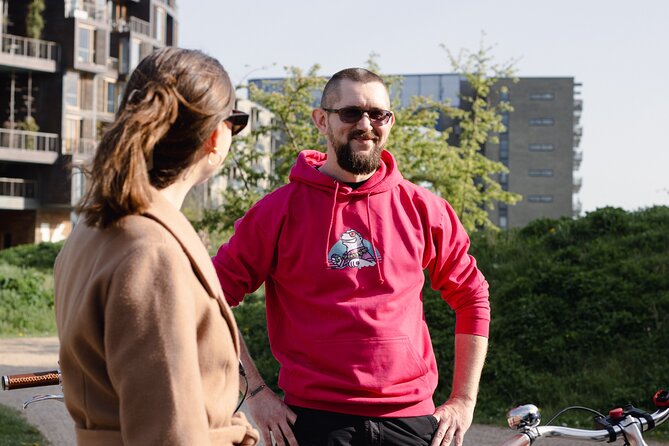
Cykelslangen is one of the tour’s most memorable practical examples. Together with Bryggebroen, it was among the first new harbor crossings built exclusively for cyclists.
The design lets cyclists travel above the surrounding paths and water rather than forcing them to mix with pedestrians. You spend about ten minutes here, learning how the bridge fits into Copenhagen’s broader bicycle network.
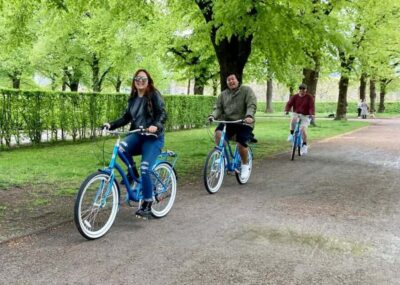
The value of seeing Cykelslangen by bike is obvious. You are not just looking at a transport project from the pavement. You are using it as intended. That makes the lesson more immediate, especially if you are curious about why cycling works so well in Copenhagen.
The route does require confidence on a bicycle. The guide is there to help, but you still need to manage the bike, watch other road users, and keep moving with the group. A helmet is available free upon request. If you want a phone holder or basket, each costs an additional 49 DKK.
Enghave Park and rainwater control
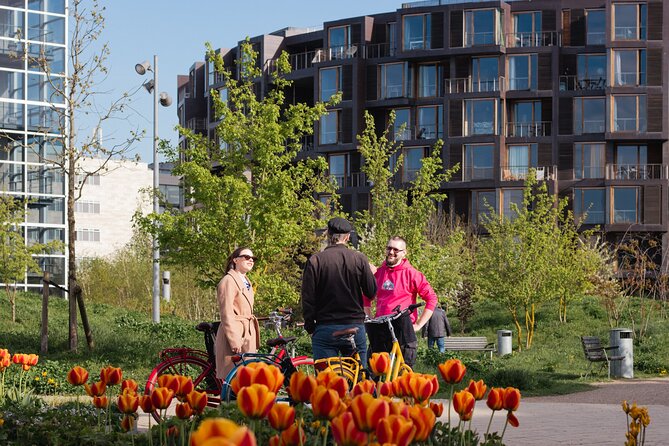
Enghave Park dates from the late 1920s and was built on the site of former allotment gardens. Its original design followed a neoclassical plan, with a bandstand, playground, and sports fields.
The park was completely redesigned between 2017 and 2019. Its new role goes beyond recreation. It helps control torrential rain in Copenhagen, giving the city a way to manage heavy downpours while keeping the space useful on ordinary days.
This is a strong stop because the idea is easy to understand while you are standing in the park. Climate planning does not always require a separate piece of infrastructure hidden away from daily life. A park can provide sports, play, greenery, and water management at the same time.
You get about ten minutes here. That is enough for the guide to explain the redesign, but not enough for a long walk through every feature. If climate adaptation is your main interest, listen closely and ask questions during the stop.
Absalon and the Meatpacking District
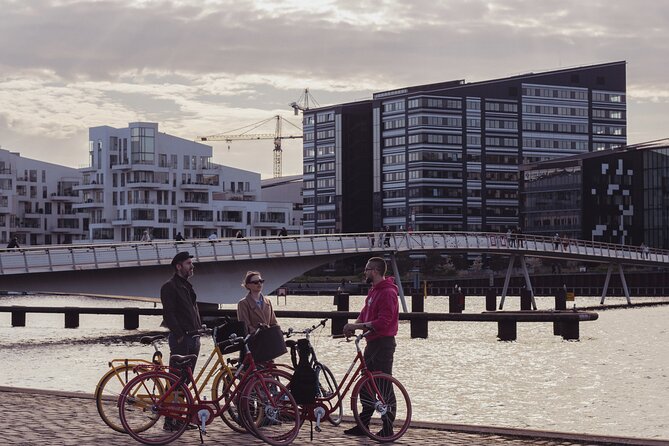
Folkehuset Absalon occupies a former church that was converted into a privately run community center. The visit lasts only five minutes, but the building gives the social side of the tour another clear example.
Instead of demolishing the former church or leaving it empty, the space was given a new communal purpose. This fits the larger pattern you see throughout the ride: older buildings can support new forms of public life when the city allows them to change function.
The Meatpacking District, known as Kødbyen, receives about ten minutes. Copenhagen planned the district to create cleaner and healthier conditions for the meat trade as the city grew. The area expanded through several additions, and its buildings show how industrial architecture changed during the 19th and 20th centuries.
Today, the district is useful for understanding how working areas evolve. The tour focuses on the architecture and planning story rather than presenting the district only as a place for nightlife or food. You get a quick look at how sanitation, industry, and city growth shaped the built environment.
The brief visit means you will not explore every corner. Still, this stop adds needed historical context to a route that otherwise leans toward newer projects.
Israel’s Square and Ørstedsparken
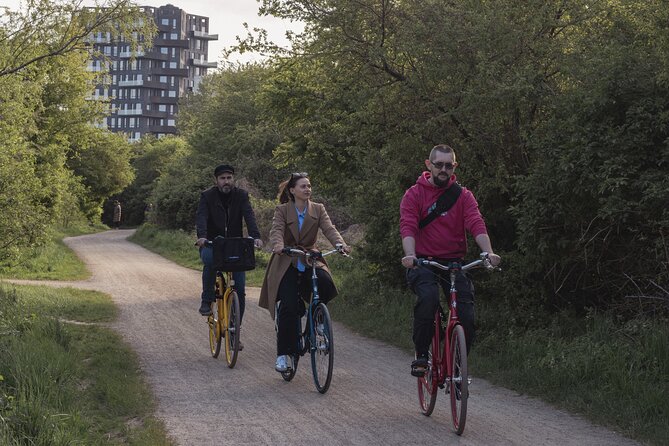
Israels Plads and the nearby Torvehallerne form one of Copenhagen’s food-focused meeting places. The square’s earlier story is tied to the city’s walls. Once the strict ban on building outside the fortified center ended in the 1890s, a farmers’ market operated here until the 1950s.
The area later became a huge parking lot before returning to public use. That shift makes the square another example of a place changing with the city’s needs. You receive about ten minutes here, enough to understand the transition from market to parking area and back to public gathering space.
The nearby Torvehallerne is especially useful if you want a food stop after the tour, though this cycling itinerary does not include a meal or tasting. You can make a note of it and return later at your own pace.
The final listed stop is Ørstedsparken, an early example of urban reuse. The park was once part of Copenhagen’s defensive system outside the walls. After the walls were removed, parts of the old moat were retained as a lake, while hills and winding paths replaced the military setting.
The ten-minute visit shows how a city can turn defensive land into public space without erasing every trace of its former purpose. It also gives the route a calmer ending before the return ride.
The cycling time, group size, and physical demands
The tour lasts about three hours, but only around 95 minutes are assigned to the listed stops. The remaining time includes roughly 65 minutes of cycling between locations. In total, you ride about 11 kilometers.
That is not an extreme distance for an experienced cyclist, but it is enough to matter if you rarely ride. You should be comfortable cycling on city roads and keeping pace with a small group. The tour description calls for moderate physical fitness, which is a fair expectation.
The group limit of 15 is a real advantage. A large bicycle group can feel awkward at crossings and make it hard to hear explanations. With fewer people, the guide can keep the ride together and respond to questions without turning every stop into a lecture.
The bicycles are included, as are children’s bikes in different sizes, subject to availability. Contact the provider in advance if you need a child’s bike. Helmets are free upon request, but they are not presented as automatic equipment, so ask for one when you check in.
Standard bicycles are included. E-bikes, cargo bikes, tandems, child seats, and e-cargo bikes cost extra and must be reserved in advance. The listed prices are 249 DKK for an e-bike, 449 DKK for a cargo or tandem bike, 649 DKK for an e-cargo bike, and 119 DKK for a child seat.
Is $72.57 a fair price?
At $72.57 per person, this is not the cheapest way to see Copenhagen. You are paying for about three hours, a bicycle, a local guide, a small group, and a route that covers far more ground than walking would allow.
I think the price is fair for a first or second day in the city, especially if you want to understand how Copenhagen works rather than simply collect famous sights. The guide saves you from piecing together the connections between harbor cleanup, bike infrastructure, public housing, parks, and adaptive reuse.
The value drops if you mainly want famous landmarks, interior access, or long photo stops. This is an educational ride with quick pauses. You may also need to add the cost of a basket, phone holder, or upgraded bike if your needs go beyond the standard bicycle.
The strong 4.8 rating from 39 reviews and 95 percent recommendation rate support the idea that the format works well for its intended audience. The praise focuses especially on friendly, clear guiding. Jörn was described as personable and competent, while Julia was praised for making the subject interesting and easy to follow.
Who should book this bicycle tour?
I would choose this for you if you enjoy architecture, urban planning, environmental ideas, or practical city design. It is also a good option if you have limited time and want to see several districts without arranging bicycles and a route yourself.
Families may find the short stops easier than a long museum visit, provided everyone can ride comfortably. Children’s bikes are available in different sizes, but availability should be checked before booking. An e-bike or child seat can be reserved for an added fee.
You may want a different activity if you dislike cycling in city traffic, need frequent rest periods, or want detailed access to buildings. The itinerary includes many exterior stops, and the ride continues in changing weather unless conditions become poor enough for cancellation.
The experience is offered in English. It begins and ends at Vester Voldgade 2, 1552 København. Toilets are available at the bike shop before departure, which is a small but useful detail for a three-hour outing.
Booking advice and cancellation details
You receive confirmation at booking. Free cancellation is available up to 24 hours before the local start time. Cancellations or changes made less than 24 hours ahead are not refunded or accepted.
The tour requires good weather and a minimum number of participants. If poor weather or low enrollment forces cancellation, you can choose another date or experience, or receive a full refund.
Because the route is often booked about 35 days ahead, reserve early if your Copenhagen dates are fixed. If you need an upgraded bicycle or child seat, arrange it in advance rather than hoping one will be available on the day.
Should you book it?
Book this tour if you want Copenhagen explained through the way people live, move, share space, and respond to climate pressure. The route is broad, the group is small, and the guide’s explanation gives meaning to places you might otherwise cycle past without noticing.
Skip it if you want a slow architectural photography tour or a checklist of royal sights. For most active visitors with three hours to spare, the combination of bike access, local guidance, and less familiar neighborhoods makes the $72.57 worthwhile.
FAQ
How long does the Copenhagen architecture and sustainability tour last?
The tour lasts approximately three hours, including stops and cycling between locations.
How far do you cycle?
You cycle roughly 11 kilometers during the tour. About 65 minutes are spent riding between the different stops.
Where does the tour start and finish?
The tour starts at Vester Voldgade 2, 1552 København, Denmark, and ends back at the same meeting point.
Is bicycle use included?
Yes. Bicycle use is included in the tour price. Children’s bikes in different sizes are available, but you should contact the provider to check availability.
Is a helmet included?
Free bicycle helmets are available upon request. Ask for one before setting off.
Can I reserve an e-bike or another special bicycle?
Yes. An e-bike, cargo bike, tandem, e-cargo bike, or child seat can be reserved in advance for an extra fee.
Are baskets and phone holders included?
No. Bike extras are available for an additional 49 DKK per item. The listed extras include phone holders and baskets.
How many people can join the tour?
The tour has a maximum of 15 participants, creating a small-group cycling experience.
What happens if the weather is poor?
The tour requires good weather. If it is canceled because of poor conditions, you can receive a full refund or choose a different date or experience.
Newly added in Copenhagen
- Private Transfer Copenhagen Airport CPH to Copenhagen by Sedan★ 4.5 · 3 reviews
- Castles of Kronborg and Frederiksborg from Copenhagen by Car★ 4.5 · 3 reviews
- Copenhagen: Old Town and Nyhavn Private Family Tour★ 4.7 · 3 reviews
- Copenhagen: Evening Gourmet Walk with Food & Drinks Tasting★ 5.0 · 3 reviews
- The Forgotten Giants Private Tour★ 5.0 · 3 reviews
- Copenhagen Craft BeerWalk City Center★ 4.4 · 3 reviews
- Copenhagen: Express Walk with a Local in 60 minutes★ 4.6 · 3 reviews
- Departure by Luxury Vehicule Copenhagen to Copenhagen airport CPH★ 5.0 · 3 reviews
Guided, compared.
Highlights 3 Hour Bike Tour with a Local Guide
Read our review →
Copenhagen Sightseeing Classic Canal Tour With Live Guide
Read our review →
Copenhagen Highlights 3 Hour Bike Tour with local Guide
Read our review →

Guided Party Pub Crawl with 4 Shots and 1 Drink
Read our review →Browse the lists this tour appears in