

Reviewed · STREET ART & HIDDEN GEMS WALKS
Copenhagen Alternative Private Tour: Vesterbro & Christianshavn
See Copenhagen beyond the postcard. This private walk links Vesterbro’s working-class streets, resistance stories, and former red-light district with the canals, churches, old warehouses, and free-spirited community of Christianshavn. The route is packed with places you could easily pass without understanding, from the bullet trap at Skydemuren to a former cattle market and a church that serves people in need.
I like the personal format, since your guide can answer questions and shape the walk around your interests. I also like the mix of social history, architecture, and everyday Copenhagen life, rather than a parade of famous sights. The main consideration is value: at $147.96 per person, the tour makes the most sense for a private group that wants context and flexibility, not for someone seeking a low-cost orientation walk.
In This Review
- Key points to know before you book
- Why Vesterbro makes a strong starting point
- Værnedamsvej and Saxogade: from beer gardens to overcrowded homes
- Skydemuren and Istedgade reveal Vesterbro’s rougher side
- Meatpacking District, Oksnehallen, and Halmtorvet
- Social Copenhagen at the Men’s Home and Maria Church
- Optional Danish food and the practical question of timing
- Crossing to Christianshavn by Knippelsbro
- Old houses, quiet streets, and Church of Our Saviour
- Christiania, the final stop and a self-guided finish
- Who gets the best value from this private walk?
- Should you book the Vesterbro and Christianshavn tour?
- FAQ
- How long does the Copenhagen Alternative Private Tour last?
- What language is the tour offered in?
- Where does the tour begin?
- Where does the tour end?
- Is this a private tour?
- Is lunch included?
- Is a local tasting included?
- Are metro tickets included?
- Does the guide enter Christiania?
- What happens if it rains?
- Can I cancel for a full refund?
Key points to know before you book
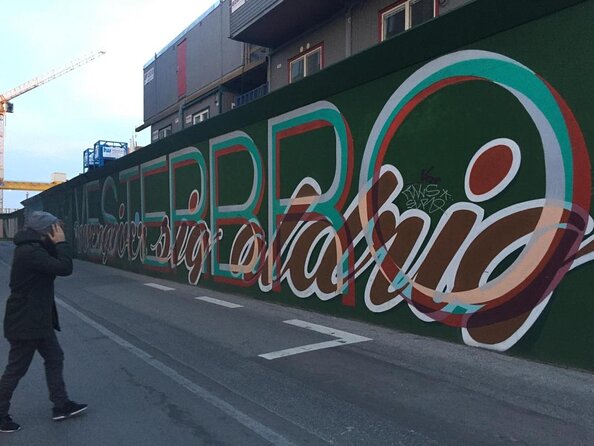
- Two very different neighborhoods in one walk: Vesterbro brings working-class roots, wartime resistance, nightlife, and social issues, while Christianshavn offers canals, old merchant buildings, churches, and Christiania.
- A private guide changes the experience: The guide can respond to your questions and share personal stories connected to Copenhagen. Alessandro, Grazi, and Karolina received especially warm praise for their friendly, personal approach.
- The route is built around overlooked details: Look for the old moat beneath Viktoriagade, the shooting-range wall, BBC broadcasts from Istedgade 31, and 17th-century streets in Christianshavn.
- The full option includes a Danish tasting and drink: Lunch at a classic Danish restaurant is listed only with the Full Option, so check your selected package carefully.
- Christiania is the final stop, but the guide cannot enter: You receive an introduction before exploring the car-free community on your own.
- Expect a serious walking tour: The advertised duration is about three and a half to four hours, with metro tickets included, though one group completed a shortened version in three hours at its own request.
Why Vesterbro makes a strong starting point
The tour begins at Viktoriagade 8, a useful address because the first stretch immediately shows how Copenhagen changed over time. This area once belonged to Christian IV’s defensive fortifications, protected by a moat. By the mid-20th century, the moat had become more like an open sewer, and the street was built over it during redevelopment.
That is a classic Copenhagen lesson: modern streets often cover older layers rather than erase them completely. Your guide can point out the protected buildings at numbers 8, 10, and 12, dating from the mid-1800s. Many buildings along the street were connected to charity, including housing for officers’ widows. The stop takes only about 15 minutes, but it gives you a useful way to read the neighborhood.
From there, the route moves toward Det Ny Teater. Opened in 1908, it remains one of Denmark’s largest theaters. Its original purpose was practical as well as cultural: the building created a major theater while opening a passage between Gammel Kongevej and what was then called Vesterbro Passage.
I appreciate this kind of stop because you are not simply told to admire a grand facade. You learn why it was built where it was and how it helped connect the city. The visit is brief, about 10 minutes, and admission is free.
More back-street walks in Copenhagen:
- Politically Incorrect Private Highlights Walking Tour
★ 5.0 · 1,244 reviews - Politically Incorrect Beer Walk
★ 5.0 · 516 reviews - Copenhagen: Old Canals and Hidden Gems Social Boat Tour
★ 4.7 · 342 reviews
Værnedamsvej and Saxogade: from beer gardens to overcrowded homes
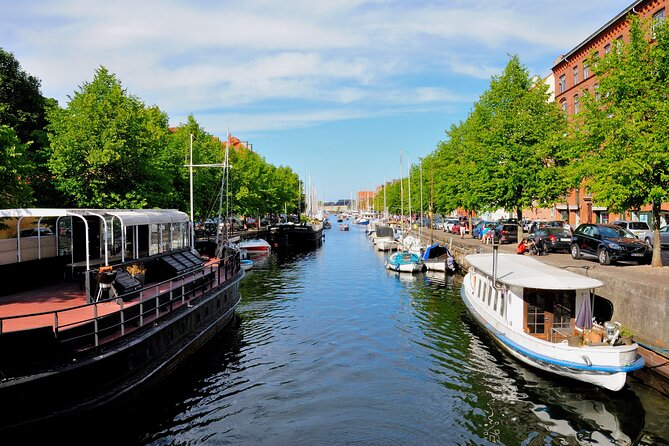
Værnedamsvej gives the walk a lighter, more social turn. Its name comes from Werner Dam, a beer collector who bought land here in the 1700s and opened a popular beer garden. The street was also known as Slagtergaden, or Butchers’ Street, because of the number of butchers operating in the area.
The stop lasts about 10 minutes. Do not expect a long food visit here. Instead, use it as a quick explanation of how trade, drinking, and local businesses shaped Vesterbro before its present-day reputation.
Saxogade brings a more difficult subject. In the early 1950s, residents sent a large protest letter about miserable housing conditions. Vesterbro had originally attracted factory workers arriving from the countryside, many hoping to improve their lives in the city. Instead, families often crowded into tiny one-room apartments, sometimes with as many as 10 people sleeping in one home.
The protest focused strongly on children and the need for better housing. This is one of the tour’s most valuable themes: Copenhagen is not presented as a polished collection of colorful buildings. You also hear about the people who lived behind those facades and pushed for change.
Skydemuren and Istedgade reveal Vesterbro’s rougher side
Skydemuren is one of the route’s most unusual pieces of architecture. This castle-like wall, set between Skydebanehaven and Istedgade, was built as a bullet trap. The nearby Royal Danish Army shooting range could send projectiles toward the newly developed street, so the wall protected traffic.
It also creates the visual endpoint of Skydebanegade, a street lined with uniform, highly decorated homes. In just 10 minutes, you get both a military explanation and an architectural one. That is typical of this tour: small details do much of the work.
Istedgade brings the social story into sharper focus. The street takes its name from the 1850 Battle of Isted during the First Schleswig War. It later became known for its role in the Second World War, its drug trade, and its place at the center of Scandinavia’s largest red-light district.
The guide also explains Istedgade’s role in the Danish resistance. During the war, the street served as an important refuge, and its famous slogan expressed the stubborn spirit of local residents. Istedgade is not treated as a simple sightseeing stop. You get a sense of a street that has carried several identities, including working-class district, resistance stronghold, nightlife zone, and troubled neighborhood.
At Istedgade 31, Stjerne Radio adds a specific wartime story. The shop opened in 1942 under Carl Munck and J. K. Søndergård. It soon transmitted BBC broadcasts through loudspeakers, making it an important part of the Danish resistance.
This is the sort of detail I value most on a city walk. A general statement about resistance can fade quickly, but a real address and a small business make the past easier to picture.
Meatpacking District, Oksnehallen, and Halmtorvet
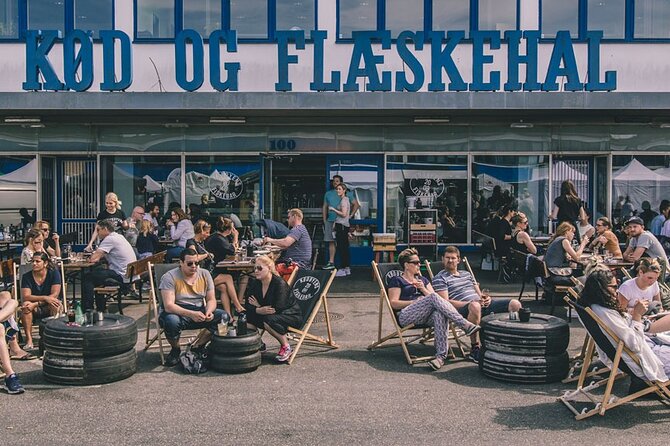
The route then turns toward Copenhagen’s Meatpacking District, a former industrial zone now known for restaurants and nightlife. The area gives you a clear example of how working spaces can acquire a new public life without losing all connection to their old purpose.
Oksnehallen belongs to the older Brown District. Built in 1891, it housed merchant offices and had space for about 1,600 cattle. The market continued operating until the White Zone opened in the 1950s. Today, Oksnehallen is an exhibition space, but the building’s original scale still hints at the district’s commercial importance.
Halmtorvet adds another layer. Copenhagen’s haymarket originally sat just inside the Western City Gate, at what is now City Hall Square. It closed in 1888 and moved outside the new livestock market. On Wednesdays and Saturdays, several hundred loads of hay and straw could be traded and sent to stables around the city.
These stops are not grand attractions requiring long visits. Most take about 10 minutes. Their value comes from the connections between them. You move from cattle to hay, from market work to present-day dining, and from an industrial edge of town to a popular social district.
A few more Copenhagen tours worth putting side by side
- Private Walking Grand Tour of Copenhagen
★ 5.0 · 3,953 reviews - Bike Tour Copenhagen. Private Guide, Concierge Service, Small Grp
★ 5.0 · 416 reviews - Private Walking Classical Tour of Copenhagen
★ 5.0 · 273 reviews - Politically Incorrect Private Hidden Gems Walking Tour
★ 5.0 · 270 reviews
Social Copenhagen at the Men’s Home and Maria Church
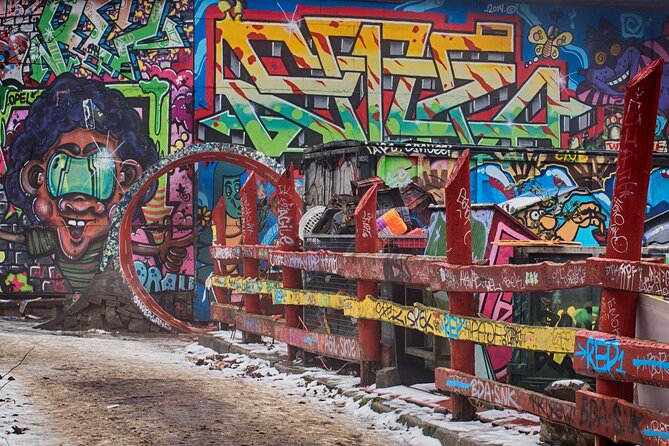
The tour does not avoid Copenhagen’s harder present-day issues. The Men’s Home for homeless people was founded in 1910. It is a private organization supported by the Danish state, with the aim of helping homeless and vulnerable people make use of their own resources and take part in a diverse society.
At Maria Church on Istedgade 20, that social role becomes even more visible. The small church opened in 1909 and now offers shelter and support to homeless people, families in need, and socially marginalized groups. Its daily work includes spiritual and economic help for people such as undocumented immigrants, drug addicts, prostitutes, and others whose lives have been criminalized.
You should not expect a conventional church visit here. The point is to understand how religious buildings can serve as active support centers in their neighborhoods. The stop is only about five minutes, but it adds needed depth to a route that might otherwise focus too heavily on architecture and urban change.
Optional Danish food and the practical question of timing
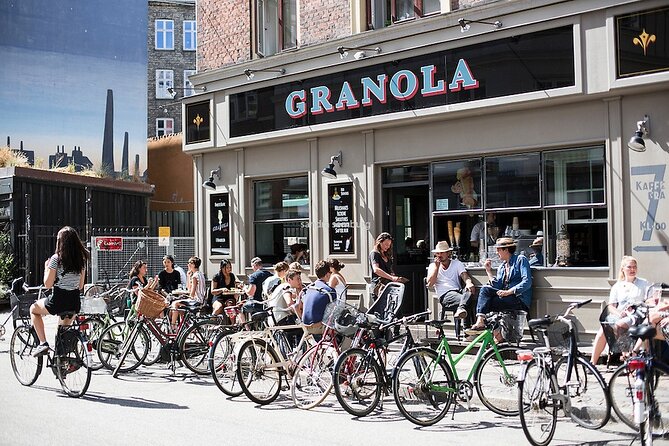
The full option includes a 45-minute lunch at a classic Danish restaurant, along with a local tasting and a drink. This is an important distinction. The experience is not designed as a food tour, and the tasting is a small part of a much broader city walk.
If food matters to you, confirm that you have selected the Full Option before paying. One person expected a more substantial food experience and felt disappointed when no food or drink was offered. The tasting is included in the correct option, but it should not be treated as the main event.
The listed stops add up to more time than the advertised three and a half to four hours if you linger at every address. That means the guide will need to keep the walk moving, combine nearby stops, or adjust the route. One group finished in three hours after asking to shorten the tour and skip lunch because of a cruise schedule.
Tell your guide at the beginning if you need to finish by a set time. The private format makes this possible, but a shorter route means less time for questions and fewer stops.
Crossing to Christianshavn by Knippelsbro
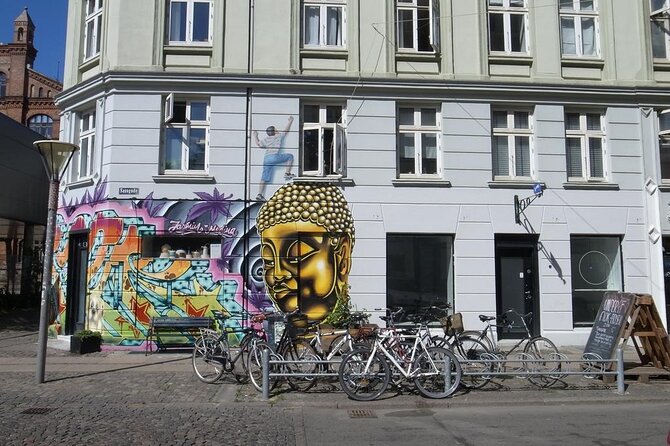
Near Copenhagen Central Station, København H, the route pauses at Denmark’s largest railway station. Built in 1911 and influenced by the style of Copenhagen’s town hall, it has seven platforms and 13 tracks. The stop lasts about 10 minutes and is one of the few places where admission is listed as included.
From there, the route crosses Knippelsbro. The 115-meter drawbridge was built in 1937 and links Copenhagen with Christianshavn. Its name comes from Hans Knip, who operated the bridge and collected tolls from passing ships in 1641. He even lived there with his family.
Christianshavn feels different from Vesterbro almost at once. The route includes Christians Kirke, a Rococo church built between 1754 and 1759. Originally called Frederik’s German Church, it served Copenhagen’s German-speaking congregation for many years.
At Strandgade 4, you learn about the building’s industrial connection. It formerly housed DieselHouse, a museum about B&W, the company that grew from a one-man smithing workshop in 1843 into one of Denmark’s largest workplaces. The museum has moved to Copenhagen’s southwest district, but the address still helps explain the scale of Danish industry.
Asiatisk Plads was once the base of the Danish Asia Company, which operated from 1732 to 1843. Today, the area contains the Ministry of Foreign Affairs and a convention center. It is a compact example of how merchant power, government, and international trade have occupied the same waterfront.
Old houses, quiet streets, and Church of Our Saviour
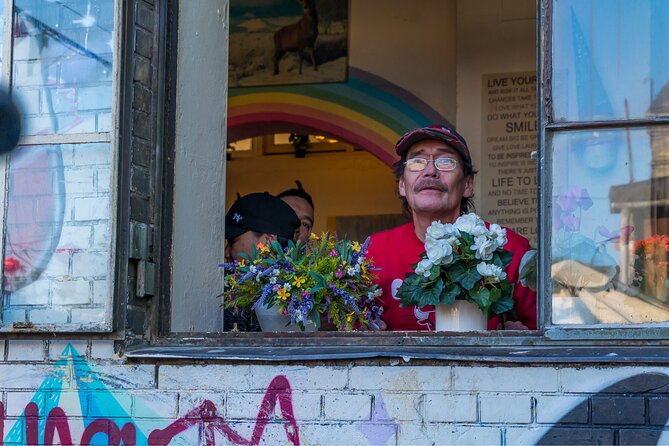
The Sankt Annae area is a good place to slow down. You see listed buildings from the 1600s and 1700s, including the row at numbers 8 through 22. Some houses contain remains from around 1650, and number 14 is the best preserved.
Wildersgade, dating from the founding period of Christianshavn in 1617 to 1622, offers a quieter scene. Its cobblestones, mansions, old homes, and warehouses from the 1700s and 1800s make it one of the more atmospheric portions of the route.
The former market square nearby is now a pleasant place to pause by the water. It also contains one of Copenhagen’s most expensive marinas, reserved for yacht club members. Look for Wilders Plads 10, a two-story timber-framed house built in 1736 as a sailmaker’s workshop and home.
Another notable building is the large yellow neoclassical structure built in 1754 to 1756. It began as a naval hospice and later housed the Danish Naval Museum until 2016. These stops are short, but they reward anyone who enjoys details in old urban districts.
Church of Our Saviour is one of the route’s best-known sights. Its Baroque design and twisted spire, with an external spiral staircase leading upward, make it easy to recognize. It also remains a working parish church serving about 8,000 people.
The tour allows about 10 minutes here, so do not assume you will climb the tower. The stop is primarily an introduction to the church and its role in the neighborhood.
Christiania, the final stop and a self-guided finish
Before Christiania, the route passes a former defense zone created during Christian IV’s time. Its purpose was to close the capital’s protective ring and help prevent attacks by the Swedes.
Freetown Christiania is the final destination. Founded in 1971 by hippies occupying military land abandoned by the Danish army, it is a partly self-governed community of about 1,000 residents. The area covers roughly 34 hectares and is one of Copenhagen’s most visited sights.
The guide cannot accompany you inside Christiania because guides are not allowed to enter. You receive the background and orientation, then continue on your own through this car-free community. That arrangement is worth knowing before booking, since the final part is not a guided visit.
Christiania is best treated with respect. You are entering a lived-in neighborhood, not an outdoor museum. The short 10-minute introduction gives you context, but it cannot replace time to explore independently.
Who gets the best value from this private walk?
At $147.96 per person, this is a premium choice for a three and a half to four-hour experience. The price is easier to justify if you are traveling as a small private group, want to ask many questions, or care more about local context than checking off major attractions.
I would choose it for:
- First-time visitors who have already seen central Copenhagen’s main sights
- Couples or families who prefer a private guide
- People interested in social history, urban change, architecture, and wartime stories
- Visitors who want to connect Vesterbro and Christianshavn in one outing
- Anyone who enjoys lesser-known addresses more than formal museum visits
I would hesitate if you have limited mobility, dislike several hours of walking, or mainly want interiors and major monuments. Most stops are outside, and the tour continues in rain because it is not cancelled for bad weather.
The walk is offered in English, includes metro tickets, and is suitable for service animals. It is a private activity, so only your group participates. Free cancellation is available up to 24 hours before the start time.
Should you book the Vesterbro and Christianshavn tour?
Book this tour if you want Copenhagen explained through its streets, residents, and changing neighborhoods. The best parts are the specific stories: the moat buried under Viktoriagade, the bullet trap at Skydemuren, BBC broadcasts from Istedgade 31, the cattle halls of Oksnehallen, and the old merchant buildings of Christianshavn.
The strongest guides make the difference. Alessandro is praised for being friendly and personable, Grazi for her enthusiasm and personal stories, and Karolina for taking time with overlooked places. Ask questions and tell your guide what interests you. That is where a private tour earns its price.
Skip it if you want a cheap overview or a full food experience. Choose the Full Option if you want the Danish tasting and lunch, and leave enough time for the route rather than planning it tightly around a cruise departure.
FAQ
How long does the Copenhagen Alternative Private Tour last?
The advertised duration is approximately three hours and 30 minutes to four hours.
What language is the tour offered in?
The tour is offered in English.
Where does the tour begin?
It begins at Viktoriagade 8, 1620 København, Denmark.
Where does the tour end?
It ends at Freetown Christiania in Copenhagen Municipality.
Is this a private tour?
Yes. Only your group participates in the activity.
Is lunch included?
Lunch at a classic Danish restaurant is included only with the Full Option.
Is a local tasting included?
A local tasting and a drink at a traditional restaurant are included only with the Full Option.
Are metro tickets included?
Yes. Metro tickets are included.
Does the guide enter Christiania?
No. The guide is not allowed to go into Christiania, so you explore that area independently after the introduction.
What happens if it rains?
The tour is not cancelled because of rain, so you should be prepared to walk in wet weather.
Can I cancel for a full refund?
Yes. You can cancel at least 24 hours before the experience start time for a full refund. Changes or cancellations made less than 24 hours before the start time are not accepted for a refund.
Newly added in Copenhagen
- Castles of Kronborg and Frederiksborg from Copenhagen by Car★ 4.5 · 3 reviews
- Private Transfer Copenhagen Airport CPH to Copenhagen by Sedan★ 4.5 · 3 reviews
- Copenhagen: Old Town and Nyhavn Private Family Tour★ 4.7 · 3 reviews
- Copenhagen: Evening Gourmet Walk with Food & Drinks Tasting★ 5.0 · 3 reviews
- Copenhagen Craft BeerWalk City Center★ 4.4 · 3 reviews
- The Forgotten Giants Private Tour★ 5.0 · 3 reviews
- Copenhagen: Express Walk with a Local in 60 minutes★ 4.6 · 3 reviews
- Departure by Luxury Vehicule Copenhagen to Copenhagen airport CPH★ 5.0 · 3 reviews
Street Art & Hidden Gems Walks, compared.


Vesterbro Tour With Beer & Pub Visits – Max 10 People
Read our review →
Copenhagen Private Tour: Highlights & Hidden Gems by Bike or Foot
Read our review →
Politically Incorrect Beer Tasting Walking Tour
Read our review →Browse the lists this tour appears in